The Desalination Plant Is Not Just a “Big Filter” as Many Think
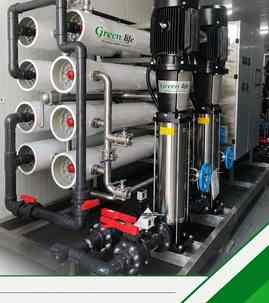
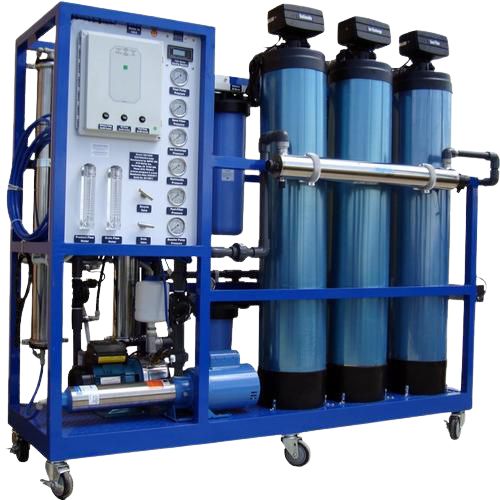
When people hear the phrase “desalination plant,” they usually picture a device with a bunch of filters, a pump, and a membrane, with fresh water coming out the other end. That picture isn’t entirely wrong, but it is dangerously incomplete.
Real desalination is not simply removing salt from water. It is the management of water as a complete system: the water source, its analysis, pre-treatment, pressure, membranes, recovery rate, reject water, product water quality, storage, disinfection, remineralization, and finally, how the water is actually used afterward.
And here is one of the most overlooked points in this field: two plants that look identical in the number of membranes and pumps can operate at very different levels of efficiency, and the cost of producing a cubic meter of water in one can be far higher than in the other, even though the nameplate capacity written on the data sheet is the same.
The reason is that a desalination plant is not measured only by the number of liters it produces, but by what could be called “the economics of every liter”: How much energy did it need? How much water was wasted? How often did the membranes need washing? What is the real lifespan of the membranes? What quality of water came out of them? And is that water actually suitable for drinking, or for irrigation, or for livestock, or does it need further treatment?
These questions become even more important for homes and farms, especially when the water comes from wells or from sources with high salinity. Water that looks perfectly fine to the eye may contain salts, boron, iron, manganese, hydrogen sulfide, or other contaminants that cannot be detected by sight or taste alone.
The World Health Organization confirms that desalination has become an important option for producing safe drinking water in water-scarce regions, but it stresses that it requires risk management, not simply the operation of a desalination membrane.
In this article, we’ll move away from the usual marketing talk and cover the less-publicized but highly impactful points in home and agricultural desalination plants, focusing on reverse osmosis (RO), since it’s one of the most widely used desalination technologies in small- and medium-scale applications.
The Mistake Most People Start With: Choosing the Plant Before Analyzing the Water
The most common wrong decision a homeowner or farm owner can make is saying: “The water is salty, so I want a 5,000-liter-per-day plant.”
That sentence sounds logical, but from an engineering standpoint, it’s not enough.
Production capacity is not the starting point. Water analysis is the starting point. Because the word “salty” doesn’t tell the engineer nearly enough. The water might contain:
- High TDS
- Very high hardness
- Iron
- Manganese
- Silica
- Sulfate
- Bicarbonate
- Hydrogen sulfide
- Organic matter
- Turbidity
- Microbes
- Boron
- Nitrate
- Fluoride
- Or a combination of more than one issue
And the membrane does not handle all of these components the same way. You might have water with a TDS that isn’t very high, but that contains a contaminant that makes pre-treatment more important than the TDS number itself.
And here is a point that is very rarely mentioned in the market: the TDS number alone is not enough to design a professional desalination plant. A household TDS meter is useful for monitoring, but it is not a chemical water analysis. TDS tells you roughly how much dissolved matter is present, but it doesn’t directly tell you what that matter actually is.
A good plant engineer doesn’t just ask “What’s the TDS?” — they ask:
- What is the water source?
- Is it a well?
- Municipal water?
- Surface water?
- Does water quality change seasonally?
- What is the temperature?
- What is the pH?
- What is the alkalinity?
- What is the hardness?
- What are the calcium and magnesium levels?
- What is the sulfate level?
- What is the chloride level?
- What is the silica level?
- What are the iron and manganese levels?
- And if the use is agricultural, what are the sodium, boron, chloride, EC, and SAR levels?
And this is where the difference begins between a plant designed for the water and a plant “assembled from parts.”
The Strangest Fact About Agricultural Desalination: Ultra-Pure Water Isn’t Necessarily the Ideal Water for Plants
In residential use, people generally want to reduce salts and contaminants and get water fit to drink.
But a farm is a different story. A plant doesn’t just need “low-salt water” — it needs the right chemical balance between the water, the soil, the plant, and the irrigation method.
And this is where a very common mistake happens: some people believe that the purer the water, the better it is for agriculture. The reality is more complex.
Irrigation water quality depends on salinity, sodium, chloride, boron, the sodium adsorption ratio (SAR), soil type, irrigation system, crop type, climate, drainage, and more.
The Food and Agriculture Organization (FAO) explains that sodium, chloride, and boron are among the most important ions that can cause toxicity to plants, and that trees and perennial crops can be particularly sensitive to some of these issues.
So when we buy a plant for a farm, the question shouldn’t be “How low will the plant’s TDS output be?” but rather: “What water quality does the crop, the soil, and the irrigation system actually need?” That is a fundamental difference.
Boron: The Element That Can Turn an Excellent Plant Into a Poor Agricultural Decision
Boron is one of the points that most deserves attention in water used for irrigation. The reason is that plants need boron only in very small amounts, but too much of it can cause toxicity.
FAO notes that boron can become toxic to some crops at relatively low concentrations, and that plant sensitivity varies widely. Removing boron from water also requires special attention when designing a desalination system.
This is especially important on farms that rely on:
- Fruit trees
- Citrus
- Grapevines
- Ornamental trees
- Sensitive crops
So it’s not enough to say that an RO plant “removes salts.” The precise question must be asked: what is the actual boron rejection rate under real operating conditions?
Because membrane performance against certain components depends on water chemistry, pH, pressure, membrane type, and operating conditions.
The output water might have a very low TDS, yet the post-treatment design still needs special review if the target is a sensitive crop.
Don’t Choose a Membrane Based on the Production Number Printed on It
A common mistake is when a buyer sees a membrane labeled “1000 GPD” and assumes they will get a steady 1,000 gallons of water per day. That’s not accurate.
The actual output of a membrane is affected by many factors, most importantly:
- Operating pressure
- Water temperature
- Water salinity
- Membrane type
- Flow rate
- Membrane condition
- Pre-treatment quality
So a distinction must be made between the membrane’s rated capacity and its actual performance inside the plant. A membrane can perform quite differently when water temperature, operating pressure, or feed water quality changes.
For this reason, comparing two plants based solely on “the number of membranes” is like comparing two cars by the number of tires. The tire count is equal, but the performance isn’t.
Water Temperature: A Small Detail With a Big Impact
Water temperature is one of the points many users overlook. Water is not a substance with fixed properties.
RO membrane performance is affected by temperature, so a change in daily production should not be immediately interpreted as a plant malfunction.
In winter, output may drop compared to summer, and in summer it may rise. But the more dangerous mistake is when the operator randomly raises pump pressure to compensate for the drop in production.
This can trigger a chain of problems: higher pressure → greater stress on components → increased likelihood of scaling or fouling depending on water conditions → higher energy consumption → and possibly a shorter membrane lifespan.
So a drop in production during a certain period does not automatically mean the solution is “increase the pressure.”
Pre-Treatment Is More Important Than Plant Owners Imagine
If there’s one secret that could resolve most RO plant problems, it’s this: protect the membrane before asking it to work.
The membrane is not the first line of defense. Water must reach it already in a suitable condition.
Depending on the nature of the water, pre-treatment may include:
- Sand or multimedia filtration
- Iron and manganese removal filters
- Activated carbon where needed
- Micron cartridge filters
- Antiscalant dosing
- pH adjustment
- Turbidity removal
- Biological treatment or disinfection depending on the source
- Removal of specific substances before the RO stage
The U.S. Department of Energy notes that pre-treatment can reduce fouling and scaling on membranes and help increase the recovery rate while reducing the energy required by the pump.
This brings us to an important truth: a cheaper membrane in a well pre-treated plant can outlast a more expensive membrane in a poorly designed plant.
Scaling Is Not Just “A Clogged Filter”
Scaling is different from the mere presence of impurities. In fouling, various materials can accumulate on the membrane surface. Scaling, on the other hand, relates to the precipitation of salts when certain compounds become insoluble under operating conditions.
The cause of the problem can be:
- Calcium carbonate
- Calcium sulfate
- Barium sulfate
- Strontium sulfate
- Silica under certain conditions
This is where the importance of proper RO design calculations comes in — not just picking a pump and a membrane.
Research from the U.S. Bureau of Reclamation indicates that fouling and scaling are among the main challenges to increasing water recovery rates, particularly when dealing with high-salinity water.
That’s why a plant operating at a very high recovery rate might look excellent on paper, but not necessarily excellent in reality.
Recovery Rate Matters More Than “How Many Liters It Produces”
Let’s say 10,000 liters enter the plant, and you get 7,000 liters of product water. That’s roughly a 70% recovery rate. But there are 3,000 liters that became concentrate water.
If you raise recovery to 85%, the amount of concentrate water decreases. That sounds excellent.
But the problem is that increasing recovery means the salts become more concentrated in the remaining portion of the water, which can increase the risk of scaling.
This is where the engineering balance appears: we want high recovery, but not at the expense of membrane stability.
The U.S. Department of Energy notes that raising recovery is linked to pre-treatment, membrane technology, and improving flow distribution and the system’s hydraulic configuration.
So don’t just ask the seller “What’s the recovery rate?” Ask instead: “What recovery rate was this specifically designed for this water, and on what basis was it calculated?”
Concentrate Water Is Not “Ordinary Water”
One of the most overlooked points when buying a small or medium plant is the reject/concentrate water. The plant doesn’t turn all the water into product water — it separates the water into:
- Product water
- Concentrate water containing a higher concentration of salts
This water cannot be handled randomly. On a farm, some may think of using it to irrigate trees, wash the ground, or dispose of it in a low-lying area.
But if the salinity is high, continuous use can lead to salt accumulation in the soil. At that point, the water problem shifts from a “desalination” problem to a “soil” problem.
FAO explains that salts and sodium affect water availability to plants and soil permeability, and that managing saline water requires taking into account the soil, drainage, crop, and irrigation method.
Therefore, the design for disposing of concentrate water should be part of the plant’s design from the start, not an afterthought once it’s already installed.
An Agricultural Plant Must Be Designed Around “The Crop,” Not the Pump
This is one of the most important ideas that separates industrial thinking from agricultural thinking. In a factory, the goal might be producing water to a specific spec.
On a farm, the ultimate goal is not producing water. The goal is: producing a good crop at the lowest cost and the least harm to the soil.
So we should start from the end:
- What is the crop?
- How much water does it consume?
- How sensitive is it to salinity?
- Is there a boron issue?
- Is irrigation drip or sprinkler?
- What is the soil type?
- What is the drainage quality?
- Are there already accumulated salts?
Only then do we go back to the desalination plant. This way of thinking prevents a very common problem: producing high-quality water, then using it in a way that harms the farm’s economics.
Very Low TDS Isn’t Always a Sign of “Ideal” Drinking Water
Water coming out of an RO system can be significantly low in minerals. And here a rare but important issue arises: water produced by desalination requires post-treatment management.
The World Health Organization notes that desalinated water tends to be low in minerals and can be more aggressive toward some materials it comes into contact with, so it may need stabilization or remineralization before distribution, such as adding calcium and magnesium and adjusting pH, or using blending with suitable water.
So a good residential plant shouldn’t treat RO as “the end.” It’s part of a system. Stages that can follow it include:
- Remineralization
- pH adjustment
- Disinfection
- Sanitary storage
- A blending valve or system when needed
The goal isn’t just raising TDS. The goal is achieving stable, safe water suitable for its intended use.
Remineralization Is Not Just a Taste Improvement
Some people treat the remineralization stage as a cosmetic step: “We add a mineral filter to make the water taste better.” That’s an oversimplification.
Water chemistry matters. Water with very low mineral content and alkalinity can behave differently toward pipes, surfaces, and materials.
So remineralization can serve a purpose related to water stability, not just taste. But it also shouldn’t be turned into a random step. “Adding minerals” doesn’t mean putting in just any stone or cartridge of unknown origin.
You need to know:
- What material is being used?
- What does it actually add?
- How much is being added?
- What is its effect on pH and alkalinity?
- Is the material suitable for drinking water?
The Storage Tank After Desalination Can Be More Important Than the Plant Itself
Water may leave the membrane in excellent quality, then enter an unhygienic tank. Right there, water quality can be lost. And this is a practical point that doesn’t get enough attention.
The tank should be:
- Suitable for drinking water in residential use
- Well sealed
- Protected from light as much as possible, depending on the material and design
- Cleanable
- Kept away from sources of contamination
- Designed so there are no significant dead zones
Because water quality isn’t just about the moment it leaves the membrane. Quality has to be maintained all the way to the point of consumption.
This aligns with the WHO’s modern philosophy that focuses on managing drinking water risks from source to consumer, not just at a single stage.
Well-Treated Water Can Still Become Contaminated After Treatment
This is one of the most overlooked points. If water passes through RO and then enters a tank and a long distribution network, the question is no longer just “Is the membrane good?” but also:
- Is the tank clean?
- Is there proper disinfection?
- Are the pipes suitable?
- Is there any backflow?
- Are there dead zones?
- Is the tank being cleaned?
- Are the filters being changed on time?
Here we must remember that a “desalination plant” and a “safe water system” are not the same thing. A safe system starts at the source and ends at the tap.
Why Shouldn’t Filters Be Changed Based on the Calendar Alone?
The advice “change the filter every six months” is useful for marketing, but it isn’t always an engineering rule.
The actual lifespan of a filter depends on:
- Water quality
- Consumption volume
- Filter type
- Flow rate
- Turbidity
- Organic matter
- Presence of iron
- Plant design
So it’s better for maintenance to be tied to indicators, such as:
- Pressure drop across the filter
- Change in water flow
- Change in water quality
- Change in RO performance
- Rising required operating pressure
- Change in conductivity/TDS in the product water
This leads to an important principle: smart maintenance relies on condition-based maintenance, not on a calendar date alone.
Monitoring Conductivity Matters More Than Just Looking at the Water
Water may look perfectly clear. But clarity doesn’t mean low salt content or the absence of dissolved substances.
That’s why some of the most important monitoring tools are:
- Conductivity meter
- TDS meter
- Pressure gauges
- Flow meters
- Sometimes ORP, pH, or other instruments depending on the system
What matters isn’t a single reading. What matters most is the trend.
If a plant has been producing water at a certain conductivity value, and that value gradually starts to rise, it could be a sign of:
- Membrane degradation
- An O-ring problem
- A sealing fault
- Fouling
- A change in feed water
- An operational problem
This allows a problem to be caught before it turns into a major failure.
Don’t Compare a Home Plant to a Farm Plant the Same Way
There’s a philosophical difference between the two uses.
At Home
What usually matters most:
- Drinking water safety
- Taste
- Footprint/space
- Noise
- Water consumption
- Ease of maintenance
- Storage quality
On a Farm
What matters:
- Flow rate
- Operating hours
- Recovery rate
- Energy consumption
- Water quality for irrigation
- Concentrate water management
- Membrane lifespan
- Compatibility with the irrigation network
- Cost per cubic meter
- The water’s effect on soil and crop
So buying a plant “popular for homes” and applying its philosophy to a farm can be an uneconomical decision.
Energy Is the Cost You Don’t See in the Plant’s Advertisement
Sellers usually talk about: “Plant output = 10,000 liters per day.” But few customers ask: how many kilowatt-hours per cubic meter? That question matters a great deal, because the water the plant produces isn’t free once it’s installed.
There is:
- Electricity
- Membranes
- Filters
- Chemicals
- Labor
- Maintenance
- Spare parts
- Cleaning
- Pumps
- Pre-treatment
- Concentrate disposal
The U.S. Department of Energy explains that reverse osmosis relies on pressure to force water through the membrane, and that higher-salinity water requires more demanding pressure conditions. It also notes that thermal desalination processes generally consume more energy than RO in cases suitable for membranes.
That’s why the best plant isn’t necessarily the one with the highest output. It may well be the plant that produces the required water at the lowest total operating cost.
A High-Pressure Pump Is Not Just “A Strong Pump”
There’s a dangerous idea in the market: “The stronger the pump, the better the plant.” That’s not true.
What’s required is the pressure suitable for the water, the membrane, the flow rate, and the recovery rate.
If the pump is larger than necessary, you may pay the price in:
- Extra energy
- Heat
- Stress on components
- Uneconomical operation
And if it’s smaller than necessary:
- Output drops
- The recovery rate may change
- Water quality is affected
- The system becomes unable to achieve its design targets
So the pump should be selected based on its operating curve, not on horsepower alone.
A Very Rare Point — Not Every Rise in TDS Means the Membrane Is Finished
When a plant owner notices a rise in TDS in the product water, the first conclusion is usually: “The membrane is damaged.” But that’s not the only possibility.
The cause could be:
- A drop in pressure
- Higher feed water salinity
- A change in temperature
- An O-ring problem
- Internal leakage
- A fault in the membrane arrangement
- A pre-treatment problem
- The membrane actually being damaged
So diagnosis needs to be systematic. A single reading is not enough to justify replacing the membrane.
You need to compare:
- Feed pressure
- Operating pressure
- Flow rate
- Feed conductivity
- Permeate conductivity
- Temperature
- Recovery rate
With this data available, plant performance can be evaluated much more rationally.
O-Ring and Vessel Quality Can Matter More Than the Membrane Brand Name
Buyers often focus on the membrane’s brand name and overlook:
- Housing
- Pressure vessel
- Tubing
- Valves
- O-rings
- Fittings
But a simple internal leak can cause a problem in product water quality.
That’s why professional design isn’t just a set of membranes. It’s an integrated mechanical, hydraulic, and chemical system.
Certifications Matter, But You Have to Understand What They Actually Mean
In residential systems, there are standards such as NSF/ANSI 58, specific to reverse osmosis drinking water systems.
This standard covers aspects such as:
- Material safety
- Structural integrity
- TDS reduction
- System efficiency
- Recovery rate
- Certain specific contaminant removal claims
But there’s a subtle point here: having a certification does not mean the system removes everything. You have to read the specific “certified claim.”
A product may be certified for TDS reduction, but that doesn’t automatically mean every possible contaminant is removed to the same degree.
This is an important reason not to rely on the phrase “internationally certified.” The right question is: certified to which standard? And what claims were actually tested?
The Difference Between a Plant That “Produces Water” and a Plant That “Gives You Data”
In small and medium projects, having measuring instruments is an investment, not a luxury. A professional plant should let you understand what’s actually happening.
At minimum:
- Pressure before and after key stages
- RO pressure
- Product flow
- Reject flow
- TDS/conductivity
- Pump operation indicators
- Fault alarms on larger systems
Because a plant that gives you no data forces you to guess. And guessing in water treatment is expensive.
A Farm Needs Soil Analysis Alongside Water Analysis
This is one of the most important points in designing irrigation plants. Water analysis alone isn’t enough — you also need to understand the soil.
Why? Because the same water can be relatively suitable in well-drained soil, while causing problems in poorly drained soil. High sodium levels can also affect soil structure and permeability.
FAO notes that the soil water infiltration problem can be linked to the relationship between water salinity and sodium, and that evaluating EC and SAR together is important for understanding the risk of permeability problems.
So: water analysis + soil analysis + crop type + irrigation method = the real picture.
A Desalination Plant Is Not a Substitute for Agricultural Drainage
A farm owner might think: “If I remove the salts from the water, the salinity problem is solved.” Not necessarily.
Even with low-salinity water, there are still:
- Naturally occurring salts in the soil
- Salts entering with fertilizers
- Evaporation
- Uneven water distribution
- Root zones that don’t get adequate leaching
So a farm may need to manage a proper leaching fraction and good drainage.
FAO explains that calculating the leaching requirement and managing salts in the root zone is a core element of irrigation water management.
Don’t Make the Desalination Plant Produce More Than the Farm Needs Just Because “Bigger Is Better”
If the farm needs a certain daily average of water, buying a much larger plant isn’t always economical.
What matters is understanding:
- Daily consumption
- Peak consumption
- Available operating hours
- Tank capacity
- Irrigation rate
- Leaching requirements
- Piping requirements
- Reserve capacity
Sometimes it’s better to produce water slowly, store it, then use it during peak times. And sometimes it’s better to run the plant for a longer period at lower capacity instead of buying a huge plant that only runs a few hours.
The design should follow the consumption pattern, not the other way around.
The Tank Can Be a “Water Battery”
This is a useful way to think about it. In a home or farm system, the product water tank can be thought of like a battery.
The plant produces water at a relatively constant rate. Consumption, on the other hand, can fluctuate.
So the tank can decouple the plant’s production rate from the user’s consumption rate. This allows for a more stable design instead of running the pump with every change in demand.
But the tank must not be allowed to become a point of stagnation and contamination.
Chemical Cleaning of the Membrane Is Not a Magic Fix
When performance drops, some users go straight for: “Do a CIP.” But chemical cleaning should be based on a proper diagnosis, because the type of fouling/scaling determines the type of cleaner and cleaning conditions needed.
The wrong cleaning approach can:
- Fail to fix the problem
- Damage the membrane
- Waste time and chemicals
- Give a false, temporary sense of improvement
It’s better to monitor performance and identify the root cause of the decline.
A Farm May Need to “Blend Water” Instead of Desalinating All of It
This is a rare idea, but it can be very economical.
If you have two water sources:
- A high-salinity source
- A lower-salinity source
Then desalinating 100% of the water isn’t always the answer. In some cases, engineered blending can be studied to reach a quality suitable for the intended use.
But blending must be based on actual analysis, because mixing water doesn’t mean all risks disappear.
Special attention must be paid to:
- Boron
- Sodium
- Chloride
- SAR
- EC
- The crop
FAO notes that the suitability of irrigation water depends on the conditions of use, and that blending and water management can be part of a strategy for handling water quality.
The Most Important Economic Question: What Is the Real Cost Per Cubic Meter?
If you want to seriously compare two plants, don’t just ask “How much does the plant cost?” Calculate instead: the cost per cubic meter produced.
This roughly includes:
- Electricity cost
- Filters
- Chemicals
- Membranes
- Maintenance
- Labor
- Spare parts
- Concentrate water treatment
- Capital cost over the operational lifetime
Here, you might find that a plant that’s more expensive up front becomes cheaper after a few years.
This is the difference between purchase price and total cost of ownership (TCO).
Why Do Some Cheap Plants End Up Very Expensive?
Because a low price can come from:
- A lower-quality pump
- Few instruments/gauges
- Inadequate pre-treatment
- Unsuitable membranes
- Poor-quality piping
- Uncalculated design
- No available spare parts
- No technical service
- Exaggerated nameplate output
So you end up paying the difference later, in:
- Membrane replacement
- Breakdowns
- Electricity
- Maintenance
- Reduced output
So the cheaper price isn’t always the cheaper choice.
What Should You Ask the Company Before Buying a Plant?
If you’re going to buy a plant for a home or a farm, ask for a clear technical file that includes:
- The water analysis used in the design — don’t accept a design based only on “TDS is roughly such-and-such.”
- Membrane type — the manufacturer, model, and specifications.
- Design operating pressure — not just the pump’s rated capacity.
- Production rate — along with the test conditions.
- Recovery rate — with an explanation of how it was calculated.
- Expected water quality — not just “the water will come out great.”
- Electricity consumption — preferably in kWh/m³ under operating conditions.
- Pre-treatment specifications — and what it’s designed to remove.
- Maintenance plan — what changes, when, and why?
- Concentrate water disposal method — especially for farms.
- Spare parts — are they available?
- Warranty details — and what does the warranty actually cover?
A Dangerous Sign: When the Seller Talks More About “Number of Stages” Than Design Quality
In residential plants specifically, competition can turn into:
- 5 stages
- 7 stages
- 9 stages
- 11 stages
But the number of stages is not a sufficient engineering criterion on its own. You could have 9 stages you don’t actually need. Or you could have a plant with fewer stages that’s well designed for the water.
The right question isn’t: how many stages? It’s: what does each stage actually do, and why is it there?
If the seller can’t explain the function of every single stage, that’s a sign worth paying attention to.
The “Magic Filter” Doesn’t Exist
There is no single perfect filter for everything. There are membranes, carbon, filtration media, ion exchangers, various membrane types, disinfection, and sometimes other technologies. Each technology has its own function.
RO is excellent at removing many salts and dissolved substances, but it is not automatically a substitute for every treatment stage.
That’s why good design starts with the question: what is the problem with the water? Then the technology is chosen. Not the other way around: what device do I want to sell? Then we look for a problem it fits.
Product Water Is Not the Final Goal — “Use” Is the Goal
This is perhaps the single most important idea in this whole article.
If the water is for human consumption, health specifications are the priority. If it’s for animals, there are other specifications. If it’s for irrigation, the subject is different. If it’s for washing equipment, there are other requirements. If it’s for boilers or industrial processes, there are even more specialized specifications.
So there’s no such thing as “the best water” in an absolute sense. There’s the best water for a given use.
This way of thinking saves money and reduces problems.
How to Think Like an Expert Before Buying a Desalination Plant?
Instead of starting with the brand, start with these questions:
- What is the water source?
- What is the water analysis?
- What is the final goal?
- How many cubic meters do I need per day?
- What is the peak consumption?
- What recovery rate is acceptable?
- Where will the concentrate water go?
- What is the operating cost?
- What is the maintenance plan?
- How will I know when the plant’s performance is starting to decline?
If these questions are answered before buying the equipment, you’ve already covered most of the road toward the right design.
A Rare Conclusion: A Successful Plant Is One That Doesn’t Need “Miracles” to Operate
A good plant isn’t one that performs impressively in its first week. A good plant is one that keeps operating:
- With the same stability
- With the same water quality
- With reasonable energy consumption
- With a slow, gradual decline in membrane performance
- With predictable maintenance
- With spare parts available
- With clear operating data
In other words, real success shows up after a year, two years, three years — not on installation day.
Don’t Buy a “Desalination Plant”… Buy a Water Management System
Desalination plants for homes and farms have become an important tool for dealing with water problems, especially in areas that rely on wells or face rising salinity.
But the biggest mistake is looking at the plant as a box that turns salty water into fresh water. The truth is that the plant is part of a larger system.
At home, the system starts with water analysis, then treatment, then RO, then remineralization, disinfection, storage, and distribution.
On a farm, the picture becomes more complex: water + soil + crop + drainage + irrigation method + salinity + boron + sodium + energy + economics.
FAO’s technical resources make clear that irrigation water evaluation does not rely on a single criterion, but on a set of factors including salinity, permeability, and ion-specific toxicity from ions such as sodium, chloride, and boron.
And for drinking water, the World Health Organization stresses the importance of handling desalinated water within a framework of risk management and water quality all the way to the point of consumption, not stopping at the desalination stage alone.
As for RO design itself, pre-treatment, recovery rate, scaling control, and performance monitoring are all factors that can matter more than simply buying membranes with high specifications.
So the selection philosophy can be summed up in a single sentence: don’t first ask “What’s the biggest plant I can afford?” Ask instead: “What’s the smallest system that achieves the water quality I need, at the lowest operating cost, with the highest long-term stability?”
And that is the real difference between a plant that was installed to run, and a plant that was designed to succeed.
A successful plant is not the one that produces the largest amount of water on paper, nor the one with the greatest number of stages, and it isn’t necessarily the most expensive one.
A successful plant is one that understands the water before treating it, understands the use before producing the water, understands the soil before using it in agriculture, monitors performance before a failure occurs, and calculates the cost of every cubic meter before the purchase process even begins.
In the end, water is not just a TDS number, desalination is not just a membrane, and a farm is not just a plot of land that needs water. It is an integrated system, and the deeper the thinking about this system, the more efficient, longer-lasting, lower-cost, safer, and closer to the true goal the plant becomes: getting water that is fit for purpose, not just water that has been desalinated.