The Importance of Water Purification and Desalination Plants in Disease Prevention and Protecting Human Health

It is easy to take water for granted as something that is simply always there in our daily lives; we turn on the tap and the water appears, and we use it for drinking, cooking, bathing and cleaning, rarely stopping to think about the journey it made before it reached our homes. The truth, however, is that access to clean, safe water is the result of a large and integrated system that begins at the water source, passes through stages of treatment, purification and disinfection, and ends with the distribution networks that carry water to the consumer.
This system has become even more important today, as populations grow, consumption rates rise, some freshwater sources decline, pollution increases, and climate change places additional pressure on water resources in many parts of the world. For this reason, talking about water purification and the construction of desalination plants is no longer just a conversation about service projects; it has become directly linked to public health, water security, economic development and the future of communities.
Some may assume that the main purpose of building a desalination plant is simply to provide an additional quantity of water, especially in countries and regions that rely on seawater and ocean water. Yet the importance of these plants runs far deeper than that. Safe water can be the first line of defense against many health risks, while contaminated water can become a vehicle for transmitting disease-causing organisms and harmful chemicals into the human body.
The problem is not limited to the presence of microbes in water. There are also contaminants that cannot be seen with the naked eye or detected by taste or smell, such as certain metals, chemicals and compounds resulting from industrial and agricultural activity. This makes relying on the water’s appearance or apparent clarity insufficient for judging whether it is fit for use.
This is where the need arises to invest in modern desalination and purification plants, alongside the establishment of precise quality-monitoring systems, because producing safe water does not end once it leaves the plant — the process of protection must continue until it reaches the glass of water a person drinks.
Why Is Clean Water a Health Issue Before It Is a Service Issue?
Water is woven into the details of daily life far more than we imagine. People do not use water only for drinking; they use it to prepare food, wash vegetables and fruit, clean utensils, bathe, wash their hands, and clean the places where they live and work.
For this reason, water contamination can affect human health in more than one way. Some disease-causing organisms can be transmitted by drinking contaminated water, while others can be transmitted indirectly through food that has been washed or prepared using unsafe water.
This brings up an important point that is not always discussed: clean water is not a treatment — it is a means of prevention before illness occurs.
Rather than waiting for cases of illness to appear and then spending money on treatment, medication and healthcare, providing safe water removes one source of risk from the very beginning. This concept matters greatly when thinking about the cost of desalination projects, because the value of a plant should not be measured only by the number of cubic meters of water it produces, but also by the scale of health and economic risks that can be reduced by providing a reliable water source.
Diseases Linked to Contaminated Water
Unsafe water can become a suitable environment for transmitting various types of microorganisms, including certain bacteria, viruses and parasites. Contaminated water has been linked to digestive disorders, cases of diarrhea and certain types of infection, especially in places suffering from weak sanitation systems or inefficient water treatment.
These illnesses may seem minor in some cases, but they become far more serious when infection recurs, or when it affects children, the elderly, or people with generally weakened immunity.
The problem must be viewed from a wider angle. Every case of water-related illness can mean a visit to the doctor, the purchase of medication, a child missing school, an adult missing work, and additional costs borne by the family. Contaminated water therefore causes not only a health loss, but potentially an economic and social loss as well.
Building an effective treatment or desalination plant, backed by a continuous monitoring system, can help reduce these risks — especially when the plant is part of an integrated system that includes water sources, networks and storage tanks.
The Danger That Cannot Be Seen With the Naked Eye
One of the most dangerous misconceptions is that clean water is simply water that looks clear and free of visible impurities.
A person can see sand, mud and some suspended particles, but cannot see with the naked eye most microorganisms or the many chemicals dissolved in water.
Water can be perfectly clear and still require advanced treatment before it is safe for consumption. Relying on the outward appearance of water is therefore not a real test of its quality.
This is one of the most important reasons why building specialized treatment and desalination plants is essential. A plant does not rely on the human eye to assess water; it relies on tests, instruments and technologies that determine the water’s characteristics and composition, then applies the appropriate treatment stages to remove or reduce the targeted contaminants.
This aspect is critical when designing desalination plants — a plant must not be designed simply to produce water, but must be capable of handling the nature of the incoming water and the contaminants it may contain.
Why Have Desalination Plants Become a Necessity in Some Regions?
There are regions that have abundant sources of seawater but at the same time suffer from limited freshwater sources. This is where desalination emerges as one of the solutions that allows a water resource that is not directly fit for drinking to be converted into water that can be used after being treated according to the required standards.
Desalination offers an important advantage: the water source does not depend entirely on the amount of rainfall or available surface water. For coastal regions, seawater can provide an additional, reliable resource as part of a long-term water security strategy.
This does not mean, however, that desalination is a magic solution to all water problems. It requires energy, investment, continuous operation and maintenance, and responsible management of the concentrated brine produced by the process.
A desalination plant should therefore be viewed as part of an integrated water management system, not as a project separate from the rest of that system.
How Do Desalination Plants Contribute to Protecting Community Health?
The process of protecting health begins with understanding the characteristics of the raw water. Seawater, for example, contains a high concentration of salts and minerals and cannot be used for drinking directly. Desalination technologies work to remove a large proportion of these salts and undesirable substances.
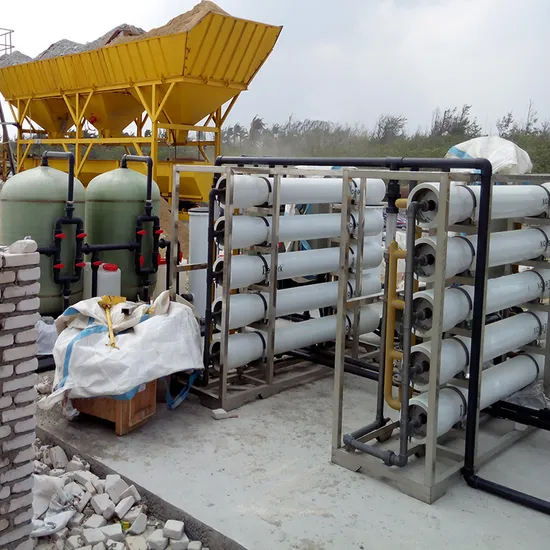
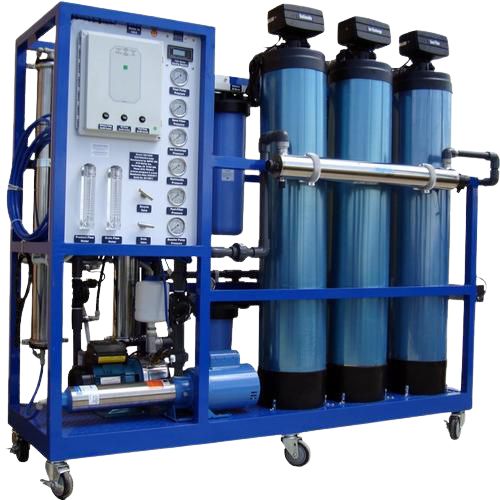
One of the best-known desalination technologies is reverse osmosis, which relies on specialized membranes that allow water to pass through while trapping most of the salts and other substances.
Producing desalinated water, however, does not necessarily mean the process is complete. The water produced needs to have its characteristics adjusted and treated in a way that makes it suitable for its intended use, and its microbiological safety must be guaranteed throughout the stages of production, storage and distribution.
This is where the importance of having a specialized team to operate the plant and monitor quality becomes clear. No matter how advanced the equipment, it cannot on its own guarantee the safety of water if it is not properly maintained and operated.
A Rare but Very Important Point: A Desalination Plant Alone Is Not Enough
One common mistake is to believe that building a modern desalination plant means the water problem has been solved.
In reality, there is another stage that is no less important than the desalination process itself: the journey of the water after it leaves the plant.
A plant may produce high-quality water, but if the distribution network is old, damaged, or not properly maintained, the water’s quality can be affected before it reaches the consumer.
The same applies to water storage tanks. If they are not cleaned and monitored regularly, they can become a point where water quality is compromised.
A successful project must therefore treat water as a chain that begins at the source and ends with the consumer. This means there is a need for:
- Monitoring the water source.
- Treating the water according to its characteristics.
- Continuously testing the water.
- Maintaining the plant’s equipment.
- Monitoring storage tanks.
- Inspecting distribution networks.
- Conducting periodic analyses at different points.
- Having plans in place to handle emergencies.
It is this integrated system that turns a desalination plant from merely a building full of equipment into a genuine system for protecting public health.
The Importance of Continuous Water Testing
Water quality cannot be guaranteed by a single test carried out when the plant opens.
Water changes, its surrounding conditions change, equipment needs maintenance, and membranes and filters have an operational lifespan — which is why quality monitoring must be an ongoing process.
Depending on the nature of the project and the standards adopted, monitoring should cover a range of physical, chemical and microbiological characteristics.
Most importantly, test results should not be mere numbers stored in files; they should be used to make operational decisions. If indicators show a change in water quality, the cause must be identified and addressed quickly, rather than waiting for the problem to appear at the consumer’s end.
This is where modern technology can play a major role, through automated monitoring systems, sensors and early-warning devices that help detect changes in certain water characteristics more quickly.
The Importance of Building Plants Near Water-Scarce Regions
Building a single massive desalination plant in one location can be beneficial, but distributing smaller or medium-sized plants across several regions may be more appropriate in other cases.
The decision depends on many factors, such as population size, consumption rates, the location of the water source, the nature of the network, the cost of transporting water, and the needs of the region.
There is also an important dimension related to fairness in resource distribution. Remote or water-scarce areas may be in greater need of local projects that reduce their reliance on transporting water over long distances.
Choosing a plant’s location should therefore not be purely an engineering decision, but one that also takes into account the current and future needs of the population.
Desalination Can Ease the Pressure on Freshwater Sources
When communities rely heavily on limited freshwater sources, rising demand can lead to the depletion of those sources.
This is where desalination can serve as an additional source that helps meet part of the demand, easing the pressure on certain freshwater sources.
This does not mean desalination should replace all other sources; rather, it can be part of a diverse water mix that includes reducing consumption, reusing treated water, protecting groundwater sources, and improving the efficiency of water networks.
The more diverse a community’s water sources are, the better able it becomes to withstand droughts, crises, or rising demand.
The Relationship Between Water, Mental Well-Being and Quality of Life
When discussing water, the focus is usually on physical illness, but the impact of water extends far beyond that.
When a family experiences irregular water supply or constant doubt about its quality, this can create a state of anxiety and instability in daily life.
Having a reliable water source, on the other hand, gives a family a greater sense of stability and makes everyday tasks such as cooking, cleaning and personal care much easier.
Improving water services can therefore raise overall quality of life, even when this effect does not show up as a direct medical statistic.
Children Are the Greatest Investment in Providing Safe Water
Children are among those who benefit the most from safe water and a healthy environment.
A child who is repeatedly exposed to water-related health problems may be forced to miss school, which can affect their educational progress.
Families, too, may end up spending part of their income on treatment instead of directing it toward education or basic needs.
Providing safe water is therefore not only about protecting a child in the present — it can be considered an investment in their future.
From this perspective, building a desalination plant is not merely an infrastructure project; it can be a project with a lasting impact on education, health and living standards for generations to come.
Desalination and Supporting Hospitals and Healthcare Facilities
Hospitals need water of an appropriate quality for many purposes, not just for drinking.
Water is used for hygiene, sterilization, laundry, and certain procedures and equipment that require water meeting specific standards.
A stable and reliable water source is therefore an essential element in ensuring the continuity of healthcare facility operations.
This shows that investing in desalination plants can be part of strengthening healthcare infrastructure, especially in regions facing water source challenges.
The Economic Dimension That Is Often Overlooked
Building a desalination plant may initially seem like a costly undertaking, given the expenses of construction, equipment, energy, operation and maintenance.
But evaluating the project should not rely solely on construction costs. The cost of not having safe water must also be calculated — the costs of illness, work interruptions, absent students, purchasing water from unreliable sources, transporting water, repairing network faults, and dealing with water crises.
When the full picture is considered, it becomes clear that investing in water infrastructure is a way of reducing many future costs.
The question, therefore, should not only be: “How much will the desalination plant cost?” but also: “How much will it cost the community if the plant is not built, or if the water system is not developed?”
This question changes the way the entire project is viewed.
Energy Is the Biggest Challenge Facing Desalination
Despite its major advantages, desalination requires energy, which makes energy efficiency a fundamental factor in plant design.
The higher the energy consumption, the higher the cost of producing water, and the environmental impact linked to that energy can also increase if it relies on high-emission sources.
This has made it increasingly important to develop more efficient technologies and to use renewable energy sources whenever it is technically and economically feasible.
Solar energy, for example, can be an attractive option in regions with high levels of solar radiation, especially when the system is designed in an integrated way.
This points to an important idea: the future of desalination does not depend only on improving desalination membranes, but also on improving the way plants obtain their energy.
What Do We Do With the Concentrated Brine Produced by Desalination?
One of the aspects that must be considered from the plant’s earliest planning stage is how to handle the concentrated brine produced by the desalination process.
This brine contains a higher concentration of salts compared to the incoming water, and discharging it without careful planning can affect the nearby marine environment.
An environmental assessment of the project must be carried out, and appropriate discharge methods must be chosen according to the nature of the site and environmental conditions, while complying with local standards and requirements.
This shows that a desalination project must not focus solely on producing water, but must consider the project’s entire life cycle — from water intake, through treatment, to the responsible disposal of by-products.
Building Plants Must Go Hand in Hand With Reducing Water Consumption
It makes little sense to build new plants and produce huge quantities of water, only to waste a large portion of it.
Building desalination plants must therefore go hand in hand with water conservation programs.
This can be achieved by fixing leaks, using more efficient equipment, raising public awareness, improving distribution networks, and encouraging the appropriate reuse of treated water.
The water saved by reducing waste can, in some cases, be equal in value to the water produced by a new plant. In this sense, the cheapest cubic meter of water is sometimes the one we never wasted in the first place.
Technology and Artificial Intelligence in the Future of Desalination Plants
Desalination plants are continuously evolving, and digital systems are now capable of monitoring a large number of operational variables.
Data can be used to track pump and membrane performance, energy consumption and water quality, while smart systems can help detect early indicators of faults before they turn into major problems.
As artificial intelligence and data analysis advance, plants are becoming better able to predict maintenance needs, optimize operations and reduce energy consumption.
Technology, however, is not a substitute for people. Even the best desalination plant in the world needs engineers and technicians capable of understanding its systems, handling unusual situations, and making the right decisions.
Training Staff Is Part of Protecting People’s Health
When building a new plant, the focus is often placed on purchasing modern equipment, while staff training is neglected — and this is a serious mistake.
Plant staff work with sensitive equipment and processes that require constant attention, and any error in operation or maintenance can affect treatment efficiency.
A project must therefore include ongoing training programs, not just a one-time training session when the plant opens.
Staff must know how to handle emergencies, how to read test results, how to detect faults, and how to apply safety and quality procedures.
The Importance of Community Awareness
Even the best desalination plant cannot, on its own, protect community health if there is no awareness of how to handle water responsibly — the consumer also has a role to play.
This includes maintaining water storage tanks, avoiding waste, paying attention to any unusual change in water, and handling water networks responsibly.
People must also be made aware that water quality does not depend on the desalination plant alone, but on every stage the water passes through.
Schools, universities, media outlets and local institutions can all play an important role in spreading a culture of water conservation.
Desalination Plants as Part of Water Security
The concept of water security has become more important than ever.
Water security means a community’s ability to provide the water its population needs in a stable and safe manner, even under difficult conditions.
Countries can face water crises due to drought, climate change, population growth, or contamination of certain sources. Under these circumstances, desalination plants can be one of the tools that help a country or region increase its ability to secure its water needs.
But water security is not achieved through desalination alone; it requires a set of policies that include protecting water sources, reducing waste, reusing water, improving agriculture, developing water networks, and investing in scientific research.
Why Should We Think About the Future, Not Just Today’s Needs?
When designing a desalination plant, the question should not be: “How much water do we need now?” but rather: “How much will the region need in twenty or thirty years?”
Populations may grow, factories may expand, urban areas may spread, and consumption patterns may change.
Long-term planning is therefore essential, so that we do not find ourselves years from now facing a new problem that requires building another plant at additional cost. Some components of the system should also be designed to allow for future expansion as needs increase.
Clean Water Is a Right, Not a Luxury
One of the most important ideas that must remain at the forefront when planning water projects is that access to safe water is directly tied to human dignity and health.
Safe water should not be a privilege reserved for those who live in a certain area or who can afford bottled water, while others are left to rely on unsafe sources.
Desalination and purification projects thus become part of achieving fairer development, especially when directed toward regions suffering from a real water shortage.
Investing in Water Is Investing in Health Before Illness
People usually focus on building hospitals, buying medication, and developing medical services — and this is undoubtedly important.
But prevention can, in some cases, be more effective than waiting for illness to strike. If water is unsafe, treating patients without addressing the root cause is like dealing with the symptom while leaving the original problem untouched.
Improving water quality, on the other hand, means removing part of the risk before it ever reaches a person.
For this reason, building water purification and desalination plants can be seen as part of the preventive infrastructure for public health.
What Should a Successful Desalination Plant Include?
There is no single plant design that suits every region, because the design depends on the water source, its characteristics, the scale of demand, and the required standards.
However, a successful project must be built on a set of core principles, including:
- Studying the water source carefully before design.
- Choosing the treatment technology suited to the nature of the water.
- Using appropriately efficient equipment.
- Providing systems to monitor water quality.
- Focusing on disinfection and protection from contamination.
- Setting up a regular maintenance plan.
- Training staff.
- Securing reliable energy sources.
- Studying the project’s environmental impact.
- Planning for future expansion.
- Monitoring water after it leaves the plant.
- Paying attention to distribution networks and storage tanks.
- Having a clear emergency plan.
- Raising awareness among consumers.
These elements make a project more capable of enduring, rather than focusing solely on the moment the plant opens.
A Crucial Point: Success Is Not About Producing Water, but Sustaining Its Quality
Any well-designed plant may be able to produce water on its opening day, but the real test begins afterward:
- Will the plant still operate efficiently after five years?
- Will the equipment be maintained on time?
- Will spare parts be available?
- Will membranes and filters be replaced when needed?
- Will testing continue?
- Will new staff be trained?
- Will the networks remain safe?
These questions matter far more than celebrating the project’s opening. A desalination plant is a long-term project, and its true success is measured by its ability to continuously provide safe water over many years.
Conclusion
Water purification and the construction of desalination plants are no longer an optional luxury that can be postponed in regions facing water shortages or contaminated sources; they have become among the most important investments a community can make to protect human beings and secure the future.
Clean water is directly linked to health, hygiene, food, education, work, the economy and social stability. The higher the water quality and the lower the likelihood of contamination, the fewer the risks people face.
Even so, building a desalination plant alone is not enough. A successful project requires rigorous scientific study, suitable technologies, reliable energy, continuous maintenance, periodic testing, safe distribution networks, and responsible management of the waste generated by the desalination process, in addition to community awareness of the importance of water.
Most importantly, we must view water as a strategic wealth, not merely a daily service. Every glass of safe water that reaches a person is the result of a whole system of work, investment and planning.
Investing in desalination and water-purification plants is, in reality, an investment in humanity itself. When we protect water, we protect our health; when we preserve water sources, we protect our economy; and when we plan water projects sustainably, we not only safeguard our present but also leave future generations a better chance at life.
In the end, the core idea can be summed up in a single sentence: safe water does not just prevent disease — it gives a community a greater capacity to live, work, grow and endure. For this reason, building desalination and water-purification plants should be viewed as a health, environmental, economic and strategic project all at once, not merely a project for producing water.