A Desalination Unit at Home or on Your Farm: A Real Investment in Your Family’s Health and the Protection of Your Production
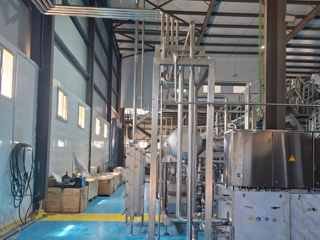
How can a properly designed desalination unit from Green Life turn a water problem into a source of security, stability, and quality? At a time when water quality has become a growing concern for many families and farm owners, the real question is no longer: do I need a desalination unit? The more important question has become: what could I lose if I rely on unsuitable water? And what could I gain when I have a water source treated according to the actual needs of my home or my farm?
Water is not simply a liquid we use for drinking or irrigation. For a family, it is part of drinking, cooking, hygiene, and washing, and for a farm it is a core part of the production cycle itself. Water quality can affect human health, the performance of plumbing networks and appliances, the soil, irrigation efficiency, and plant growth and crop quality.
The World Health Organization confirms that the safety of drinking water is directly linked to public health, and that the risks are not limited to microbial contaminants alone, but also include chemical contaminants such as nitrates, fluoride, and arsenic, depending on the water source and its conditions.
From here emerges the idea of a home or agricultural desalination unit as more than just a water purification device. It is a system for managing the water source itself.
And this is precisely where the importance of design comes in; because a good desalination unit is not the one with the largest number of filters, nor the one with exaggerated specifications, but the one designed after understanding:
- The water source
- Water analysis
- Consumption volume
- Nature of use
- Number of family members
- Farm area
- Crop type
- Irrigation system
- Water and soil salinity
- Operating conditions
- Method of disposing of concentrated water
- And the quality level required for the final water
This is the idea that should underpin any unit designed by a specialized company such as Green Life: don’t start with the equipment, start with the problem.
First: Why has having a treated water source inside the home become an important idea?
There is a big difference between obtaining water from an external source and assuming it is suitable for every use, and having an internal treatment system through which you can handle the water according to the nature of its source.
Water may come from a public network, a well, a groundwater source, a surface source, or a highly saline source. And each source has its own problems.
- The problem may be dissolved salts
- It may be hardness
- It may be iron and manganese
- It may be turbidity
- It may be organic matter
- There may be microbiological problems
This is why it is not correct to say that every home needs the same unit. Quite the opposite. A home relying on different water than another home usually needs a different design.
And here appears the first important advantage of a specifically designed unit: you are not treating “water in general,” you are treating your own water. And that is a fundamental difference.
Second: A desalination unit is not just a big filter
One common mistake is reducing the desalination unit to the idea: “water goes in, passes through the filters, then comes out clean.” This explanation is far too simplistic.
A good desalination unit is an integrated series of treatment stages, each with its own function. In reverse osmosis (RO) systems, for example, there is a pre-treatment stage to protect the membranes, then a pressurization stage, then the membranes that separate a large portion of the salts and dissolved substances, then post-treatment stages for the produced water according to the required use.
After desalination, the water may need chemical adjustment, remineralization, or disinfection, depending on the water source and the final use.
The World Health Organization notes that the safety of desalinated water does not depend only on the salt-removal process, but on managing risk across the source, the treatment, the final water, and storage.
This is a very important point for the family: the unit is not just an RO membrane. The real unit is:
Water source + analysis + pre-treatment + desalination + post-treatment + storage + distribution + maintenance and monitoring.
Third: How does a desalination unit protect your family?
When we talk about protecting the family, we must be precise. No responsible company can claim that installing a desalination unit alone guarantees the prevention of all illness or makes water safe regardless of its source.
But a properly designed and correctly operated treatment system can reduce risks associated with certain contaminants, according to the nature of the incoming water and the technologies used.
This is where the importance of water analysis before design comes in; you cannot protect your family from something you don’t know exists.
1. Controlling dissolved salts
If the water source is highly saline, a correctly designed RO unit can significantly reduce the salt load in the produced water. This does not mean that all water needs the same level of salt removal.
Drinking water has its own requirements. Bathing water has other requirements. And irrigation water has different considerations.
So the right question is not: “What percentage of salt removal?” but rather: “What water specifications do I need after treatment?” This question makes the design far more professional.
2. Reducing certain chemical contaminants based on analysis and technology
One of the reasons water analysis is a step that cannot be skipped is that some water sources may contain undesirable elements or compounds. The World Health Organization notes that chemical contamination of water may be naturally occurring, such as arsenic and fluoride, or linked to human sources, such as nitrates.
But here caution is needed against a common misconception: RO is not a magic solution for every contaminant. Each contaminant behaves differently, and some cases may require additional stages.
So professional design starts from the water analysis report and then determines:
- Do we need RO?
- Do we need carbon?
- Do we need a softener?
- Do we need media filtration?
- Do we need UV?
- Do we need chemical dosing?
- Do we need remineralization?
- And do we need more than one stage?
This is not engineering luxury. This is the correct way to build a unit that truly serves the family.
3. Protecting home appliances and the plumbing network
There is a benefit that many people overlook. Water quality does not only affect people, it also affects:
- Water heaters
- Washing machines
- Faucets
- Pipes
- Boilers
- Water-linked air conditioning units
- And some other water-dependent appliances
Highly hard water, for example, can cause limescale buildup in certain equipment. Over time, the problem can shift from simply water quality to recurring maintenance costs.
This is why a treatment unit can be an investment that protects the home’s internal infrastructure, not just an improvement to the taste of the water.
Fourth: The most important advantage for the family — relative independence from fluctuations in the water source
Imagine a family relying on a single source. Then the following happens:
- A change in water quality
- An interruption
- A change in pressure
- A change in salinity
- A temporary problem at the source
Having a properly designed unit with an appropriate tank and good monitoring does not eliminate the problem, but it can give the family a greater margin of safety.
The World Health Organization notes that the continuity and reliability of water supply is an important part of its relationship to health and well-being.
And here the water unit transforms from a device into part of the home’s basic infrastructure.
Fifth: What does designing a desalination unit “tailored to the home” mean?
This point specifically is very important. It doesn’t mean that a home with ten people simply needs a unit twice the size of one for a home with five people. There are other factors:
- Water consumption rate
- Number of usage points
- Number of bathrooms
- Water use in the kitchen
- Presence of a garden
- Presence of a pool
- Presence of tanks
- Water pressure
- Number of operating hours
- Is the unit for drinking only or for the whole house?
- Source quality
This is why the real need must be calculated. And here a company like Green Life can build the design around actual usage instead of selling a ready-made device and then trying to force the home to adapt to it.
Sixth: Why shouldn’t the goal be “maximum possible desalination”?
This is one of the most important points that distinguishes engineering thinking from marketing thinking. Someone might say: “I want to remove everything from the water.” But that is not always the correct engineering approach.
Water is not an enemy whose every component must be removed. What is required is achieving quality suitable for the intended use.
For drinking water, the produced water may need appropriate final treatment rather than being left with very low mineral content without study. Here an important stage emerges that can be part of the design: remineralization or final water adjustment, depending on the nature of the system, the use, the analysis, and the targeted specifications.
Practical evidence for the importance of this idea is that some desalination projects re-adjust the water chemistry after RO before blending it with other water sources.
Seventh: What about the farm? Here the story is completely different
If a home needs water suitable for human use, a farm needs something more complex: suitable water + suitable quantity + continuity + a suitable irrigation system + soil management.
Because a plant does not just drink water. A plant lives within a system: water + soil + salts + roots + fertilizer + drainage + climate.
This is why installing a desalination unit on a farm without analyzing the soil and water may not give the farm owner the result they expect. But when the design is done correctly, the treatment unit can be a powerful tool for improving production stability.
Eighth: Salinity doesn’t only affect the water… it can turn into a soil problem
This is an extremely important point. If irrigation water contains high levels of salts, repeated use of it can contribute to salt accumulation in the root zone, especially if drainage conditions are inadequate.
And here the real problem appears: the farmer may look at the crop and say: “The plant isn’t growing well.” But the cause may lie in: water → soil → roots, and not in the fertilizer alone.
Research on water management in arid regions indicates that managing irrigation and drainage and using suitable irrigation techniques can play an important role in limiting salt accumulation in the soil.
So a desalination unit can be part of a salinity control strategy, but it is not a substitute for proper agricultural management.
Ninth: How can a desalination unit help improve farm production?
Suppose you have a farm relying on a water source with high salinity or an unstable composition. You might face:
- Uneven plant growth
- Weakness in certain areas
- Blockages in the irrigation network
- Scale deposits
- Root problems
- Lower fruit quality
- Variation in production
- Difficulty controlling fertilization
When water becomes more controllable, irrigation and fertilization management can become more precise. This does not mean that desalination alone will increase production by a specific percentage; any increase in production must depend on the crop, water, soil, climate, irrigation system, and fertilization.
But the core idea is: when uncontrollable factors decrease, the farmer’s ability to control the factors they can manage increases. And that is a very important gain.
Tenth: Treated water makes fertigation more controllable
In modern agriculture, irrigation can be combined with fertilization through fertigation systems. But water quality affects this process. When water is highly saline or has an unsuitable composition, managing nutrients becomes more complex.
When treated water with the appropriate specifications is available, a more precise fertilization program can be designed. Here the role of the desalination unit is not just “giving the plant water,” but providing a more controllable water base for the nutrition program. And this is a very important point for high-value crops.
Eleventh: Not every farm needs to desalinate all of its water
This is perhaps one of the most important pieces of advice that can save a farm owner significant money. For example, the use of treated water can be studied for:
- Nurseries
- Greenhouses
- High-value crops
- Sensitive stages of the growth cycle
- Drinking water sources for workers or animals according to requirements
- Specific parts of the production system
In certain regions or conditions, it may be better to combine different treatment methods instead of relying on RO alone. This is exactly why engineering design matters before purchasing equipment.
Twelfth: Why is analyzing the farm’s water more important than the price of the unit?
If someone offers you a unit at a very low price without asking you:
- What is the water source?
- What is the salinity?
- What is the SAR?
- What is the hardness?
- What about iron and manganese?
- What about nitrates?
- What about bicarbonates?
- What about silica?
- What about turbidity?
- What is the flow rate?
- What is the cultivated area?
- What type of crop?
This is a warning sign that calls for caution. Because a unit is not a standardized commodity, it is an engineering solution. An excellent unit may work well on one farm while the same specifications fail on another farm because the water composition is different.
Thirteenth: A Green Life unit must start from “analyzing the problem”
If you want the conversation about a Green Life-designed unit to be a professional discussion rather than a traditional advertisement, the strongest message to convey to the customer is:
We don’t start with the question: which unit do you want? We start with the question: what do you want to achieve with your water?
- Do you want drinking water for the family?
- Do you want to treat well water?
- Do you want to desalinate saline water?
- Do you want to protect your home’s plumbing network?
- Do you want water for irrigation?
- Do you want to treat water for a farm?
- Do you have a soil salinity problem?
- Do you want water for a nursery?
- Do you have greenhouses?
- Do you have a production line?
Each of these questions can lead to a different design.
Fourteenth: A Green Life unit design can be “a system,” not just a piece of equipment
The real value of a specialized company does not lie only in manufacturing or installing the unit. The value lies in the entire project cycle:
- Water source inspection — before talking about equipment
- Water analysis — to understand the real problem
- Determining the need — in terms of quantity and quality
- Choosing the technology — instead of installing the same solution for every customer
- Design — suited to the actual conditions
- Execution — with operation and maintenance in mind
- Initial commissioning — to fine-tune performance
- Follow-up — because the unit’s life doesn’t end the moment it’s installed
This idea can be one of Green Life’s strongest marketing points: “From water analysis to unit design to operation… one solution built around your needs.”
Fifteenth: The advantage few talk about — protecting the investment itself
If you spent money on:
- Pumps
- Irrigation networks
- Greenhouses
- Fruit trees
- Seedlings
- Tanks
- Home appliances
and then ignored water quality, you are leaving an important part of your investment unprotected.
For a farm specifically, water is not just an operating expense, it is a production input, like fertilizer, seeds, and energy.
So the right question to ask is: how much does unsuitable water cost me annually? Not just: how much does a desalination unit cost?
A unit may be a clear cost paid once or in stages, while the losses from unsuitable water appear spread across:
- Lower production
- Higher maintenance
- Problems in the irrigation network
- Soil problems
- Inconsistent yield
- Increased consumption of certain inputs
- Replanting
- Lower product quality
And when you look at the full picture, the concept of the unit’s price changes.
Sixteenth: How does a desalination unit protect a farm’s production?
There are four words I consider more important than the word “desalination”: Stability – Control – Protection – Continuity.
- Stability: water quality becomes more consistent
- Control: you know what is entering the plant
- Protection: reducing certain risks associated with unsuitable water
- Continuity: having a system designed to meet your needs, not just a device that works when everything is perfect
These four elements can be more important than simply reaching the lowest TDS number.
Seventeenth: Don’t forget the irrigation network
Even the best desalination unit will not give you the best result if the irrigation network is poor. If the water is good but:
- The filters are unsuitable
- The pressure is unbalanced
- The drippers are clogged
- The lines are poorly designed
- The irrigation is uneven
then the farm may not benefit from the water quality as expected. That’s why the treatment unit and the irrigation network should be viewed as a single system.
Good water + poor irrigation = a result lower than expected.
But: suitable water + well-designed irrigation + correct soil management = a better opportunity to benefit from the investment.
Eighteenth: We must not forget concentrate management
Anyone considering installing an RO system should ask an important question: what will happen to the concentrated reject water leaving the unit? Because an RO unit produces treated water, and at the same time a stream more concentrated in salts. This matters greatly for both homes and farms.
At home, there should be a suitable plan for discharge or safe use depending on the nature of the water and local regulations. On a farm, the concentrate must not be handled carelessly in a way that could increase soil salinity or harm the water source.
I consider this point part of design quality, not a secondary detail. Even modern discussions on RO plant operation place reject and concentrate management among the core sustainability challenges.
Nineteenth: What if we linked the desalination unit to solar energy?
For some homes and farms, integrating a desalination unit with a solar power system can be studied. There is an important opportunity here, especially in locations with good solar radiation.
But we must not fall into the mistake of: “just install some solar panels and that’s it.” It’s better to study:
- The unit’s consumption
- Operating hours
- Required capacity
- Storage
- Tanks
- Pump operation
- Other loads
Recent research has shown that RO plants can offer a degree of flexibility in electricity consumption when pump operation is coordinated with water storage and operational management, opening the door to smarter integration between water management and energy management.
Twentieth: A smart unit is not one with a big screen
It’s very easy to use the word “smart.” But real intelligence isn’t in the screen, it’s in the data.
If the unit measures:
- Pressure
- Flow
- Conductivity
- Tank level
- Certain quality indicators
- Operating hours
then it can be used to understand performance. Over time, we build a picture of:
- When does efficiency start declining?
- When do the filters need maintenance?
- Is energy consumption changing?
- Is membrane performance declining?
- Is there a change in the water source?
And this is how maintenance becomes more proactive.
Twenty-First: Why is a custom design better than buying a ready-made unit?
Because “ready-made” does not mean “suitable.” You might buy a technically excellent unit, but it is:
- Smaller than you need
- Larger than you need
- Unsuitable for the salinity level
- Unsuitable for the flow rate
- Lacking suitable pre-treatment
- Lacking a suitable control system
- Producing more concentrate than you can manage
- Requiring more power than is available
And here a cheap deal can turn into a long-term cost. Custom design starts from the question: what do we want the unit to produce? Then it works backward to determine the equipment.
Twenty-Second: For the home… don’t look for the “most powerful unit”
Look for: the most suitable unit. A home needs:
- Suitable water quality
- Suitable output
- Reasonable energy consumption
- Ease of maintenance
- Availability of spare parts
- Suitable storage system
- Disinfection when needed
- Regular follow-up
You don’t need a massive industrial unit just because the word “more powerful” sounds better.
Twenty-Third: And for the farm… don’t look for the “highest unit output”
Look for: the lowest cost per cubic meter that is actually suitable for the plant. That is a big difference.
It may be better to operate a unit at a certain capacity along with:
- A tank
- A drip irrigation system
- Precise fertilization management
- A soil-leaching program when needed
- Salinity monitoring
rather than operating a very large, high-capacity unit to treat all the water without an economic study.
Twenty-Fourth: When is a desalination unit an excellent investment?
The idea becomes very strong when there is a real problem the unit can address, such as:
- A highly saline water source
- A water source needing advanced treatment
- A continuous need for water with specific specifications
- A farm with a high-value crop
- Heavy reliance on an unstable source
- A water quality problem affecting equipment or irrigation
- The need to reduce reliance on purchasing external water
- A water source that can be treated economically
But the final decision must be based on water analysis and a study of need and cost, not on advertising alone.
Twenty-Fifth: How do you choose the right Green Life unit for you?
If you are a homeowner, start with these questions:
About the water
- What is its source?
- Is it municipal supply or a well?
- Has it been analyzed?
- What is the salt content?
- Is there a hardness, iron, or manganese problem?
- Is there a microbial problem?
About the family
- How many people?
- What is the daily consumption?
- Is the unit for drinking only or for the whole house?
- Is there a garden or additional use?
About the location
- Installation space?
- Electricity?
- Tanks?
- Drainage?
And for the farm:
- Land area?
- Crop type?
- Daily water requirement?
- Peak seasonal need?
- Water source?
- Water analysis?
- Soil analysis?
- Irrigation system?
- Is there a drip network?
- Salinity level?
- Is there a drainage problem?
- What is the project’s economic goal?
Once these questions are answered, the real design work can begin.
Twenty-Sixth: Green Life — from a desalination unit to a partner in water management
If Green Life wants to present itself differently from the market, the message should not be: “We have a desalination unit.” That has become a claim made by many companies.
The stronger message is: “We have a solution designed around your water needs.”
For the home: we help you build a water system suited to your water source and your family’s use.
And for the farm: we help you transform water from an unknown factor into a measurable, controllable element within your production system.
This message is more professional and more realistic.
Twenty-Seventh: The real value isn’t in the unit… it’s in what it protects
When a homeowner buys a desalination unit, they are not buying a set of filters. They are trying to protect their family, and trying to improve the quality of the water that enters their daily life.
And when a farm owner buys a treatment unit, they are not buying a pump and membranes. They are trying to protect their agricultural investment, and trying to protect:
- Trees
- Crops
- Soil
- The irrigation network
- Workers
- The production cycle
- Product quality
And here the concept of investment becomes much clearer.
Twenty-Eighth: The message that should reach the homeowner
If we wanted to sum up the idea for a homeowner in simple words, we could say: you don’t need a desalination unit because all water is bad. You need to know your water’s condition first, then build a system that addresses the problem that actually exists.
Because the water entering your home enters into the details of your life every single day. And the best solution is not the most complex one, it’s the most suitable one.
Twenty-Ninth: And the message to the farm owner
As for the farm owner, the message is different: water is not just one element of irrigation; water is part of production.
If water quality is variable, farm management can become harder. But when you know your water’s characteristics, monitor it, and treat it properly, you open the door to more precise management of irrigation, fertilization, and soil.
But desalination must always be treated as part of a complete agricultural system, not as a standalone solution to every production problem.
Thirtieth: Why is “design before execution” the most important point?
Because the biggest mistake that can happen is buying the equipment first and then trying to make it fit the site. Correct design works in the opposite direction:
Source ← Analysis ← Need ← Required quality ← Required quantity ← Technology ← Equipment ← Operation ← Maintenance.
And this is the point that can make a unit designed by a specialized company like Green Life different from buying a ready-made device off the market.
Conclusion: A desalination unit isn’t a luxury when water is the foundation of your life or your production
Good water is not a luxury for the family, and it is not just an operating cost for the farm. It is a fundamental element of stability.
For the home, a correctly designed treatment unit can help provide a water source that matches its intended use, reduce certain contaminants and undesirable components depending on the nature of the water and the technology used, improve control over water quality, and protect certain parts of the home’s plumbing network and appliances from the effects of unsuitable water.
For the farm, a desalination unit can become part of a broader strategy for managing salinity and improving control over irrigation water, especially when the quality of the water source is one of the factors limiting production or complicating fertilization and irrigation management.
But more important than all of that is not treating the desalination unit as a one-size-fits-all product. Water differs. Homes differ. Farms differ. And crops differ. So the design must differ too.
And here comes Green Life’s philosophy, which can be summed up in a single sentence:
We don’t just sell you a desalination unit… we design a water system for you based on your needs.
- Start with water analysis
- Define the use
- Calculate the need
- Determine the required quality
- Then design the unit
Because the best desalination unit is not the one that produces the largest quantity of water, nor the one with the most stages, nor the cheapest one to buy.
The best unit is the one that gives you the right water, in the right quantity, with the right quality, at an operating cost you can afford, with a design that takes maintenance, drainage, and continuity into account.
For the family, this means more control and peace of mind in your water system. For the farm, it means better management of one of the most important production inputs.
And in both cases, the story begins from the same place: water analysis first… then design.
And this is what turns a desalination unit project into a well-studied investment, not just an equipment purchase.