Why Has a Home Water Desalination Plant Become a Smart Investment? And Why Choose Green Life?
In the past, whenever someone mentioned installing a water desalination plant, the first question that came to people’s minds was: “Do we really need a desalination plant at home? Isn’t there already water coming out of the tap?” Today, the more important question has become something completely different: Am I truly certain about the quality of the water reaching my home? And do I have a real way to control the quality of the water my family drinks every day?
The difference between the two questions is significant. Water isn’t just something we reach for when we feel thirsty — it runs through almost every detail of our lives. We drink it, cook with it, make beverages with it, and use it in countless daily activities. That’s why thinking about water quality should never be treated as a luxury, or as a decision we postpone until an obvious problem appears.
This is exactly where the importance of home water desalination and treatment plants comes in. The point isn’t that municipal water is necessarily unfit for use, nor that every home needs the same system — the key idea is that the quality of the water source and the nature of the problem are what should determine the right type of treatment. This is a principle confirmed by organizations specialized in drinking water: choosing a home treatment system should be based on the actual condition of the water, the contaminants or salts present, the intended use, and the level of long-term reliability required.
And this is exactly where the value of a specialized company shows itself. You don’t need someone who just sells you a “filter.” You need a partner who understands water, understands your home’s needs, knows how to choose the right system, installs it correctly, and then stays with you after installation for maintenance and follow-up. That’s precisely why choosing Green Life is a decision worth thinking seriously about.
1. Why Should I Care About Water Quality in My Home?
Let’s agree on something very important first. Water can look completely normal to the naked eye — it may be clear, taste unremarkable, and have no noticeable odor. But that alone isn’t enough to judge its quality.
Some dissolved substances simply can’t be seen with the naked eye, and some water problems only show up through laboratory analysis or measurement. Relying on the water’s appearance or taste alone is not a scientifically sound way to determine whether it needs additional treatment.
Public health authorities note that home water treatment systems vary considerably in their ability to remove pathogens and chemical substances, and that it’s best to test the water first and then choose a system capable of addressing the specific problem that actually exists. This is where the right way of thinking begins.
Instead of saying, “Just give me the most powerful plant you have,” the right approach is to say, “Analyze the water and tell me exactly what I need.” Because a good plant isn’t the biggest or the most expensive one; a good plant is the right plant.
2. What Does a Home Desalination Plant Actually Do?
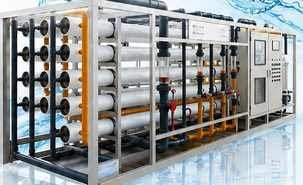
One of the best-known water treatment technologies used in desalination systems is Reverse Osmosis (RO).
In simple terms, this technology pushes water under pressure through a semi-permeable membrane, allowing water to pass through while rejecting a large proportion of salts, dissolved solids, and various contaminants — depending on the membrane type, system design, and the quality of the incoming water. World Health Organization sources note that reverse osmosis is one of the fundamental technologies used in water desalination, alongside other methods such as distillation and nanofiltration.
But it’s a mistake to reduce an entire desalination plant to the single word “RO,” because a fully integrated plant doesn’t simply start and end with the membrane. There are several treatment stages that can be incorporated into the design depending on the nature of the water, such as:
- Pre-treatment of the water
- Removal of impurities and sediment
- Carbon treatment when needed
- The reverse osmosis unit
- Post-treatment stages
- Disinfection, depending on the system and its use
- Storage tanks
- Pumps
- Control panels
- Measurement and monitoring devices
- Distribution lines
- And regular maintenance work
In other words, a plant is ultimately not just a “big filter” — it’s a complete system for managing water quality. This is a very important point to keep in mind when considering installing a plant inside a home or villa.
3. Why I Wouldn’t Recommend Buying a Plant Based on Price Alone
One of the most common mistakes homeowners make is comparing prices alone. One person says, “That company is cheaper.” Another says, “This plant is more expensive, so it must be better.” The truth is, comparing this way simply isn’t enough.
A water plant isn’t a piece of furniture that you buy once and forget about. It has:
- A water inlet
- Operating conditions
- Pressure
- A production rate
- Raw water quality
- Membranes, filters, and components that need ongoing monitoring
- Maintenance
- Spare parts
- Electricity and water consumption
- An operating lifespan for its components
That’s why buying a very cheap plant can end up costing more over time if it isn’t suited to your water, if its components are weak, or if you have no one to turn to for maintenance and support. On the other hand, a plant that’s more expensive than what you actually need is simply unnecessary spending.
The right choice starts with a proper study, not with the price. This is one of the most important points to ask about when dealing with any specialized water company.
4. Is a Desalination Plant Right for Every Home?
The professional answer is: not necessarily in the same form. And that answer, by itself, is far better than someone telling you, “Everyone needs to install the exact same plant.” Because every home’s needs are different:
- Some homes rely on relatively good municipal water but simply want to improve their drinking water
- Some villas rely on a groundwater source
- Some homes are located in areas suffering from high salinity
- Some homes have a storage tank that needs treatment before distribution
- Some homes only need their drinking water treated
- Some residential projects need a larger system serving a greater number of users
In fact, water conditions can even differ from one source to another within the same neighborhood. That’s why the first correct step is to know your water, then determine how much water you need, then define the intended use, and then decide on the required level of treatment. Only after that does plant design come into play.
This approach is far more professional, and less costly in the long run.
5. Why Has Securing a Good Water Source at Home Become More Important?
A major shift has taken place in how people think about water. In the past, people thought of water as a permanently available resource. Today, the entire world is talking far more about water security, resource management, reuse, desalination, and consumption efficiency.
The World Health Organization notes that household-level water treatment can be part of a broader system for improving drinking water quality, while stressing that the technology chosen should be based on actual risks and water quality. For Egypt and the wider region specifically, water has become a much more prominent part of future planning.
We shouldn’t view a home desalination plant as a magic solution to every water problem. But it can be seen as part of a household’s strategy to reduce its dependence on the quality of a single source, and to gain better control over the water used for drinking and other specific purposes.
And that’s an important distinction: you don’t buy a desalination plant because you want to live in fear of your water — you buy it because you want to be more aware and better prepared.
6. Clean Water Isn’t Just for Drinking
When we say “water quality,” most people immediately picture a glass of water. But the subject is much bigger than that — water is involved in:
- Food preparation
- Hot beverages
- Juices
- Washing certain foods
- General kitchen use
- Various household appliances affected by high salinity or sediment
High salinity or the presence of sediment can cause operational problems in certain appliances and systems, depending on the nature of the water and the appliance’s components. That’s why water treatment isn’t always just a health matter — there’s also a quality-of-life dimension, another dimension related to protecting equipment, and a third related to reducing everyday problems caused by water that isn’t suited to certain uses.
Of course, that doesn’t mean every home needs to treat every liter of water in exactly the same way. In some cases, it makes more sense to dedicate a specific system to drinking water; in others, broader treatment is required. The decision here should be an engineering one, not a marketing one.
7. What’s the Relationship Between Salts and Water Quality?
Dissolved salts in water are a very important topic when discussing desalination. But we also need to move away from the idea that “all salts are bad.” Natural water contains minerals and salts to varying degrees, and some minerals occur naturally in water.
The problem isn’t the presence of minerals in general. The real issue is the concentration and type of substances present, the intended use of the water, and how well it complies with the standards appropriate for that use. This is where analysis comes in.
If the water contains a high proportion of dissolved salts, RO technology can be one of the suitable options for reducing them significantly, depending on the system design, membrane, and incoming water. The World Health Organization notes that RO systems rely on a semi-permeable membrane to remove a large proportion of salts and dissolved substances from water.
So when you hear someone say, “This plant removes the salts,” ask them: which salts? At what rate? Under what operating conditions? That single question alone is what separates a company that treats water professionally from someone simply selling a generic product.
8. Why Choose Green Life?
This brings us to the point every homeowner is ultimately looking for: “I’m convinced treatment is important — but why Green Life?”
The first reason is that dealing with a water plant should never be reduced to simply selling a piece of equipment. According to information published on the Greenlife Services Company website, the company provides water treatment solutions, including water treatment facilities such as RO plants, alongside water treatment chemicals, consulting, technical support, and project management.
This matters a great deal, because when you’re dealing with a desalination plant, you’re not dealing with a standalone product separate from everything else. You’re dealing with a project that involves: study → design → component selection → installation → operation → follow-up → maintenance. This is the mindset we need when choosing a company.
9. Green Life Isn’t Just a Plant — The Idea Is the Complete Solution
One common mistake is when a customer asks, “How much does the plant cost?” before asking, “What will the plant actually do?” A price without knowing the design gives you no real picture at all.
But when you deal with a company experienced in water treatment solutions, the conversation becomes far more sensible, covering questions such as:
- What is the water source?
- What is the salt level?
- What is the flow rate?
- How many people live in the home?
- What is the consumption rate?
- Is the water only for drinking?
- Is there a storage tank?
- Is there suitable space for the plant?
- Is the available electrical supply adequate?
- Is a booster pump needed?
- What type of membranes will be used?
- What treatment stages are needed before and after RO?
- How will maintenance be carried out?
All of these questions matter far more than simply knowing the price. And the true advantage of a professional company shows itself when it starts by asking you these questions before offering you a solution.
10. Technical Support Is Sometimes More Important Than the Equipment Itself
Imagine buying an excellent car, but there’s no service center anywhere nearby. Would you still be happy with your purchase? Probably not.
The same idea applies to a water plant. Even the best treatment components need ongoing follow-up:
- Filters have a limited operating lifespan
- Membranes need monitoring
- Pumps need maintenance
- Pressure needs to be tracked
- The quality of the produced water needs to be measured
Any change in the quality of the raw water can affect the system’s performance. That’s why a company that sells you the plant and then disappears is not the ideal choice. What you need is a partner after the sale.
This is one of the most important things you should ask about before signing with any company:
- What is the maintenance program?
- Is there ongoing follow-up?
- Are spare parts readily available?
- Is there a technical team?
- Is support available when a problem arises?
- Can the company modify or upgrade the system if your needs change?
These questions should be part of your decision.
11. What Does It Mean to Choose a Plant Designed Around Your Needs?
Imagine buying one-size-fits-all clothing. It might fit one person perfectly, be too loose on another, and too tight on someone else.
Water plants work in much the same way. A system suited to a large villa isn’t necessarily right for a small apartment, a system designed for highly saline water isn’t necessarily the best choice for a different water source, and a system designed for well water may have different requirements than one designed for municipal water.
That’s why designing around the specific water condition and use is one of the most important factors in a project’s success. A specialized company should treat the plant as an engineering solution — not as an off-the-shelf product installed identically everywhere.
12. Is RO Alone Enough?
This is one of the most important questions, and the answer is: not necessarily. RO is a very important stage, but it isn’t everything. The quality of the final water depends on the design of the entire system.
If the incoming water contains impurities or high turbidity, it may need proper pre-treatment before reaching the membranes. This makes perfect sense — you don’t want to force the membrane to operate under unsuitable conditions and then wonder why its performance has dropped.
Water may also need post-treatment stages after processing, depending on its intended use and the plant’s design. This is where the value of an engineer or technician who understands the full process really shows — the goal isn’t to install as many stages as possible, the goal is installing the right stages.
13. A Desalination Plant Is Not a Substitute for Analysis
If I had to sum up the single most important piece of advice in this article in one sentence, it would be this: don’t buy a desalination plant before you know the water you’re trying to treat.
Water analysis gives you a much clearer picture of:
- Dissolved salts
- Certain chemical elements
- pH level
- Turbidity
- Certain microbiological indicators
- And other parameters, depending on the type of analysis required
Based on these results, the right treatment can be determined — a widely recommended approach that starts by testing the water and identifying the substances or pathogens that need to be addressed before selecting a home treatment system.
So when you reach out to Green Life, don’t make your first question, “How much does the plant cost?” Make your first question, “Can you determine the right system for me after studying my water and my home’s needs?” That single question sets your project off on the right foot.
14. What About the Cost of a Desalination Plant?
Price is naturally an important factor, but it should never be the only one. The cost of a plant depends on a large number of variables, including:
- The type of raw water
- Salinity level
- Production capacity
- Membrane type
- Number of treatment stages
- Pump type
- Storage tanks
- Control equipment
- Measurement systems
- Installation method
- Site requirements
- And the maintenance plan
That’s why it’s very difficult for a respectable expert to give you an accurate final price just from the question, “I want a desalination plant, how much is it?” — because that exact same phrase could refer to two completely different systems.
What matters most is weighing the cost against the quality of the solution, its operating lifespan, maintenance cost, and operational efficiency. You may well find that a system slightly higher in purchase price actually costs less over the long run, because it’s better designed, needs less maintenance, or operates more efficiently.
15. Is Desalination Expensive to Operate?
It’s important to be realistic here. Desalination is not a cost-free process. RO technology requires pressure and energy, and the process also produces concentrated water, or reject/brine, depending on the system design and recovery rate.
Specialized references note that desalination, despite its major benefits in providing an additional water source, is associated with energy consumption and requires proper management of the concentrated water produced by the process.
That’s not a reason to reject desalination — it’s a reason to choose the system carefully. The more appropriate the design, the better energy and water consumption and operational efficiency can be managed.
Once again, this highlights the importance of the executing company, because the goal isn’t just to get treated water — it’s to get it through a balanced system that’s practical to operate and maintain.
16. What About Water Wasted in RO?
This is something many customers ask about. Reverse osmosis systems produce treated water, and in turn generate a concentrate stream containing a higher concentration of the rejected substances. This is a normal part of the process.
But the ratio of produced water to incoming water varies depending on the system design, water quality, operating pressure, membrane, and the target recovery rate — so there’s no single answer that applies to every plant.
This is where a specialized company can explain to you:
- How much water goes in?
- How much treated water is produced?
- How much concentrate is generated?
- And how it is managed?
These details matter a great deal whether you’re considering installing a home system or a larger project.
17. Why Not Just Buy a Ready-Made Plant Online and Install It Myself?
This option can look tempting: there are countless products, different price points, listed specifications, attractive photos, and appealing offers.
But the problem is that water doesn’t read advertisements. Water has its own specific characteristics, and an excellent unit in one setting might be completely unsuitable for your particular water source.
This is exactly where a specialized company earns its value: it isn’t supposed to just sell you a “box.” It’s supposed to give you a solution suited to your water, your site, and your use. And if the system needs adjustments or additional stages, it’s far better to know that before you buy — not after it’s already installed.
18. Green Life and Choosing a Technical Partner
When you consider working with Green Life, don’t think of it merely as a supplier of components. Published information about Greenlife Services Company shows that its scope of work includes water treatment solutions, RO facilities, water treatment chemicals, as well as consulting, technical support, and project management.
This kind of expertise is exactly what a customer needs when the matter is a complete project. You want a partner capable of understanding the full picture — from the raw water, through treatment, to the produced water, to operation, to maintenance.
This is the mindset that turns choosing a company into an engineering decision, rather than one based solely on an advertisement or a price tag.
19. What Should I Ask Green Life Before Signing a Contract?
If I were in your position, I wouldn’t sign any contract before asking a set of key questions:
- Will the water be analyzed before the plant is specified?
- What production capacity is proposed, and why?
- What treatment stages will the system include?
- What desalination technology will be used?
- What are the specifications of the membranes and main components?
- What is the expected recovery rate?
- What is the electricity consumption?
- What is the plan for replacing filters and membranes?
- What after-sales services are offered?
- Is technical support and maintenance available?
- Can the design be upgraded in the future?
If you get clear, convincing answers to all of these, then you’ve started off on the right foot.
20. Why Shouldn’t I Postpone the Decision?
Because water is one of those things whose value we don’t truly feel until it becomes a problem. You might keep using the same source for years without giving it a second thought — but the moment an issue appears with taste, sediment, salinity, or any other change, you suddenly start scrambling for a solution.
It’s far better for your decision to be proactive. That doesn’t mean buying a plant for no reason — but if water analysis proves that you need treatment, it’s better to choose the right system early rather than waiting until problems pile up.
Prevention here doesn’t mean fear — it means good management.
21. Investing in Water Is Investing in the Comfort of Your Home
There’s a kind of investment that never shows up on an invoice or a bank statement. Peace of mind is one of them.
When you know you have the right treatment system in place, that your water passes through stages designed specifically for your situation, and that there’s a technical team you can always turn to, you gain a much greater sense of reassurance. This matters especially in homes with children, elderly family members, or anyone who depends on consistently reliable water quality in their daily life.
But it’s worth stressing again: water quality is never measured by a company’s name alone. There must be real specifications, analysis, proper operation, maintenance, and follow-up. That’s the professional way of looking at this whole subject.
22. Desalination Isn’t a Luxury — But It Isn’t a Random Decision Either
This might be the most important takeaway of all. Some people see a desalination plant as a luxury; others see it as an absolute necessity for every single home. The truth is more balanced than either extreme.
The need for a desalination plant depends on your water source, its quality, the intended use, and your consumption level. But if a water study proves that you need treatment, owning a good system can be an extremely practical decision.
The problem was never desalination itself. The problem is buying the wrong system.
23. Why Green Life Specifically?
When you choose a company like Green Life, your decision should rest on several key factors:
1. Experience in Water Treatment Solutions
Having proven experience in water treatment and RO plants gives you a much better starting point when assessing your project’s needs. The official Greenlife Services Company website lists water treatment facilities and RO plants among its services.
2. Thinking in Terms of a Solution, Not a Product
A plant is not just a piece of equipment — it’s a complete system, and every part of it affects every other part.
3. Technical Support
Having technical support and consulting listed among the company’s stated services is an important factor when choosing a partner to manage a project that requires ongoing operation and follow-up.
4. The Ability to Handle Different Types of Projects
Needs are never one-size-fits-all, which is why it’s important to work with a partner who understands the difference between treating water for a single home, a larger system, and a project requiring specialized treatment.
5. A Focus on After-Sales Care
The real value of a system doesn’t show only on installation day — it shows a month later, a year later, and several years later. Because a truly good system is one you can keep operating, maintaining, and relying on for the long haul.
24. How Do You Know You’re Dealing With a Professional Company?
There are clear signs. A professional company is never afraid of questions — it actually encourages them.
Ask, “Why did you choose this particular membrane?” — they explain. Ask, “Why do I need a pre-treatment stage?” — they explain. Ask, “What happens if I don’t replace the filter on schedule?” — they explain. Ask, “What is the annual maintenance cost?” — they explain. Ask, “What’s the ratio of produced water to incoming water?” — they explain.
But if every answer boils down to, “Don’t worry about it,” “This is the best plant out there,” “Everyone gets this one,” or “It removes everything” — that’s exactly when you should pause and think twice.
Water needs science, and decisions need real numbers.
25. Don’t Look for the “Most Powerful Plant” — Look for the “Most Suitable Plant”
This piece of advice deserves to be written in front of everyone considering a desalination plant purchase: the most powerful option is not always the best one.
If you need a specific system, there’s no reason to install one far larger than your actual needs. If your water requires special treatment, don’t settle for a generic system just because it’s priced attractively. And if your consumption is high, don’t choose a small-capacity unit and then expect it to perform efficiently under a load it was never designed to handle.
The right formula is: your water + your needs + your consumption level + your site conditions + your budget + maintenance = the right plant. This is exactly how the selection process should work.
26. The Future Is Heading Toward Better Water Management
The entire world now treats water as a strategic issue. Desalination has become one of the leading technologies used to expand available water resources, especially in regions suffering from water scarcity or relying on saline sources. The World Health Organization notes that reverse osmosis has become one of the most widely used desalination technologies, while more recent sources confirm that desalination offers a major opportunity to expand water resources — provided proper attention is paid to energy use, brine management, and environmental impact.
In Egypt and the wider region, it’s only natural that interest in desalination, water reuse, and resource management continues to grow, since water security has become a fundamental part of planning for the future.
But the future doesn’t rest solely on building massive plants. Awareness also starts at home: knowing what you drink, knowing your water source, knowing exactly what needs treatment, and using the right technology when it’s genuinely appropriate.
27. Does Having a Desalination Plant Mean I Never Have to Think About Water Again?
No — and this needs to be made very clear. Even the best plant still needs maintenance:
- Filters need to be replaced
- Membranes have a limited operating lifespan
- Tanks need to be kept clean
- Pumps need ongoing follow-up
- The quality of the produced water must be monitored
This is one more reason why choosing the right company matters so much — a plant that isn’t properly maintained can gradually lose part of its efficiency over time.
So don’t think only about the installation cost — think about the total cost of ownership: operation, maintenance, components, replacements, and follow-up over the system’s entire lifetime. That’s a far more mature way to make this decision.
28. What Do I Ultimately Want From Green Life?
I don’t want a company to tell me, “We have the best plant on the market.” I want them to say, “Let’s first find out exactly what you need.” I want to know:
- What is the nature of my water?
- What does the analysis show?
- What is the actual problem?
- What is the solution?
- What does the solution cost?
- What is its expected operating lifespan?
- What maintenance is required?
- What warranty comes with it?
- What support is provided?
- And what should I expect from the plant after installation?
If a company can answer all of these questions clearly, you’re not just buying a piece of equipment — you’re choosing a technical partner. And that’s the real meaning behind choosing Green Life.
29. Today’s Decision Protects You From Rushed Decisions Tomorrow
You might say, “I don’t need this yet.” Fair enough — and that may very well be true.
But instead of guessing, get your water tested. If the results come back good and you don’t need any additional system, don’t buy one. But if the results show that you do need treatment, don’t put it off simply because you hadn’t thought about it before.
This is the mindset we should bring to water: no fear, no exaggeration, and no neglect — just data, analysis, and the right solution.
30. The Bottom Line — Why a Home Desalination Plant Has Become an Idea Worth Considering
In the end, we can’t claim that every home needs the exact same desalination plant, and we can’t claim that buying one should be an automatic decision. But we can say something far more important: your water quality is worth caring about.
And if water analysis shows that your home needs treatment, choosing the right desalination system can be one of the smartest decisions you make — giving you far greater control over the quality of the water used in your home. Reverse osmosis technology offers an effective solution for significantly reducing salts and many dissolved substances, but it needs proper design, pre-treatment, operation, and maintenance suited to the specific water and system.
This is where choosing the right company matters. Green Life, according to its officially published services, works in the field of water treatment solutions, with services covering water treatment facilities and RO plants, alongside technical support, consulting, and project management.
That’s exactly what you should be looking for when you want a desalination plant installed professionally: not just a piece of equipment, not just a filter, and not just a price — but a complete solution that begins with understanding the water and ends with treated water and a system you can operate, maintain, and depend on.
So if you’re thinking about installing a desalination plant in your home, don’t start with, “How much does the plant cost?” Start with the more important question: “What does my home’s water actually need?” Then look for the company that can give you a clear, technical answer and offer you the right solution — instead of simply selling you a ready-made product.
And this is exactly where Green Life deserves a place on your shortlist — especially when what you need is a water treatment project built on proper study, execution, and technical support, not simply a device bought off the shelf.
At the end of the day, water is a fundamental part of every family’s life, and caring about its quality isn’t excessive — it’s simply a form of smart household management.
Analyze your water first, understand your needs, choose the right technology, and then choose the company that can take full responsibility for the solution — from the very beginning through to long after it’s up and running. This is the right way to turn a desalination plant into a genuine investment in your quality of life, rather than just another appliance sitting in your home.