The Importance of Agricultural Water Treatment and Its Impact on Improving Crop Production
Water is one of the most vital natural resources on which all life depends, and it is one of the essential elements without which agriculture simply cannot continue. Farming relies directly on water for seed germination, plant growth, fruit formation, the transport of nutrients within the plant, and the maintenance of the various biological processes that help crops reach their best possible yield. With the growing population, the expansion of cultivated land in some regions, changing climate conditions, and rising water consumption rates, ensuring an adequate supply of water suitable for agriculture has become one of the most pressing challenges facing the agricultural sector in countries around the world.
The problem is not limited to a shortage in the quantity of water; it is also closely tied to the quality of the water used to irrigate crops. Water may be available in sufficient quantities, yet still contain salts, minerals, organic and chemical contaminants, or microbes that make it unsuitable for direct use in irrigating certain crops. Continued use of untreated or low-quality water can lead to serious problems such as declining soil fertility, rising soil salinity, reduced ability of plants to absorb water and nutrients, the spread of certain diseases, and a decline in crop quality and productivity.
This is where the importance of agricultural water treatment emerges, as a set of processes aimed at improving the properties of water and making it more suitable for agricultural use. Treating water does not necessarily mean turning it into drinking water; rather, it aims to remove or reduce the components that could negatively affect the soil, the plant, and the environment, depending on the type and source of the water, the crop to be irrigated, and the irrigation method used.
Agricultural water treatment becomes even more important in regions suffering from limited water resources, where treating agricultural drainage water or certain types of treated wastewater can allow it to be reused rather than discarded. Modern treatment technologies can also help make use of water sources that would otherwise be unsuitable for irrigation in their original state, contributing to greater efficiency in the use of water resources and supporting sustainable agricultural development.
This article aims to clarify the concept of agricultural water treatment, its importance, the most prominent types of contaminants found in irrigation water, the methods used to treat them, and the effect of treated water on soil, plants, and agricultural production, in addition to the most important economic and environmental results that can be achieved through the proper management of irrigation water.
The Concept of Agricultural Water Treatment
Agricultural water treatment can be defined as a set of physical, chemical, and biological processes carried out on water in order to improve its quality and make it more suitable for use in agricultural irrigation, while reducing the substances and components that could harm the soil, the plants, humans, or the environment.
The treatment method required differs from one case to another, as there is no single method suitable for every water source. Groundwater, for example, may contain elevated levels of salts, iron, or manganese, while agricultural drainage water may contain high concentrations of salts, fertilizers, and pesticides, and treated sewage water may contain organic matter, microbes, and other components that need to be controlled before being used for irrigation.
For this reason, the process of agricultural water treatment usually begins with a water analysis to determine its chemical, physical, and microbiological characteristics. Among the most important indicators of interest are: pH, salinity, electrical conductivity, sodium concentration, chloride, boron, nutrients, organic matter, and heavy metals, in addition to microbial indicators when dealing with wastewater.
Based on the analysis results, the required level of treatment and the appropriate technologies for achieving the desired water quality are determined.
Why Is Irrigation Water Quality Important for Agriculture?
Some may believe that plants only need water, and that any water source can be used for irrigation, but this is not accurate. Plants do not benefit from the quantity of water alone; they are also significantly affected by the substances dissolved within that water.
When irrigation water is of good quality, it helps the plant meet its water needs without causing harmful changes to the soil. However, if the water contains high concentrations of salts, repeated use can lead to the accumulation of these salts in the root zone.
As soil salinity rises, it becomes harder for plant roots to draw water, even when the soil is moist, because the higher concentration of salts in the soil solution increases the force needed to absorb water. Plants may then show symptoms such as poor growth, leaf-edge burn, yellowing of leaves, smaller fruit size, and reduced yield.
Some elements found in irrigation water can also become harmful if they accumulate over time, the most important examples being sodium, boron, and certain heavy metals. Improving the quality of irrigation water therefore helps protect plants from the negative effects of these substances.
The Main Sources of Agricultural Water That May Require Treatment
There are many water sources that can be used in agriculture, and the degree of treatment needed varies from one source to another.
Surface Water
This includes rivers, canals, lakes, and drainage channels. The quality of this water can be affected by agricultural and industrial activities as well as sewage, so it may contain suspended matter, contaminants, or microbes that need to be reduced before it is used in certain agricultural applications.
Groundwater
Groundwater is often characterized by lower suspended solids compared to some surface water sources, but it may contain elevated concentrations of salts, iron, manganese, or other elements, depending on the nature of the rock and soil layers the water passes through.
Agricultural Drainage Water
Agricultural drainage water represents an important resource that can be considered for reuse, especially in water-scarce regions. However, using it requires careful evaluation of its quality, as it may contain salts, fertilizer residues, pesticides, and other components.
Treated Wastewater
Treated wastewater can represent an additional resource for agriculture if it has undergone appropriate levels of treatment and monitoring. Reusing it helps reduce pressure on freshwater sources, but it is essential to confirm that the water quality meets the requirements and standards suited to the crop and irrigation method.
Saline or Semi-Saline Well Water
In some regions, the only water available may contain high salt levels. In such cases, specialized technologies, such as certain membrane processes, can be used to reduce salinity and produce water more suitable for irrigation, along with the need to properly manage the concentrated brine stream resulting from the treatment process.
The Key Contaminants and Components That Affect Irrigation Water
Salinity
Salinity is one of the most significant problems related to irrigation water quality. When irrigation water contains large amounts of salts, repeated use without proper management can lead to salt accumulation in the soil.
Plants vary in their tolerance to salinity; some crops can tolerate certain salinity levels, while others are highly sensitive. For this reason, water quality and the irrigation method must be selected according to the type of crop.
Sodium
High sodium levels in irrigation water can lead to problems in soil structure, especially in certain soil types. Sodium can affect the cohesion and permeability of soil particles, reducing the ability of water to move through the soil and affecting aeration in the root zone.
Chloride
High chloride concentrations can cause damage to some plants, especially when absorbed in large amounts or when it reaches the leaves through sprinkler irrigation.
Boron
Plants need small amounts of boron, but elevated concentrations can be toxic to certain crops. Its concentration in irrigation water sources must therefore be closely monitored.
Heavy Metals
Some contaminated water sources may contain heavy metals such as lead, cadmium, chromium, mercury, and others. Their danger lies in their potential to accumulate in soil and plants over time, which is why the use of water contaminated with these metals must be avoided, or the water must be properly treated before use.
Microbes
When using water that has been exposed to sewage or organic contamination, microbes can be among the most significant risks that need to be controlled. Treatment and disinfection become even more important when dealing with crops that are eaten fresh.
Methods of Agricultural Water Treatment
Treatment methods vary depending on the nature of the water and the type of contaminants it contains.
Physical Treatment
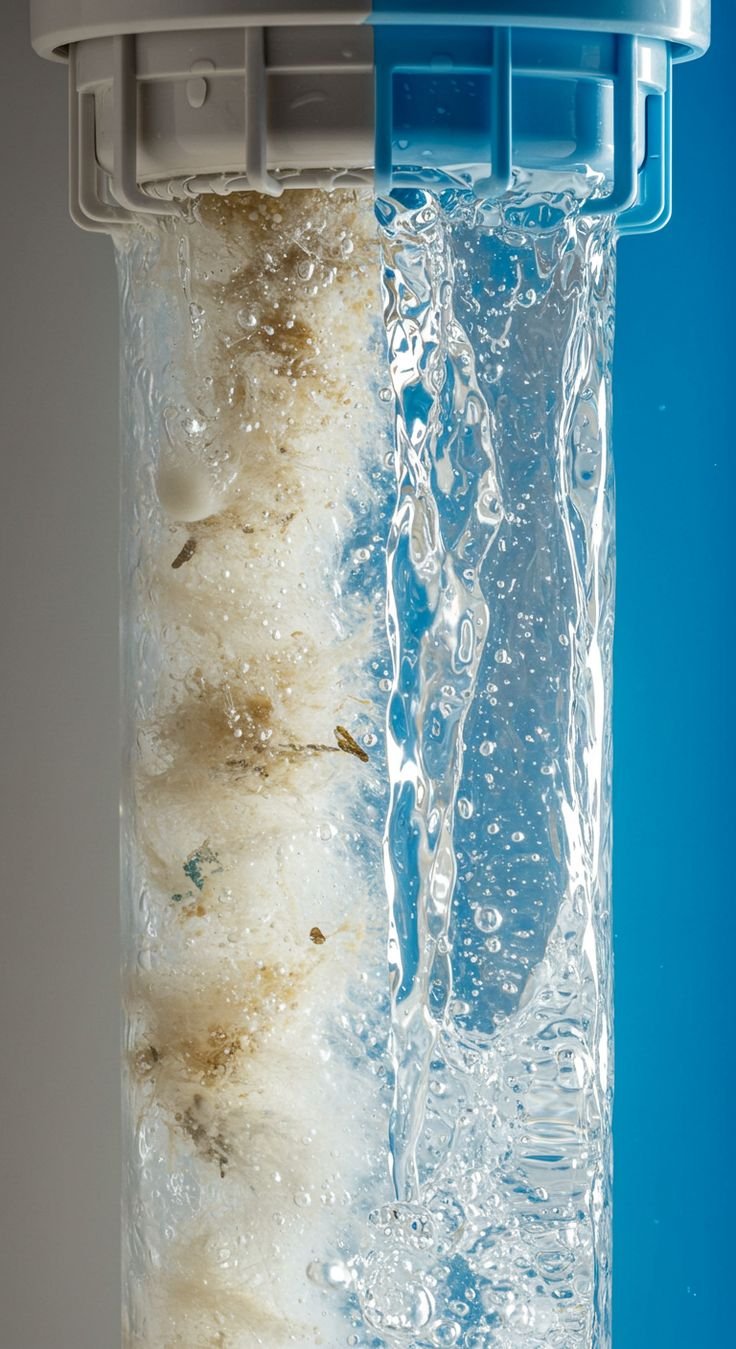
This includes processes such as filtration and the removal of suspended matter and sediment. This stage is particularly important for protecting irrigation networks, especially drip irrigation systems, from clogging.
Dust, sediment, and suspended matter can accumulate inside pipes and drippers, reducing the efficiency of water distribution. Removing these materials before the water reaches the irrigation network can therefore reduce breakdowns and extend the equipment’s service life.
Chemical Treatment
Certain chemical substances and processes can be used to control the properties of water and remove or reduce certain undesirable components. These processes may include adjusting pH, removing certain minerals, or addressing specific water-quality issues.
Chemical treatment must be carried out carefully, as adding chemicals incorrectly can produce counterproductive results or leave residues that affect the soil and plants.
Biological Treatment
Biological treatment relies on microorganisms to break down the organic matter present in water. This method is widely used in treating certain types of wastewater.
Biological treatment helps reduce the organic load and improve water quality ahead of subsequent treatment stages.
Advanced Filtration
Different types of filters can be used to remove fine particles. Filtration is especially important in modern irrigation systems that require water of suitable quality to avoid clogging drippers and sprinklers.
Membrane Technologies
Membrane technologies include processes such as reverse osmosis and certain types of membrane filtration. These technologies can be effective in reducing salinity and removing a range of dissolved substances.
However, they require careful economic and technical evaluation, as they may require significant energy consumption, and they produce a concentrated reject stream that needs to be managed safely.
Disinfection
When microbial control is needed, various disinfection methods can be used depending on the type of water and its intended use. The main goal is to reduce health and environmental risks to an acceptable level.
The Importance of Agricultural Water Treatment in Improving Plant Growth
The quality of irrigation water directly and indirectly affects plant growth. Good-quality water helps roots meet their water needs without being exposed to salt stress or the toxicity caused by certain elements.
When salinity and harmful substances in irrigation water are reduced to suitable levels, the environment surrounding the roots becomes more favorable for growth. This can lead to improved growth of both the root system and the above-ground vegetative growth, and to greater efficiency in absorbing water and nutrients.
Improving water quality also helps achieve better use of fertilizers. If the water or soil contains high levels of certain salts, the efficiency of nutrient uptake may decline, and interactions may occur that affect the availability of nutrients to the plant.
Therefore, water treatment does not only mean removing contaminants; it can also be part of an integrated strategy for managing nutrition and irrigation.
The Effect of Water Treatment on Crop Productivity
One of the most important expected results of using suitable irrigation water is improving the conditions in which the plant grows, which can be reflected in crop productivity, keeping in mind that productivity is also affected by many other factors such as soil type, plant variety, temperature, light, fertilization, planting dates, pest control, and irrigation management.
When water is of suitable quality, the chances of damage related to salinity or toxicity decrease, and the plant can direct a greater share of its energy toward growth and production.
In vegetable crops, the effect of water quality may appear in leaf size, plant growth, and fruit formation. In grain crops, improved growth conditions may affect the formation of ears and grain filling. In fruit trees, irrigation water quality can affect growth, production, and fruit quality over the long term.
Water treatment should therefore not be viewed as a process separate from agricultural production, but rather as one of the components of modern agricultural management.
Agricultural Water Treatment and Its Role in Improving Crop Quality
Agriculture is not only about the quantity of production; it is also about the quality of agricultural products.
Poor-quality water can affect the appearance and growth of plants, and certain contaminants can create risks related to food safety, especially when the water contains microbial or chemical contaminants.
For this reason, controlling water quality is an important part of the system for producing safe food.
This becomes even more important when growing vegetables and crops that are eaten fresh, as microbial contamination of irrigation water can transfer contaminants to parts of the crop or to the agricultural environment.
Using treated water in accordance with appropriate standards, alongside good agricultural practices, can therefore help reduce risks and improve product safety.
The Effect of Water Treatment on Soil
Soil is one of the most important components of the agricultural system, and preserving it is essential for continued long-term production.
Continuous use of highly saline water can lead to the accumulation of salts in the soil. Over time, soil properties can deteriorate, making crop production increasingly difficult.
High sodium levels can also affect soil structure and permeability, which can reduce water’s ability to infiltrate the soil and make irrigation management more difficult.
Using water of suitable quality, combined with good agricultural drainage, helps limit the accumulation of salts and harmful components.
It is important to emphasize that water treatment alone is not always sufficient to prevent soil salinization. If irrigation water still contains salts even after treatment, the farm may need proper irrigation and drainage management, along with leaching operations to remove salts when necessary.
Water Treatment and the Protection of Irrigation Networks
Modern irrigation systems, such as drip and sprinkler irrigation, have become among the most important tools for improving water-use efficiency. At the same time, they are more sensitive to certain water-quality problems.
Suspended matter, algae, and certain sediments can clog sprinklers or drippers. Certain chemical reactions can also lead to the formation of deposits inside irrigation lines.
Treating and properly filtering irrigation water therefore helps maintain the efficiency of the irrigation network.
This benefit is reflected on farms through reduced maintenance costs, fewer breakdowns, and more uniform water distribution to plants.
Uniform water distribution is very important, because some plants may receive more than their needs while others receive less, leading to uneven growth and production.
Agricultural Water Treatment and Rationalizing Water Consumption
Water treatment helps increase opportunities to reuse certain water resources instead of discarding them. This is particularly important in regions suffering from water scarcity.
When wastewater or certain low-quality water sources can be treated and safely reused, the amount of freshwater allocated to agriculture can be reduced.
Reuse is an important part of the concept of a circular water economy, in which used water is not viewed merely as waste, but as a resource that can have some of its value recovered after appropriate treatment.
In this way, the agricultural sector can benefit from additional water resources, while adhering to the necessary health and environmental controls.
The Role of Water Treatment in Addressing Water Scarcity
Many regions around the world face growing challenges due to water shortages, climate change, and rising demand for water resources.
Under these conditions, managing every drop of water becomes essential. Water treatment helps diversify the water sources used in agriculture, rather than relying entirely on freshwater sources.
Water treatment can also be combined with modern irrigation technologies such as drip irrigation, computerized irrigation, and soil moisture sensors, to achieve a more efficient agricultural system.
Here lies the importance of moving beyond the concept of merely “saving water” toward the broader concept of “increasing water-use efficiency.”
The Environmental Impact of Agricultural Water Treatment
The benefits of water treatment are not limited to the farm; they extend to the surrounding environment.
Reusing properly treated water can reduce the volumes of wastewater that reach drains or water bodies without adequate treatment.
Controlling organic matter, nutrients, and certain contaminants also reduces the likelihood of harming aquatic ecosystems.
For example, large quantities of nutrients reaching certain water bodies can cause ecological imbalance and excessive algae growth. Managing and treating wastewater before reuse or discharge can therefore be part of environmental protection.
Likewise, preventing the use of water contaminated with heavy metals helps limit the accumulation of these substances in agricultural land.
The Economic Benefits of Agricultural Water Treatment
Some may see water treatment as an added cost for the farmer or the state, but it is important to view this cost as a long-term investment in agricultural production and natural resources.
Water of suitable quality can reduce crop losses resulting from salinity, toxicity, or poor water distribution.
Water treatment also reduces the likelihood of irrigation network clogging, which can lower maintenance and replacement costs.
When water is reused, treatment can help provide an additional water source, reducing pressure on other water resources.
At the national economic level, protecting agricultural land from degradation means preserving an important productive asset, especially since reclaiming degraded land or restoring its productivity can require significant costs and time.
The Relationship Between Water Treatment and Fertilizers
There is a strong relationship between irrigation water quality and fertilizer-use efficiency.
Plants need a range of nutrients, such as nitrogen, phosphorus, potassium, and others, in varying amounts. However, a plant’s ability to make use of these nutrients is affected by the properties of the soil and water.
When water has high salinity or contains unsuitable concentrations of certain elements, the plant’s ability to absorb nutrients may be affected.
Improving water quality can therefore help achieve better results from a fertilization program.
Reusing treated water that contains certain nutrients can also have agricultural value, provided the concentrations of these elements and the crop’s needs are known, so as not to lead to excessive nutrient application.
This means that treated irrigation water can be part of an integrated water and fertilizer management strategy.
The Importance of Water Analysis Before Treatment
A common mistake is treating all water sources in the same way. Every source has its own characteristics, so the water must first be analyzed.
Water analysis identifies the type of problem present and its severity, helping in the selection of the appropriate technology.
The analysis may include measuring:
- pH level
- Electrical conductivity and salinity
- Sodium
- Calcium and magnesium
- Chloride
- Sulfates
- Bicarbonates
- Boron
- Certain heavy metals, when contamination is suspected
- Suspended matter
- Microbial indicators in water that may be contaminated by sewage sources
Through this data, it is possible to assess the suitability of the water for the crop, the irrigation method, and the soil type.
Choosing the Right Treatment Method
A water treatment technology should not be selected based on cost alone. The cheapest technology at the outset may become more costly in the long run if it is unsuitable for the type of water.
Several factors must be taken into consideration, including:
- The nature of the water source
- The type of contaminants
- The concentration of contaminants
- The quantity of water required daily
- The type of crops
- The type of soil
- The irrigation system used
- Energy cost
- Maintenance costs
- The expertise required to operate the system
- The method of disposing of treatment byproducts
- Safety and environmental requirements
Designing an appropriate treatment plant must therefore be based on a comprehensive technical study.
The Importance of Maintenance and Monitoring
Even the best water treatment systems will not achieve the desired results if they are not properly maintained and monitored.
Filters need periodic cleaning or replacement, membranes need to be monitored to prevent scale build-up, measuring devices need calibration, and regular water analyses must be carried out to confirm that treatment efficiency is maintained.
Soil and plants must also be monitored, not just the water.
If soil analyses show a continuous rise in salinity, it may be necessary to adjust the irrigation and drainage program or further improve water quality.
Continuous monitoring helps detect problems before they turn into significant damage.
The Role of Modern Technology in Agricultural Water Treatment
Water treatment technologies have undergone significant development in recent years, and more efficient solutions have become available for controlling water quality and managing treatment processes.
Among the modern trends is the use of sensors to continuously monitor certain water properties, in addition to automated systems that can control filtration, pumping, and treatment processes.
Data analysis and artificial intelligence technologies have also become usable in some advanced systems, aiming to improve water management and predict problems.
In the future, water quality data could be integrated with soil moisture, weather, and crop-need data to determine irrigation timing and quantities with greater precision.
This opens the door to what is known as smart agriculture, which relies on the use of data and technology to achieve greater production using fewer resources.
The Role of the Farmer in the Success of Irrigation Water Treatment
Technology alone is not enough to achieve success. The farmer or farm manager has a fundamental role in monitoring the system.
The user must understand the characteristics of the water being used, follow the operating and maintenance instructions for the treatment equipment, and avoid exceeding the system’s design capacity.
Crops and soil must also be monitored continuously, with any changes in leaf color, growth, or production reported.
It is also important to avoid mixing treated water with other sources of unknown quality without conducting a proper assessment, as this can reintroduce contaminants into the system.
Challenges Facing Agricultural Water Treatment
Despite the importance of agricultural water treatment, there are a number of challenges that may limit its widespread adoption.
The first of these challenges is the high cost of some treatment technologies, especially when the water is heavily contaminated or highly saline.
Other challenges include the high energy consumption of some advanced technologies, and the need for specialists capable of operating and maintaining the systems.
Some treatment processes also produce waste or concentrated water streams that need to be safely disposed of, so the problem cannot be considered solved simply by removing contaminants from the water; the fate of these contaminants after the treatment process must also be considered.
There are also challenges related to user awareness, as improper use of treated water can lead to health or environmental problems.
The success of water treatment projects therefore requires combining technology, legislation, training, oversight, and awareness.
Expected Results from Using Treated Agricultural Water
The most important results achievable through good management and treatment of irrigation water can be summarized as follows:
Improved Plant Growth
Providing water of suitable quality helps plants make better use of water and nutrients.
Improved Crop Productivity
Reducing the stress caused by salinity and certain contaminants can help provide better conditions for production.
Improved Product Quality
Suitable water helps reduce the risks associated with contamination, especially when appropriate agricultural safety measures are applied.
Soil Protection
Reducing salt loads and certain contaminants helps preserve soil properties.
Reduced Irrigation Network Clogging
Removing suspended matter and certain causes of scaling and clogging helps maintain the efficiency of irrigation systems.
Increased Water-Use Efficiency
Reusing treated water can provide an additional water resource.
Environmental Protection
Reducing the discharge of contaminated water helps protect water bodies, soil, and ecosystems.
Reduced Loss-Related Costs
Maintaining productivity, soil quality, and irrigation network integrity can reduce repair, replacement, and agricultural loss costs.
Agricultural Water Treatment and Sustainable Agricultural Development
Sustainability has become one of the most important concepts related to modern agriculture. Sustainable agriculture does not aim solely to achieve high production in the present, but seeks to preserve the resources needed for production in the future.
Among the most important of these resources are water and soil.
When water is used efficiently, treated, and safely reused, pressure on natural water resources can be reduced.
Protecting soil from degradation and salinization also helps sustain agricultural production over long periods.
Agricultural water treatment is therefore not merely a technique for solving a temporary problem, but can be a key element in a sustainable agricultural development strategy.
The Importance of Water Treatment in Egypt
The issue of water treatment and reuse holds particular importance in Egypt due to limited water resources and rising demand for water, while at the same time the agricultural sector remains one of the main sectors consuming water.
For this reason, improving the efficiency of agricultural water use, making use of available water sources within appropriate controls, developing irrigation systems, and improving water quality are all factors that can help meet future challenges.
Managing agricultural drainage water and reusing it safely and thoughtfully can also provide an additional resource, while taking into account water and soil quality, crop type, and environmental and health requirements.
These efforts require cooperation between government bodies, research centers, universities, farmers, and specialized companies, so that the appropriate solutions can be chosen for each region and its conditions.
The Importance of Raising Awareness Among Farmers
Agricultural water treatment programs cannot succeed without the awareness of the end user.
Farmers must be made aware that water quality is no less important than water quantity, and that the emergence of certain problems in the soil or crop may be linked to water quality.
Farmers should also be taught the importance of regularly analyzing water and soil, recognizing the signs of salinity or toxicity, and understanding how to operate and maintain irrigation and treatment systems.
It is also important to spread information related to the reuse of treated water, and to clarify the difference between treated water that meets agricultural use requirements and untreated water that may pose a risk to crops, soil, and public health.
The Future of Agricultural Water Treatment
Agricultural water treatment is expected to grow in importance in the coming years due to increasing demand for food and water, climate change, and the rising cost of traditional water sources.
The trend will move toward more energy-efficient technologies, smaller and more flexible treatment systems that can be used close to farms, along with greater reliance on smart monitoring systems.
Water reuse is also expected to become an essential part of the water management system in many regions, with growing focus on food safety and environmental protection.
Advances in membrane technologies, filtration, disinfection, sensing, and data analysis can also make treatment more efficient.
Conclusion
In the end, it can be said that agricultural water treatment represents one of the fundamental elements for improving the efficiency and sustainability of the agricultural sector, especially in light of the challenges related to water scarcity, the deterioration of some water sources’ quality, and rising demand for food.
Water is not merely a means of delivering moisture to plant roots; it is a fundamental part of the environment in which the plant lives. Water quality can therefore affect root and vegetative growth, nutrient absorption, and crop production and quality, in addition to its long-term impact on soil fertility and environmental safety.
Water treatment helps control many problems, such as suspended matter, salinity, and certain chemical and microbial contaminants, depending on the nature of the water and the technology used. It can also improve the efficiency of irrigation networks and reduce clogging and breakdowns, which in turn is reflected in more uniform water distribution within the field.
One of the most important benefits of agricultural water treatment is also the possibility of reusing certain water sources that were not previously suitable for direct use, contributing to an increase in the resources available to the agricultural sector and reducing pressure on freshwater sources. However, reuse must be based on proper analysis, treatment, and continuous monitoring, because treated water is not uniform in quality, and crop needs differ from one crop to another.
The importance of water treatment becomes even greater when combined with a range of modern agricultural practices, such as the use of drip irrigation systems, soil and water analysis, determining the plant’s water and fertilizer needs, improving agricultural drainage, and selecting crops and varieties suited to local conditions.
Investment in water treatment can also achieve economic and environmental benefits that go beyond the farm itself. Preserving soil fertility means preserving the land’s productive capacity, reducing breakdowns in irrigation networks lowers maintenance costs, reusing water reduces pressure on natural resources, and controlling contaminants helps protect the environment and public health.
It is important to emphasize that agricultural water treatment is not a single solution to all agricultural problems, but rather part of an integrated system for managing water, soil, and crops. Highly saline water cannot simply be treated and then used carelessly on poorly drained land, because salts can still accumulate in the soil. Similarly, improving water quality is not enough if the irrigation system wastes large quantities of it or fails to distribute it evenly.
The best results are therefore achieved when water is treated as a resource that must be managed from its source all the way to the plant. The process begins with water analysis, then identifying contaminants, then selecting the appropriate treatment, followed by monitoring water, soil, and plant quality, and adjusting irrigation and fertilization practices as needed.
Looking ahead, the importance of this system will grow as food and water needs increase. Developing agricultural water treatment technologies, training farmers, supporting scientific research, and providing effective monitoring and analysis systems are all necessary steps toward building an agricultural sector better able to face future challenges.
Accordingly, agricultural water treatment should not be viewed merely as an added cost, but as an investment in agricultural production, in soil fertility, in water resources, in the environment, and in food security. The more scientifically treatment is applied in line with the type of water, crop, soil, and irrigation system, the greater the chances of achieving positive and sustainable results.
The future of agriculture depends heavily on our ability to use water more efficiently, not merely on providing greater quantities of it. This is why treating and safely, thoughtfully reusing water has become one of the most important tools that can help achieve agriculture that is more productive, more efficient, and more protective of natural resources for future generations.
In conclusion, irrigation water quality is one of the key factors behind the success of modern agriculture; the better the water quality and the more scientifically it is managed, the greater the ability of the soil, the plant, and the irrigation system to function efficiently, and the greater the chances of achieving stable, high-quality, and long-term sustainable agricultural production.