When a Drop of Water Becomes a Security Issue, Not Just a Resource
When people talk about water, the conversation often jumps straight to a simple question: how do we get water that is safe to drink? But as important as that question is, it captures only a small part of the picture. The water that eventually reaches a person is the result of a long, complex chain of engineering, chemical, and biological processes — starting with understanding the source and nature of the water, moving through treatment, separation, disinfection, and monitoring, and ending at the distribution network or point of use.
In recent decades, the water problem has stopped being an issue confined to drought-prone countries. Climate change, population growth, urban expansion, industrial growth, pollution of water sources, and rising agricultural demand have all turned water management into a global challenge. This is exactly why desalination plants have emerged as one of the most important engineering solutions supporting water security, especially in coastal regions and countries with limited freshwater resources.
But desalination is not simply a process of removing salt from water. This is one of the points that most needs clarifying. A successful desalination plant is not one that merely produces fresh water — it is one that produces it at a stable quality, an acceptable cost, a calculated energy consumption, an appropriate recovery rate, an environmental impact that can be controlled, and a long operating life for its equipment.
More importantly, water quality does not begin at the desalination membranes — it begins long before that.
There are fine details in water treatment that may not be visible to the end user, but that in reality determine whether a plant succeeds or fails. Some of these details relate to chemistry, some to hydraulics, some to microbiology, some to how the plant is operated, and others to things that seem small, such as the location chosen for the water intake or the timing of filter backwashing.
In this article, we will go through a set of rare and advanced points in water treatment and desalination, while explaining the importance of desalination plants from an engineering, environmental, and economic perspective — moving beyond the traditional view that reduces the whole subject to a single phrase: “salt removal.”
Raw Water Is Not the Same Even When It Looks the Same
One common mistake is treating raw water as a single, uniform material that can all be handled with the same treatment approach.
But seawater is not like groundwater, groundwater is not like river water, and industrial wastewater is entirely different from domestic sewage. In fact, two water sources from the very same region may need two completely different treatment plant designs.
Why? Because water carries with it a “chemical and biological fingerprint” that differs depending on its source.
Seawater, for example, contains high concentrations of dissolved salts, in addition to calcium, magnesium, sulfates, silica, organic matter, microorganisms, and more.
Groundwater, on the other hand, may contain iron, manganese, dissolved gases, or certain inorganic contaminants, and its turbidity may be very low — yet it can still require precise chemical treatment.
Surface water may contain organic matter, silt, algae, bacteria, and suspended solids, so the main challenge before desalination is protecting the downstream treatment units from this contaminant load.
For this reason, analyzing the raw water is, in reality, the true starting point of any water treatment project.
And analyzing a single sample is not enough. From an engineering standpoint, it is essential to understand seasonal changes in water quality, because a water source can change throughout the year in temperature, turbidity, organic content, and biological activity.
This is where the first rare insight appears: designing a water plant based only on the average water quality can be an engineering mistake, because the plant does not operate on the average — it operates in reality, with all its fluctuations. A good plant must be able to handle difficult conditions, not just ideal ones.
Pretreatment May Matter More Than the Desalination Unit Itself
When some people hear the word “desalination,” they immediately picture membranes — particularly reverse osmosis membranes. But in reality, membranes do not work alone. Before water reaches them, it must be prepared in a way that protects it from anything that could clog, contaminate, or damage it.
This is where the pretreatment stage comes in.
This stage may include a range of processes such as:
- Screens
- Solids removal
- Coagulation and flocculation
- Filtration
- Ultrafiltration
- Organic matter control
- Microorganism control
- Removal of certain scale-forming compounds
- pH adjustment
- Adding specific chemicals when needed
The key point is that pretreatment is not just a “big filter before the membranes” — it is a complete protection system.
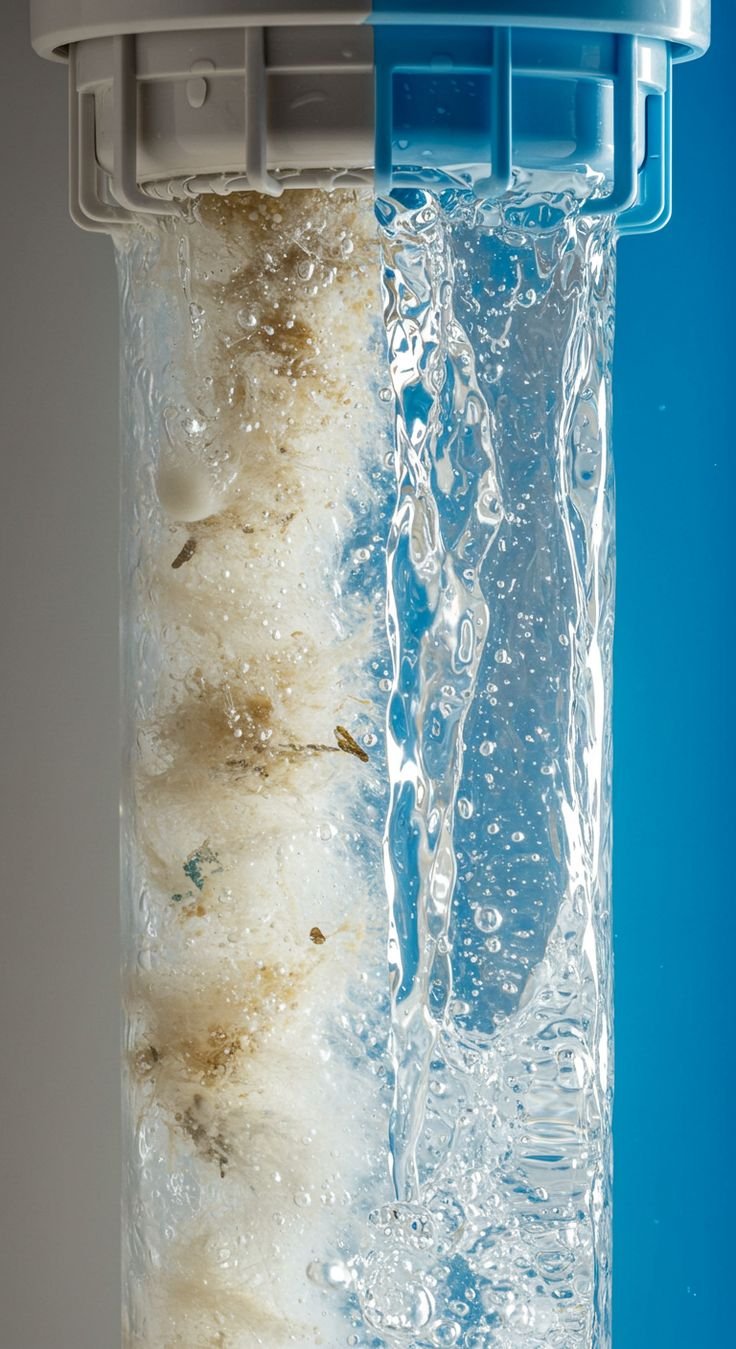
If water enters the reverse osmosis membranes while still carrying large amounts of organic matter, fine particles, or biological activity, what is known as Fouling can occur — the buildup of contaminants on the membrane surface.
This buildup increases resistance to water flow. The result? Lower production, higher required pressure, higher energy consumption, and a greater need for chemical cleaning.
So a problem that at first looks like a “membrane” problem often turns out, in reality, to be a “pretreatment” problem.
There Is a Difference Between Scaling and Biological Fouling of the Membrane
One of the most important points requiring hands-on operating experience with desalination plants is distinguishing between the causes of declining membrane performance. Not every drop in production means the same thing.
For example, there is:
- Scaling: salts depositing on the membrane surface once certain compounds reach saturation and precipitate.
- Organic Fouling: the buildup of organic matter on the membrane surface.
- Biofouling: the growth of microorganisms and formation of biofilms on the membrane surface.
- Colloidal Fouling: the accumulation of fine colloidal particles.
Each of these cases may require a different diagnostic and cleaning strategy.
This is where one of the most important skills in operating a plant lies: never treating a problem before knowing its cause.
If the problem is mineral scaling, it makes no sense to treat it the same way you would treat biological fouling.
Even more importantly, repeated chemical cleaning is not always the best solution — frequent cleaning can simply be an attempt to treat the symptom of a deeper pretreatment problem.
The SDI Index Is Not Just a Number on a Lab Report
One of the indicators used to evaluate water before reverse osmosis membranes is the SDI – Silt Density Index.
This index is used to assess how likely water is to clog membranes because of fine particulate matter.
It may seem simple: take a sample, calculate the index, and compare the result to the required limit. But the real value is not in the number alone.
What matters is understanding what is behind that number.
A high SDI reading could result from mineral particles, colloidal matter, organic matter, or biological activity — and each cause may need a different treatment.
Here a key operating principle emerges: numbers at water plants do not speak for themselves; the engineer must read the relationship between the numbers.
For example, changes in differential pressure across the filters, changes in turbidity, changes in SDI, and a drop in product flow, together, can give a much clearer picture than any single indicator on its own.
Temperature Has a Bigger Impact Than Many People Expect
One point that is sometimes overlooked is that reverse osmosis membrane performance is affected by water temperature.
The lower the water temperature, the lower the water’s permeability through the membrane, meaning the system may need higher pressure to achieve the same output.
This means that the design of a desalination plant should not rely only on average temperature — it should account for the worst expected operating conditions.
A plant designed to produce a specific amount using warm water may perform very differently during periods of lower temperature.
This is especially important in regions where water temperature changes noticeably throughout the year.
From this, it becomes clear that plant design is not simply a calculation of the required water quantity — it is a calculation of the relationship between:
Salinity + pressure + temperature + membrane type + recovery rate + raw water quality + operating conditions.
A Higher Recovery Rate Is Not Always Better
Recovery is the percentage of feed water that is converted into product water compared to the total water entering the system.
It is natural for some people to think in simple terms: “If we have 100 cubic meters of water, why not get 90 cubic meters instead of 50?” But it is not that simple.
The higher the recovery rate, the more concentrated the salts become in the remaining water, which increases the risk of scaling on the membranes. So pushing recovery to its maximum possible value can lead to bigger operational problems, and potentially higher energy and chemical consumption, along with a shorter membrane lifespan.
The ideal recovery rate is not the highest possible one — it is the rate that achieves the best balance between the amount of water produced, energy consumption, operating stability, scaling risk, cost, and environmental impact.
This is a fundamental point in the economic design of a plant.
Why Has Reverse Osmosis Become a Central Element in Desalination?
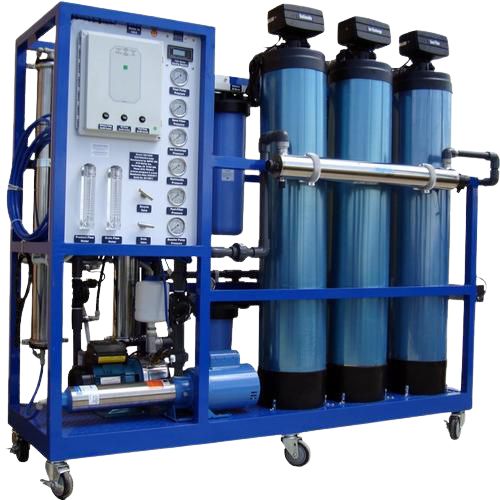
Reverse Osmosis (RO) relies on semi-permeable membranes that allow water to pass through to a large degree while blocking most salts and many contaminants. Water is pushed through the membrane under high pressure.
But the importance of reverse osmosis does not lie only in its ability to remove salts — it lies in the ability to combine it with other systems to form a fully integrated treatment scheme.
For example, one can use:
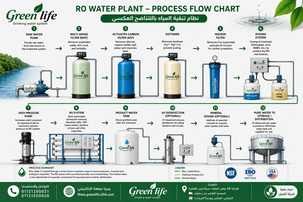
Pretreatment → micro- or ultrafiltration → reverse osmosis → post-treatment → disinfection → storage and distribution.
In some cases, additional stages may be needed depending on water quality and the intended end use.
But it must be emphasized that reverse osmosis does not make water “fit for everything” the moment it leaves the membrane. The resulting water still needs to be evaluated and readjusted according to its intended use.
Ultra-Pure Water Is Not Necessarily Better for Drinking
This is one of those points that sounds strange the first time you hear it. Some may assume that removing the greatest possible amount of salt always means getting better water. But drinking water is not simply water stripped of everything.
After desalination, water can end up very low in certain minerals and ions.
This is why desalinated water may need Remineralization and property adjustment before it is distributed.
The goal is not to add salts randomly, but to adjust the water’s properties so that it is suitable for its intended use, chemically stable, and does not cause problems in distribution networks.
This leads us to an important idea: good water is not necessarily the purest water — it is water whose properties have been treated so that it is safe, stable, and fit for its intended use.
Corrosion Is a Silent Problem Inside Water Plants
When water is low in minerals or has certain chemical properties, its relationship with pipes, tanks, and equipment can change.
This is where the problem of Corrosion appears.
Water leaving a desalination plant may be excellent in terms of salts and contaminants, but if its chemistry is not properly adjusted, it can react with the materials of the distribution network.
This means that the design of a water plant should not end once water is produced — it must also consider:
- What happens to this water after it leaves the plant?
- How will it behave inside the pipes?
- Will it affect metals?
- Will its properties change during storage?
- Could it cause problems in the network?
These are important questions, especially for large drinking water plants.
Water Quality Is Not Only About Chemistry
Another mistake is focusing on chemical analysis while neglecting the microbiological side.
Water may have low turbidity and be chemically acceptable, yet still require precise procedures to control microorganisms.
This is why disinfection plays a central role.
Techniques used in this area include:
- Chlorine
- Ultraviolet (UV) light
- Ozone in some applications
- Other disinfection processes depending on the nature of the system
But using disinfectants requires understanding the relationship between them and the membranes and equipment.
Some reverse osmosis membranes are sensitive to certain oxidizers, so water entering the membranes may need appropriate removal of the disinfectant residue before it reaches them.
This is where the importance of integrated design comes in.
Energy Is the Hidden Challenge in Desalination
One of the most important points about modern desalination plants is that water is not the only output that needs to be accounted for — energy is also an economic output that must be managed.
Seawater desalination by reverse osmosis requires high pressure, and that pressure requires energy.
This is why improving energy efficiency has become one of the most important areas of development in the desalination industry.
One of the technologies that has helped improve efficiency is the use of Energy Recovery Devices.
These devices capture the energy present in the concentrated brine stream leaving the system under high pressure and return part of it to the process.
This can make a huge difference to the economics of a large plant.
From an expert’s point of view, the right question is not: “How much water does the plant produce?” but rather: “How much water does the plant produce per unit of energy?” This indicator is far more useful when comparing plant efficiency.
Why Should a Desalination Plant Be Viewed as a System, Not as Separate Pieces of Equipment?
In large projects, pumps might be purchased from one company, membranes from another, control systems from a third party, and filters from a fourth.
But the success of a plant does not depend only on the quality of each individual piece of equipment — it depends on how well these components are integrated.
You could have an excellent pump, an excellent membrane, and an excellent control system, and yet the plant could still perform poorly if these elements are not compatible with one another.
This is where integration engineering becomes important. The following must be ensured:
- Compatible flow rates
- Properly calculated pressures
- Correctly distributed measurement points
- Interlinked protection systems
- Chemicals compatible with the equipment
- Control systems capable of detecting deviations
- Operation designed around emergency scenarios
In the end, a plant is not a collection of devices — it is an integrated engineering organism.
Instrumentation Is the Eyes of the Plant
One point that does not always get enough attention is the importance of instrumentation — a plant cannot know what is happening inside it without data.
Among the most important measurements to monitor are:
- Pressure
- Flow
- Electrical conductivity
- Temperature
- pH
- Turbidity
- Differential pressure
- Certain chemical indicators
- Indicators related to the quality of the produced water
But the problem is not just having instrumentation — it is the quality of the data itself.
If an instrument is not properly calibrated, the system may give a false reading, and if the reading is false, the control system may make a wrong decision. This is why calibrating and maintaining instruments on a regular schedule is not a secondary task — it is a core part of plant safety.
Data Can Predict a Failure Before It Happens
This is one of the modern and highly important points. Modern desalination plants generate a huge volume of data, and with monitoring and analysis systems, abnormal patterns can be detected before they turn into a major failure.
For example:
If the flow of produced water begins to gradually decline while the differential pressure across a certain stage rises, there may be a problem developing slowly.
If this signal is caught early, corrective action can be taken before the problem worsens.
This leads to the concept of Predictive Maintenance. Instead of waiting for equipment to fail, its data is analyzed to estimate the likelihood of a problem occurring.
This can reduce:
- Sudden shutdowns
- Repair costs
- Production losses
- Spare parts consumption
- Operational risks
In the future, integrating artificial intelligence and data analysis into the operation of water plants will become increasingly important, especially as the volume and diversity of data grow.
Membranes Don’t Die Suddenly… They Usually Give Warning Signs
From operational experience, it is important to treat membranes as components with behavior that can be monitored. Performance may begin to change gradually.
- Pressure may rise
- Flow may drop
- Conductivity may change
- Differential pressure may shift
A range of signs may appear that point to the beginning of a problem.
This is why recording the historical performance of membranes matters so much — an engineer who has data from previous months can compare the current situation with how the membrane behaved under similar conditions in the past.
Relying on a single reading alone, on the other hand, can give a misleading impression.
Not All Chemicals Are “Bad,” But Using Them Incorrectly Is a Problem
Water plants use many chemicals depending on the nature of the process, including coagulants, pH adjusters, scale inhibitors, cleaning agents, disinfectants, and others.
But the goal is not to use the largest possible amount — the goal is to use the right dose at the right time.
Overdosing can create new problems, and underdosing may not achieve the intended purpose.
This is where the importance of laboratory testing, operating trials, and controlling doses based on data — rather than guesswork — comes in.
Reusing Water Can Sometimes Be Smarter Than Finding More of It
When thinking about water security, the usual question is: “Where can we get additional water?” But there is another question that matters just as much: how can we make better use of the water we already use?
This is where the concept of reusing treated water comes in.
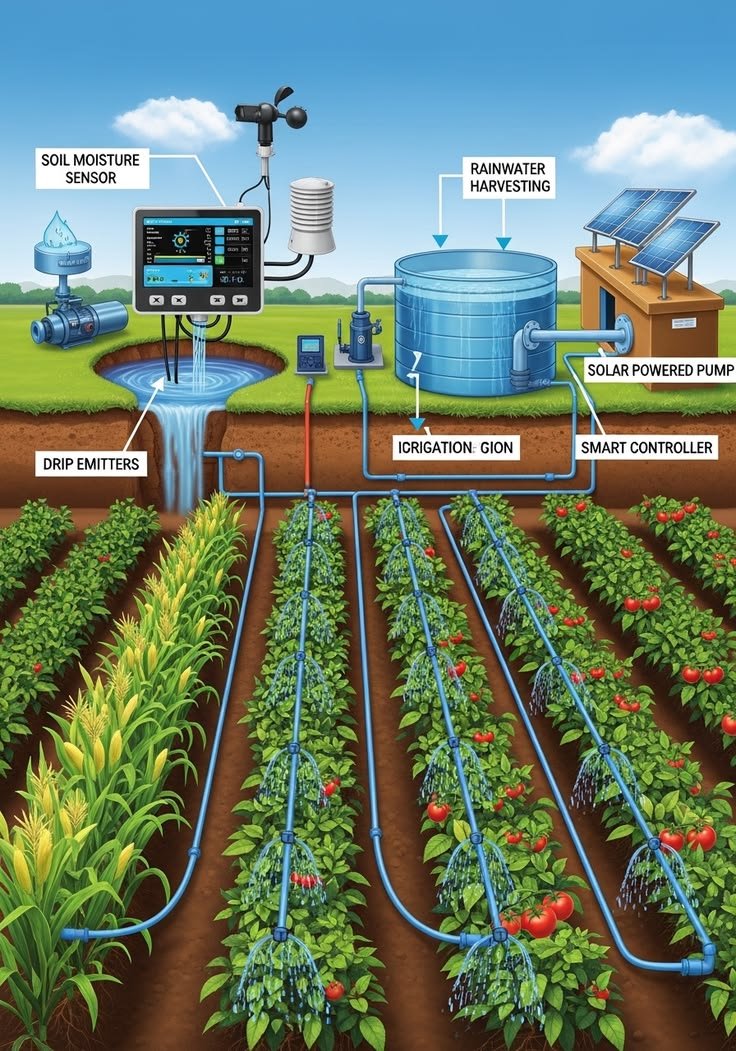
Treated water can be used in certain industrial, agricultural, and other applications, in line with required quality standards and regulations, easing pressure on freshwater sources.
Economically, improving water management and reuse can, in some cases, be less costly than building an entirely new source from scratch.
This is why the future will not depend on desalination alone, but on a combination of:
Desalination + reuse + loss reduction + efficiency improvement + protection of water sources.
Water Losses Can Defeat Any Desalination Project
A country or city might invest huge sums in building a massive desalination plant, yet at the same time lose large amounts of water inside its distribution networks.
This reveals an important paradox: producing more water does not always solve a water shortage problem if the system itself suffers from high losses.
This is why true water security requires working on two fronts:
The production side
Producing new water through desalination, treatment, or reuse.
The management side
Reducing losses, detecting leaks, improving network efficiency, and managing demand.
This means a desalination plant must be part of an integrated water system, not a standalone solution.
What Do We Do With the Highly Saline Water Leaving a Desalination Plant?
This is one of the most sensitive issues in desalination projects. The desalination process doesn’t make salts disappear — it separates part of the water into fresh water, leaving behind a more concentrated stream commonly known as concentrate, or Brine.
This stream needs proper management, and how it is handled depends on:
- The nature of the site
- The type of water
- The size of the plant
- The discharge method
- The sensitivity of the surrounding environment
- Local regulations
- The hydrodynamic characteristics of the area
This is why brine management must be part of the design from the very start of the project, not a decision made after the plant has already been built.
The Environmental Impact of Desalination Is Not Limited to Brine
It is easy to reduce the environmental impact of a desalination plant to the issue of highly saline water alone, but a genuine environmental assessment is much broader.
There is also:
- Energy consumption
- Emissions linked to the energy source
- Chemicals
- Spent membranes
- Cleaning processes
- Maintenance work
- Construction
- Water withdrawal from the source
- Brine discharge
So when comparing two desalination projects, the question should not just be: “Which plant produces more water?” It should be: “Which plant achieves the best balance between water, energy, cost, and environmental impact?”
Desalination Powered by Renewable Energy Is Not Just a Marketing Idea
With the falling cost of certain renewable energy technologies and advances in energy storage systems, it has become possible to seriously consider integrating renewable energy sources with desalination.
But there is an important challenge: desalination plants need stable operation, while some renewable energy sources are, by nature, variable.
This is why smart design may rely on a mix of:
- Renewable energy
- The electrical grid
- Energy storage systems
- Smart load control
- Water production management
Here an important concept may emerge for the future: desalination as a flexible electrical load.
This means that the operation of certain production stages can adapt to available energy, as long as an appropriate water reserve is maintained and system stability is preserved.
A Plant That Always Runs at Full Capacity Is Not Necessarily the Most Efficient
It might seem logical that running a plant at maximum capacity all the time achieves the best economics, but the operational reality is more complex.
Pumps, membranes, and equipment have optimal operating points, and water demand can change throughout the day or the season.
So smart operation can actually be more efficient than fixed, constant operation.
Sometimes it may be better to run the plant at a lower load for a certain period rather than running it at full capacity and then repeatedly stopping and restarting it.
This depends on the plant’s design, the nature of the equipment, and the control system.
Choosing the Location of a Desalination Plant Is a Strategic Decision
Some might assume that the ideal location for a seawater desalination plant is simply the point closest to the sea, but the decision is more complex than that.
The following must be studied:
- Source water quality
- Current movement
- Depths
- The nature of the seabed
- Pollution risks
- Storms
- Temperatures
- Distance to consumption areas
- Energy availability
- Infrastructure
- The feasibility of discharging concentrate
- Construction and operating costs
The location closest to the sea may not be the most economically or environmentally optimal choice.
Drawing Water From the Sea Requires Precise Engineering
The Intake point is not simply an opening for a large pipe — it is a critical element in the plant’s performance.
If the source water contains seasonal algae, sediment, or high levels of organic matter, the intake method can affect the quality of the water reaching the pretreatment stage.
For this reason, different engineering solutions can be used depending on site conditions, such as open intakes, beach wells, or other techniques.
Choosing the right system can reduce the load on pretreatment and, as a result, affect the performance of the entire plant.
Maintenance Is Not an Extra Cost… It’s Part of the Cost of Water
When calculating the cost of producing a cubic meter of water, it is a mistake to look only at electricity and chemicals.
There is also:
- Membrane replacement
- Pump maintenance
- Spare parts
- Instrument calibration
- Equipment cleaning
- Labor
- Downtime
- Preventive maintenance
- Emergency maintenance
A plant may have low electricity consumption but high maintenance needs, and as a result may not actually be the most economical option.
This is why the total lifecycle cost of a plant must be considered, not just the initial purchase or operating cost.
Membrane Lifespan Depends More on Operation Than on the Catalog
A manufacturer may give an approximate expected lifespan for a membrane, but the actual lifespan is heavily affected by operating conditions, including:
- Pretreatment quality
- Temperature
- Pressure
- Fouling
- Cleaning
- Chemicals
- Start-stop cycles
All of these are influencing factors, which is why you may find two membranes of the exact same type, with one performing well for a long time while the other deteriorates much faster due to differences in operating conditions.
This is one of the most important truths that desalination plant owners need to know: good equipment does not compensate for poor operation.
Frequent Start-Stop Cycles Can Be a Problem
Reverse osmosis plants should not be treated like a simple pump that can be switched on and off without consequence — repeated start-stop operations require carefully designed procedures.
Pressure changes or shifts in membrane conditions can occur, and membranes may require preservation or flushing procedures depending on the plant’s status and how long it has been down.
This is why a plant must have a clear, written start-stop procedure that the operating team is properly trained on.
Water Security Does Not Mean Owning the Biggest Desalination Plant
This is an extremely important strategic point.
A country may own a massive desalination plant and still remain at risk if its water system depends on a single source or a single facility.
True water security requires:
- Diversity of water sources
- Having a reserve
- Multiple plants where needed
- Network interconnection
- Adequate storage
- Emergency plans
- Monitoring systems
- Demand management
- Water reuse
In other words: resilience matters more than size alone.
Why Have Desalination Plants Become Important for Countries and Cities?
There are several reasons that make desalination a strategic choice:
- Providing a source relatively independent of rainfall: in arid regions, rainfall alone cannot be relied upon.
- Easing pressure on groundwater: excessive use of groundwater can lower water tables or degrade its quality in some areas.
- Supporting coastal cities: cities near the sea have access to an enormous water resource, though one that requires advanced treatment.
- Supporting industry: some industries require water that meets precise specifications.
- Addressing climate change: with shifting rainfall patterns and rising demand, diversifying water sources becomes even more important.
Desalination Is Not a Substitute for Protecting Freshwater Sources
Here we need to be clear: having desalination plants does not mean we can afford to neglect rivers, lakes, and groundwater.
Desalination is an important solution, but in many cases it is part of the solution, not the whole solution.
If we have a freshwater source that can be protected at a reasonable cost, protecting that source may be far more efficient than producing new water using energy.
This is why smart water policy must be based on a clear order of priorities:
Protecting sources → reducing losses → improving efficiency → reuse → desalination when needed.
What About Desalinating Brackish and Groundwater?
Not all desalination projects are tied to seawater. There is brackish or semi-saline groundwater that can be treated using membrane technologies.
In some cases, its salinity is far lower than seawater, which can make the required operating pressure and energy needs quite different.
But the problem can lie in other contaminants such as iron, manganese, silica, or certain compounds that require pretreatment.
This is why the word “desalination” does not necessarily mean “seawater.”
Advanced Treatment Doesn’t Start When a Problem Appears
One of the best engineering practices is designing a system that can handle changes before they turn into problems.
For example, if a seasonal change in turbidity or algae is expected, the design must be able to accommodate it.
And if the water source is exposed to sudden contamination, monitoring and protection systems must be considered.
And if water demand is variable, operations must be designed around different scenarios.
This is the difference between a plant designed on paper and a plant designed to actually work in reality.
The Human Element Still Matters More Than Automation
Despite major advances in control systems, the trained engineer and technician cannot be replaced.
Automation can detect a change in pressure, but a human can ask: “Why did this change happen now?”
Instruments provide the data, but experience interprets it.
There can be cases where the control system alone cannot determine the true cause of a problem.
This is why investing in training operating teams is just as important as investing in equipment.
Plant Staff Need to Understand “System Behavior”
An outstanding water plant engineer is not just someone who knows how to run each piece of equipment — it is someone who can understand the relationships between them.
- When turbidity rises, what happens to the filter?
- When the quality of incoming water changes, what happens to the pressure?
- When salt concentration rises, what happens to recovery?
- When pH changes, how might the likelihood of scaling change?
This mindset is what turns operation from simply following instructions into genuine engineering management.
The Future of Desalination Won’t Just Be Technical… It Will Also Be Managerial
The next challenge in water will not just be inventing a new membrane — it will be managing the entire system efficiently.
We need:
- Better data
- Real-time monitoring
- Predictive analytics
- Less energy
- More sustainable materials
- Better brine management
- Greater reuse
- Reduced losses
- Qualified engineers and technicians
This is where water technologies may increasingly intersect with artificial intelligence, the Internet of Things, and advanced control.
The desalination plant of the future may become increasingly reliant on digital models that continuously analyze data and suggest operational adjustments.
Artificial Intelligence Won’t Replace the Water Engineer, But It Will Enhance Their Capabilities
Artificial intelligence can analyze thousands of readings in a short period of time, detect relationships that would be difficult to notice manually, predict certain failures, and compare equipment performance over time.
But the final decision in sensitive systems must still rely on a clear engineering framework and verification procedures.
Because water is not just data; there is public health, the environment, equipment, economics, and safety all involved.
The Importance of Having an “Operational Fingerprint” for a Plant
One idea that can raise the level of operational management is building a precise historical record for the plant.
This record can include:
- Daily production
- Energy consumption
- Pressures
- Temperatures
- Water quality
- Cleaning operations
- Membrane replacements
- Failures
- Maintenance work
- Chemical consumption
Over time, this data turns into an operational fingerprint for the plant.
Once a long enough history exists, it becomes possible to tell exactly when performance begins to deviate from its normal pattern.
This is a huge advantage for predictive maintenance and performance improvement.
The Real Economics of Water Start From the “Cubic Meter Actually Delivered”
Some studies talk about the cost of producing a cubic meter of water, but a fair comparison must take into account the water that actually reaches the end user.
If a plant produces a large quantity, but a significant share of that water is lost in transport, storage, or the network, then the real economics of the project change entirely.
This is why evaluating a water project must cover the entire value chain:
Source → treatment → desalination → storage → transport → distribution → use.
Desalination Plants Can Be Part of Economic Development
Water is not only for household consumption.
Water is a core element in:
- Industry
- Tourism
- Agriculture
- Energy
- Services
- New cities
This is why having a stable water source can support long-term development planning.
But that does not mean every economic activity should rely on desalinated water.
Rather, the quality of water required for each use should be clearly defined, and then the most suitable and efficient source should be provided — there is no point in using highly treated water for an application that does not need that level of quality.
There Is No “Perfect Design” That Works for Every Plant
One of the most important lessons from the water sector is that off-the-shelf solutions are not always the best solutions.
A plant in a coastal area with clear seawater is very different from a plant in an area subject to algae blooms.
A plant supplying a city with drinking water is different from a plant serving an industrial facility.
A small plant is different from a massive one.
This is why design must start from the project’s needs and the water source itself — not from picking a popular technology and then trying to force the project to fit it.
The Importance of Desalination Plants in the Future
As cities keep growing and demand for water keeps rising, desalination plants will become increasingly important in many regions, particularly coastal and arid ones.
But the importance of desalination in the future will not lie only in increasing the amount of water produced — it will lie in its ability to deliver a water source that is: stable, scalable, monitorable, and able to be integrated with other sources.
In this context, the most successful plants will be the ones that manage to combine:
- Energy efficiency
- Reliability
- Water quality
- Operational flexibility
- Environmental sustainability
- Digital control
- Economic management
Behind the Water That Reaches the Tap Lies Engineering We Never See
When someone turns on a tap and water flows out naturally, it is easy to forget the amount of engineering, effort, and oversight that stands behind that simple moment.
Every cubic meter of desalinated water may be the outcome of a full chain that starts with analyzing the raw water, then choosing the intake system, then pretreatment, then filtration, then pumping under high pressure, then passing through the membranes, then treating the produced water, then disinfection, then storage and transport.
And importantly, each stage affects the one that follows it:
- If the raw water is poor and not properly treated, the membranes will suffer
- If the membranes suffer, pressure and energy consumption will rise
- If pressure rises, cost increases
- If cost increases, the project’s economics change
- And if brine is not managed properly, environmental challenges appear
- And if the network is not monitored, water can be lost after it has already been produced
This is why water treatment is not just a collection of filters, pumps, and membranes — it is a fully integrated engineering system.
As for desalination plants, they are not simply factories that produce fresh water from the sea. They are one of the strategic tools that can help communities build a more resilient water future, especially in regions facing water scarcity.
But their true success is not measured by their size or by the number of membranes they contain — it is measured by their ability to produce water efficiently, reliably, and sustainably.
And this brings us to the most important point:
The water crisis cannot be solved by a single technology, no matter how advanced. The real solution is managing the entire water cycle: protecting existing water sources, reducing losses, reusing treated water when appropriate, improving consumption efficiency, using desalination when it is the logical choice, and developing technologies that consume less energy and are more environmentally responsible.
In the end, a drop of water may seem very small, but behind it lies an enormous system of science, engineering, and economics.
And as water becomes scarcer, the ability to treat, manage, and produce it efficiently becomes one of the most important skills that will determine communities’ capacity to grow and endure.
This is the real reason desalination plants will remain, in the years ahead, an important part of the future of water security — as long as we do not view them as a standalone solution, but as one component within a larger system built around:
Safe water, smart management, responsible consumption, and technology that serves both people and the environment at the same time.