The Future of Water Purification: From CTO Carbon Block Filters to Local Activated Carbon Manufacturing in Egypt
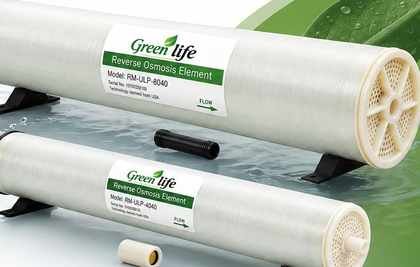
Carbon filtration is one of the most underrated engineering stages in industrial water treatment plants and reverse osmosis (RO) systems, even though it is the first line of defense protecting the most expensive component in the entire plant: the RO membranes. A mistake in selecting or maintaining the carbon filter does not show its effect immediately — it accumulates silently over weeks until the plant suddenly hits a collapse in salt-rejection efficiency. In this article, we examine the precise engineering role of CTO carbon block cartridges, the challenges facing Egypt’s industry in securing this vital material, and Green Life’s engineering vision for localizing activated carbon manufacturing as a radical, sustainable solution to these challenges.
What Are CTO Carbon Block Cartridges and How Do They Work?
CTO stands for Chlorine, Taste, Odor. It refers to filter cartridges made of compressed activated carbon formed into a single solid block, unlike loose granular activated carbon (GAC) that is packed loosely inside a vessel. The manufacturing process fuses fine activated carbon powder with a polymeric binder under pressure and heat, producing a uniformly porous block that provides a consistent, streamlined flow path for water instead of the random channels found in loose media.
The carbon cartridge works through two complementary mechanisms:
- Physical Adsorption: Activated carbon has an enormous internal surface area that can exceed 1,000–1,500 m² per gram thanks to its fine porous structure, allowing it to capture dissolved organic molecules (pesticides, industrial solvents, aromatic compounds, and unwanted odors and tastes) on the internal pore surface.
- Catalytic Dechlorination: Free chlorine reacts chemically with the carbon surface, converting it into a non-oxidizing chloride ion, rather than simply being captured physically.
It is specifically this second mechanism that makes the CTO cartridge an indispensable protective barrier for reverse osmosis membranes. Modern RO membranes are made of a thin-film composite polyamide layer, a material that is highly sensitive to chemical oxidation; even continuous exposure to very low concentrations of free chlorine breaks down the molecular bonds in the membrane’s active layer, cumulatively and irreversibly, gradually reducing the salt rejection rate until the membrane fails completely and must be replaced — a cost that ranks among the largest operating expenses of any RO plant.
In engineering terms, CTO cartridges provide comprehensive upstream protection before the membrane stage through:
- Removing the free chlorine and chloramine used to disinfect the source water.
- Adsorbing organic compounds and industrial solvents that could foul the membrane surface.
- Improving taste and odor by removing the compounds that cause them.
- Additional mechanical filtration of fine particulates (typically rated between 0.5 and 5 microns), reducing the turbidity entering the next stage.
- Reducing the likelihood of biofouling caused by residual chlorine that could otherwise promote later microbial growth on the membrane surface.
Current Challenges in Importing Activated Carbon and the Global Shift Toward Sustainability
The vast majority of water filter manufacturing plants in Egypt and the Arab region rely on importing raw activated carbon from external sources — whether coconut-shell-derived carbon (from Southeast Asian countries) or coal-based carbon from other sources. This complete reliance on international supply chains exposes the local industry to a real set of engineering and economic challenges:
- Exchange rate volatility: Import invoices in hard currency make the final cost of raw carbon vulnerable to fluctuations unrelated to product quality or local demand.
- Long and unstable supply chains: Shipping times that stretch to weeks or months, along with the risk of sudden disruption (such as international shipping crises), make planning a safe carbon inventory an ongoing challenge for filter manufacturers.
- Quality variation between shipments: Differences in raw material source or production batch can mean variation in effective surface area, and therefore in adsorption efficiency — something that is difficult to control without direct oversight of the production line.
- Transport carbon footprint: Shipping a heavy raw material across thousands of kilometers adds a carbon footprint that runs counter to the global industry’s push to cut emissions across the entire supply chain.
In contrast, the global industrial sector is moving strongly toward alternative, renewable sources of activated carbon, drawing on locally available agricultural and biomass residues instead of relying entirely on coal or long-distance imports — a shift that simultaneously serves cost-reduction goals and the circular-economy and environmental-sustainability objectives that have become a competitive necessity rather than an added luxury.
Green Life’s Future Vision: Toward an Egyptian Activated Carbon Industry
Building on this reality, Green Life is developing an ambitious engineering plan to localize the production of high-quality activated carbon inside Egypt, relying on a renewable and abundantly available raw material: agricultural residues, foremost among them rice straw and wood waste.
From an engineering standpoint, converting these residues into activated carbon goes through two essential stages:
- Carbonization / Pyrolysis: Thermal decomposition of the biomass (lignocellulosic material rich in cellulose, hemicellulose, and lignin) in a low-oxygen environment at temperatures ranging between 300 and 700°C, producing biochar with a preliminary carbon structure.
- Activation: Developing the fine porous network within the biochar, either through physical activation (using steam or carbon dioxide at temperatures between 800 and 1,000°C) or chemical activation (using agents such as phosphoric acid), to raise the effective surface area to the levels required for competitive adsorption performance.
The specific choice of rice straw and wood waste is not an engineering coincidence, but a decision that serves two strategic goals at once: on one hand, the high cellulose and lignin content of these residues provides an ideal raw material for producing a high-quality porous carbon structure; on the other hand, rice straw represents a well-known seasonal environmental problem in Egypt, where a large portion of it is still disposed of through illegal open burning, causing severe air pollution known in the media as the “Black Cloud.” Redirecting this waste toward an industrial production line solves two problems at once: it eliminates a recurring source of environmental pollution and turns it into a strategic industrial raw material.
This direction directly serves the circular economy through an integrated loop:
- Agricultural residue (rice straw/wood) → industrial raw material (activated carbon) → filtration media in water treatment plants → potential reactivation of spent carbon to further extend its life cycle.
On a direct industrial level, this direction is expected to deliver tangible benefits for factories and plant owners:
- Localized cost base: Pricing in Egyptian pounds instead of complete reliance on hard currency, reducing exposure to exchange-rate fluctuations.
- Shorter lead times: Direct local supply instead of long international shipping cycles.
- Direct quality control: Engineering oversight by Green Life across the entire production line, from raw material to finished product.
- Positive environmental impact: Reducing open burning of agricultural residues and its associated emissions.
- More stable supply continuity: Reducing the risk of international supply-chain disruptions affecting local filter cartridge production lines.
Conclusion: A Summary of the Benefits
From protecting RO membranes every day through CTO cartridges, to a strategic vision for fully localizing activated carbon production from Egyptian agricultural residues, Green Life is charting an integrated engineering path that combines operational reliability, economic feasibility, and environmental responsibility. The impact of this shift is not limited to lowering filter costs — it extends to stabilizing the national supply chain for the entire water treatment industry, positioning Egypt on a path toward regional leadership in producing high-quality, sustainable filtration materials.
Contact Green Life’s Engineering Experts
If you are an engineer or factory owner looking for the design or supply of reliable carbon filtration and reverse osmosis systems that protect your investment and extend the operating life of your plant, the Green Life engineering team is ready to study your project and offer the most suitable solution for your industrial, agricultural, or commercial needs. Contact us today to begin a specialized engineering consultation.