How Do Reverse Osmosis (RO) Systems Work for Water Treatment?
Are you suffering from high levels of salts and impurities in your water? Are you looking for an effective solution that provides you with pure, safe water for daily or industrial use? The effective solution is using Reverse Osmosis (RO) systems for water treatment, which have become one of the most advanced and efficient water treatment technologies in the world. But how do these systems work? And why do factory owners, companies, hotels, and even homes rely on them?
Green Life, your permanent partner on your journey toward success and excellence, brings you today real and useful answers about reverse osmosis systems. With us, you will find what you are looking for in the field of water treatment in Egypt.
What Is an RO System?
The term RO refers to “Reverse Osmosis,” known as reverse osmosis. It is an innovative technology that works by pushing water through a semi-permeable membrane using high pressure to separate impurities, salts, and contaminants from pure water.
This technology is considered the best and most widely used for water treatment, thanks to its great ability to remove bacteria, viruses, heavy metals, and harmful chemicals. RO reverse osmosis systems in Egypt are used for many purposes, including:
- Purifying drinking water.
- Desalinating seawater.
- Treating industrial water.
- Purifying medical water.
- Modern agriculture.
The Concept of Reverse Osmosis in Water Treatment: Why Do We Use RO Technology?
RO reverse osmosis systems are used in water treatment because of their high capacity to:
- Remove more than 95% of the salts present in water.
- Improve the taste of water.
- Eliminate unpleasant odors.
- Reduce harmful chemicals.
- Produce pure and safe water.
The Main Components of Reverse Osmosis Systems
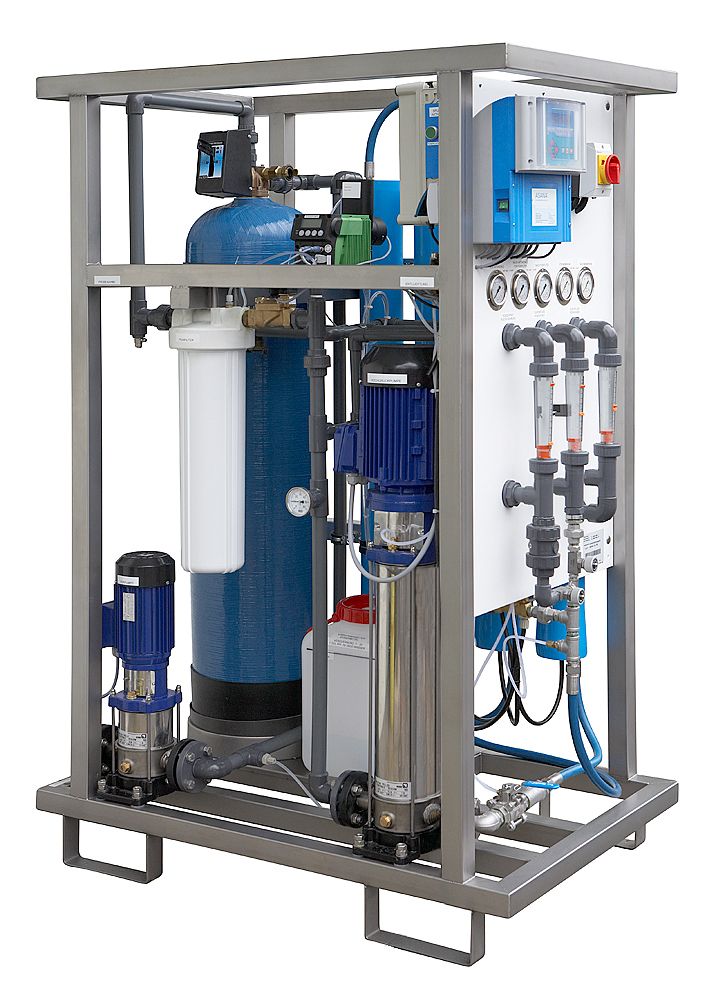
RO reverse osmosis systems consist of several main parts that work together in parallel to achieve the best possible efficiency, including the following:
- Pre-treatment unit: includes sand and carbon filters, which play a major role in removing impurities and organic matter.
- Pressure pump: raises the water pressure to push it through the semi-permeable membranes.
- Pressure vessels (semi-permeable membranes): considered the most important part of the system, they separate impurities and salts from the water.
- Pre- and post-filters: including sediment filters, activated carbon filters, and taste-and-odor improvement filters.
How Do RO Reverse Osmosis Systems Work in Egypt?
There are regular operating stages for RO systems in water treatment, which include the following:
- Pre-filtration stage: in this stage, sand, dust, rust, and large impurities are removed. This step is essential because it helps protect the main membrane from damage.
- Semi-permeable membrane stage: here the main reverse osmosis process takes place, where only water molecules are allowed to pass through, while salts, bacteria, heavy metals, and viruses are removed.
- Water quality improvement stage, the final stage, where after the purification process, water passes through additional filters to improve its taste, odor, and purity level.
Applications of RO Systems in Various Sectors in Egypt
The applications of RO reverse osmosis systems vary across many fields, thanks to their great capacity for water treatment. They can be used in:
- Medical sector: this technology is used in the medical sector to produce ultra-pure water for laboratories and hospitals.
- Food industries: it helps improve the quality of food products and industrial beverages.
- Agriculture: used in the agricultural sector to improve the quality of irrigation water and reduce salinity.
- Seawater desalination: this technology is widely used in coastal areas and is one of the most important modern applications for providing drinking water in regions that lack fresh water.
Benefits of Using RO Technology in Water Desalination Plants
If you are still wondering about RO systems in Egypt and how beneficial they are for water treatment, here are their most notable benefits:
- Producing high-purity water: this technology removes dissolved salts, heavy metals, and bacteria from water, resulting in pure water.
- Improving taste and odor: by removing organic matter and chlorine.
- Removing harmful contaminants: such as lead, mercury, and nitrates.
- Providing fresh water for water-scarce areas: especially in tourist regions or areas with high salinity or scarce fresh water.
- Flexibility in use: reverse osmosis technology is suitable and easy to use and install for homes, companies, factories, and large desalination plants.
Water Treatment Stages Inside the RO Reverse Osmosis System
The efficiency of reverse osmosis systems is not limited to the main membrane alone; water passes through several successive treatment stages to ensure the highest levels of purity are reached. The process begins with a pre-filtration stage to remove sand, sediment, and suspended matter that could affect the system’s efficiency. Afterward, the water passes through activated carbon filters to eliminate chlorine, organic matter, and unwanted odors.
Then comes the most important stage, in which water passes through the reverse osmosis membranes that trap dissolved salts, heavy metals, bacteria, and viruses. In some advanced systems, a final disinfection stage using ultraviolet (UV) light or ozone is added to ensure completely pure and safe water for use.
Factors Affecting the Efficiency of RO Systems
The efficiency of a reverse osmosis system depends on several key factors that directly affect the quality of the produced water and the lifespan of the equipment. Among the most important of these factors is the quality of the raw water entering the system, as a high level of salts and impurities requires special engineering design and higher operational capacities.
Water pressure also plays a fundamental role in the success of the separation process; the more suitable the pressure, the higher the efficiency of removing salts and contaminants. Likewise, water temperature, the periodic condition of the membranes, and the level of regular maintenance affect the system’s performance and its continued operation at the highest possible efficiency.
Why Do Major Projects Rely on Reverse Osmosis Systems?
RO systems have become the first choice for many factories, hotels, resorts, and agricultural projects due to their ability to continuously provide large quantities of high-quality water. These systems help reduce operating costs associated with purchasing water or dealing with problems resulting from water that does not meet specifications.
They also help protect equipment and production lines from corrosion and limescale buildup caused by high salt levels, which extends the operational lifespan of devices and reduces maintenance costs. For this reason, reverse osmosis systems are considered a long-term investment that achieves significant economic savings while ensuring the water quality required for various industrial and commercial activities.
Types of RO Systems Used in Egypt
RO reverse osmosis systems in Egypt are witnessing notable development, along with increasing demand due to the diversity of needs and uses, which include the following:
- Household systems: used in homes to provide pure, impurity-free drinking water, and characterized by ease of installation and maintenance.
- Commercial systems: the need for RO reverse osmosis systems has emerged in restaurants, hotels, cafés, and hospitals in Egypt.
- Industrial systems: reverse osmosis systems serve factories and major water plants, thanks to their high capacity to treat large volumes of water.
The Future of RO Systems in Egypt
The Egyptian market is witnessing significant expansion in the use of RO reverse osmosis systems, due to:
- Increased health awareness.
- Rising pollution rates.
- The urgent need for water desalination.
- Industrial and agricultural expansion.
Green Life: The Best Partner for Installing RO Reverse Osmosis Systems
Green Life offers you the latest RO reverse osmosis systems with the highest standards of quality and efficiency. We are able to design integrated solutions that fit the needs of factories, companies, farms, and homes.
We provide you with installation, maintenance, and technical support services. We have a specialized team with extensive experience in the field of water treatment, guaranteeing you outstanding performance and continuous operation at the highest possible efficiency.
If you are looking for pure water and reliable treatment solutions that provide you with quality and a suitable cost, we are here to offer you the best RO systems with the latest modern technologies.
Frequently Asked Questions
What do you know about the RO system?
It is an innovative system that relies mainly on reverse osmosis technology to purify water from salts and impurities, allowing water to pass through a semi-permeable membrane to separate it from sediments and salts.
Do RO systems remove bacteria?
Yes, innovative and effective RO reverse osmosis systems can remove a very large percentage of bacteria, viruses, and harmful substances.
Is RO water healthy to drink?
Yes, as long as the system is properly maintained and the filters are changed regularly, the water produced by reverse osmosis technology becomes clean and suitable for use.
What is the lifespan of an RO filter?
This depends on the type of filter and the quality of the water, but it is recommended to change the filters every 6 to 12 months.
Are RO systems suitable for homes?
Certainly, RO reverse osmosis systems are today considered one of the best solutions for obtaining pure, drinkable water.
You can contact us via WhatsApp to inquire about all the services provided by Green Life.