Industrial Wastewater Treatment Solutions for Factories
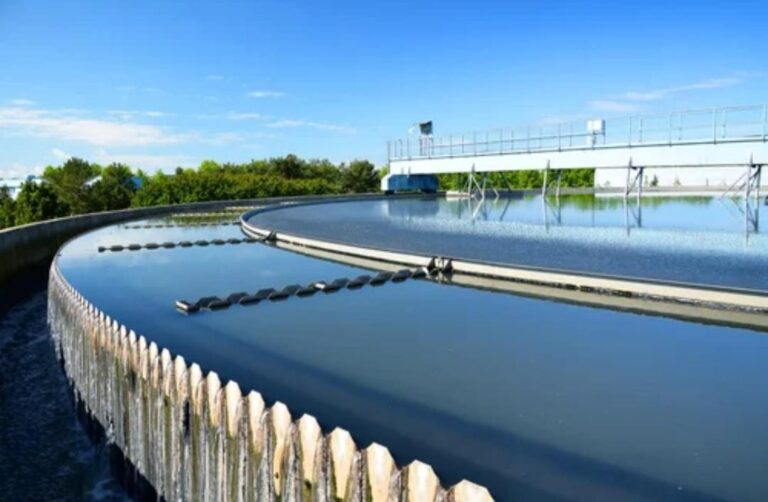
Industrial wastewater treatment for factories is one of the essential methods that has been used since long ago, and remains in use today, to rid water of the pollutants generated by heavy industries. It is a chemical and physical process that calls for high skill and extensive expertise, refined over years with the goal of creating renewed opportunities to obtain clean water. Green Life is here to help you reach your goal easily, quickly, and at a reasonable cost.
The Importance of Industrial Wastewater Treatment in Egypt
There is a whole set of benefits behind the idea of treating industrial wastewater for factories in Egypt. We’ll walk you through the most important of them in the points below:
- The government has imposed fines on anyone who fails to treat the water generated by industries — whether food, textile, or pharmaceutical — so to avoid them, you should request water treatment services from a specialized company with modern tools and techniques that can carry out the work professionally.
- Keeping pace with all the developments taking place across the developed world.
- Cutting down the cost of continually having to buy new water.
- Limiting the corrosion and deterioration of infrastructure that occurs when industrial wastewater is left untreated, due to the harmful substances it contains.
- Contributing to the creation of healthy ecosystems free of emerging diseases.
- The possibility of recovering some valuable materials through treatment, which can be used to create energy sources, for example.
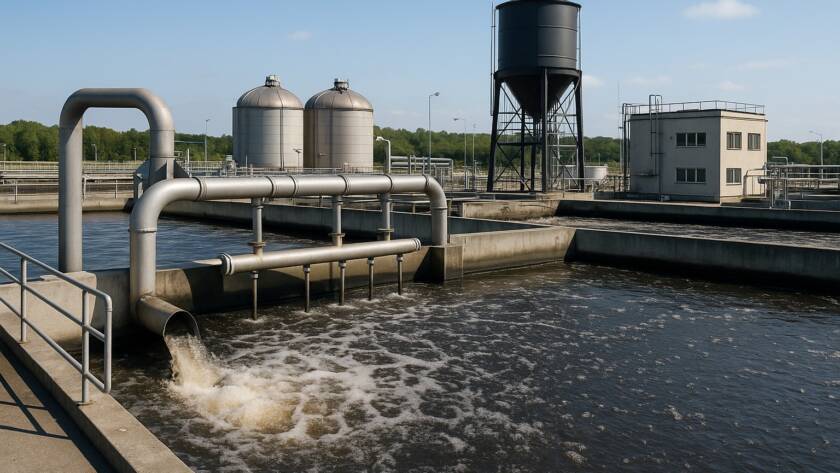
Environmental Challenges Arising from Industrial Wastewater
Although treating industrial wastewater for factories is an excellent, positive idea by every measure, it does carry a few challenges, which include the following:
- The high cost of treatment in some cases, which makes it difficult for certain facilities — especially newer ones — so you need to look for a specialized company that studies budgets carefully before setting prices.
- The difficulty of acquiring modern technologies due to their high price.
- The primitiveness of treatment methods in some cases, which makes the process not professional enough.
- Inconsistent quality in installing the plants, which reduces how well they operate.
Water Recycling and Reuse Systems
What steps do you think you’d go through when treating industrial wastewater for factories, and is it really as difficult and labor-intensive as it sounds?
- First, solid objects, grease, and oils are separated from the water, along with anything visible to the naked eye.
- Chemicals are then added to break down complex compounds and settle fine particles at the bottom.
- Third, unpleasant odors are removed from the water by adding beneficial bacteria that break down organic matter, leaving it clean and usable.
- The final stage involves disinfection using chlorine or ultraviolet rays, making the water suitable for non-critical industrial operations and for irrigating agricultural land. And don’t assume this takes a great deal of time — we simply install advanced plants that draw in the water and complete every subsequent stage with a high degree of flexibility, while we, in turn, monitor their performance to guarantee there is no malfunction or shortfall.
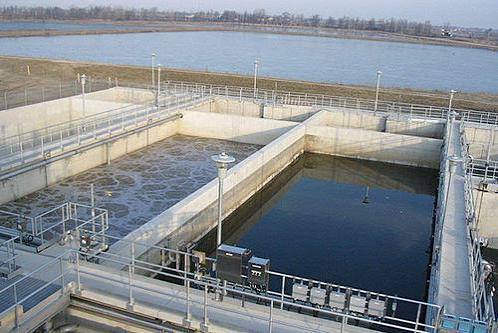
Which Industries Need Treatment Plants the Most?
In reality, the nature of industrial wastewater differs from one factory to another, but there are industries that rely heavily on treatment plants because of the sheer volume of pollutants they generate. Here are the industries most in need of treatment plants:
Food Processing Plants
They produce water containing fats and oils, proteins, and biodegradable organic matter, so they need fat-separation systems along with biological treatment.
Pharmaceutical Plants
These are among the most complex industries, given the presence of active pharmaceutical compounds, chemical solvents, and fine organic matter, and they require advanced treatment techniques such as advanced oxidation and micro-filtration membranes.
Textile Factories
Their water contains dyes and salts specific to dyeing and finishing chemicals, requiring color-removal techniques and specialized chemical treatment.
Chemical and Petrochemical Industries
They generate high-risk pollutants, including solvents and complex organic compounds, which call for multi-stage treatment systems.
Maintenance and Operation Schedule for Industrial Wastewater Treatment Systems in Factories
| Item | Details | Frequency | Responsible |
| Inlet inspection (raw wastewater) | Monitor the quality of water entering the plant and measure oil content, suspended solids, and pH level | Daily | Operations Engineer |
| Cleaning the screens | Remove trapped solid waste such as plastics and debris to prevent system clogging | Daily / as needed | Operations Technician |
| Inspecting the sedimentation tanks | Verify settling efficiency and ensure sludge does not build up excessively | Weekly | Maintenance Engineer |
| Operating the coagulation and flocculation units | Adjust chemical dosing and ensure proper floc formation | Daily | Plant Operator |
| Calibrating chemical dosing | Adjust the ratios of treatment chemicals used to ensure efficiency | Weekly / monthly | Chemical Engineer |
| Cleaning the filter units | Wash or replace filter media to ensure the quality of the outgoing water | Weekly | Operations Technician |
| Inspecting pumps and pipelines | Check for leaks or abnormal vibrations | Weekly | Mechanical Maintenance Team |
| Inspecting the reverse osmosis (RO) system | Monitor pressure, salt concentration, and membrane efficiency | Weekly | Operations Engineer |
| Maintaining electrical panels | Verify the integrity of wiring, control systems, and automation | Monthly | Electrical Engineer |
How Does Source Segregation Help Improve Treatment?
Before answering this question, let’s first clarify what ”source segregation” means: it refers to separating waste at the source in order to isolate different types of pollutants before they enter the main treatment plant. As for its role in improving treatment, this includes the following:
- Improving operational efficiency: when oils, chemicals, or highly concentrated water are separated at an early stage, the treatment process becomes more effective and less complex.
- Reducing chemical consumption: pre-separation helps cut down the quantity of chemical reagents required during the treatment stages.
- Extending equipment lifespan: reducing pollutant loads helps protect pumps, tanks, and filters from corrosion or clogging.
- Lowering operating costs: reducing energy use, chemical consumption, and routine maintenance work brings operating costs down.
- Improving treated water quality: separating pollutants helps achieve higher water quality levels and opens up the possibility of reusing it later.
What Role Does Environmental Compliance Play in Factories?
Environmental compliance is considered one of the most important factors determining the success and continuity of any industrial facility. The role of environmental compliance in factories therefore includes:
- Adhering to legislation: regulatory bodies set maximum limits on pollutant concentrations in discharged water, and factories must comply with these limits.
- Avoiding fines and penalties: non-compliance can lead to hefty financial fines, temporary suspension of operations, license revocation, and additional legal costs — so be sure to avoid all of that.
- Improving corporate reputation: environmentally compliant factories earn greater trust from customers, investors, government bodies, and international partners.
- Supporting sustainability: environmental compliance helps reduce a factory’s environmental footprint, thereby supporting sustainable development goals.
- Boosting export opportunities: many global markets require suppliers to comply with international environmental standards, so having an effective industrial wastewater treatment system strengthens a factory’s competitiveness both locally and internationally.
Treating industrial wastewater for factories within the framework of environmental compliance can be confusing, since regulations differ from one region to another, and any violation costs you dearly. That’s why it’s important for your operation to be organized, carefully studied, and carried out by specialists in the field who know exactly where the pitfalls lie — sparing you the mistakes and problems others have run into. Having a company like ours by your side also means you can come out unscathed from any problem you might face.
Green Life: Engineering Solutions That Lead You to Success in Industrial Wastewater Treatment
Green Life is a trusted partner in industrial wastewater treatment in Egypt, combining specialized engineering expertise with modern technologies to deliver integrated solutions that meet the needs of factories and facilities of every kind.
The company’s team brings together a select group of experienced engineers and technicians who study every project carefully to ensure the design and implementation of systems that achieve the highest levels of efficiency, quality, and reliability.
Green Life offers comprehensive services that include installing industrial wastewater treatment plants, water purification stations, recycling systems, and advanced filters, along with ongoing technical support and maintenance to guarantee the best performance over the long term.
At Green Life, our job doesn’t stop at installing equipment and systems — it extends to building a genuine partnership with our clients. With every new project we chart a more sustainable, more efficient path, and with every drop of water treated we open up broader horizons for growth and success.
We don’t just offer engineering solutions — we lead our clients toward a safer, more sustainable future, where environmental challenges are turned into real opportunities for development and excellence, because we believe success starts with smart solutions, and Green Life is the partner that leads you there with confidence.
Frequently Asked Questions
Why does industrial wastewater treatment matter in Egypt?
Treatment helps reduce pollution and protect water resources from harmful industrial waste. It also helps factories achieve environmental compliance and avoid violations and fines.
What are the best chemical treatment methods?
The best chemical treatment methods include coagulation, flocculation, and chemical precipitation to remove impurities and pollutants, along with pH adjustment and oxidation to treat complex chemical compounds.
Can treated water be reused?
Yes — it can be reused for cooling, cleaning, and certain industrial processes, which helps cut water consumption and lower the factory’s operating costs.
Which industries need treatment plants the most?
Food, pharmaceutical, and textile factories are among the sectors most in need of treatment, because their wastewater contains a wide variety of organic and chemical pollutants.
What role does environmental compliance play in factories?
Environmental compliance ensures adherence to the laws and standards governing water discharge, while also enhancing a factory’s reputation and increasing its opportunities to expand and export to global markets.
Treating industrial wastewater for factories is not a luxury — it is a necessity that cannot be dispensed with in times like ours. Don’t hesitate to reach out to Green Life if you have any questions. You can contact us via our WhatsApp number and ask about all the services Green Life provides. Thank you for reading our article all the way through — feel free to keep browsing our website for more topics.