
Inward loadVariable flow and concentration
WASTE / TRANSFORMATION
Industrial Wastewater Treatment Plant Design Company in Egypt
Design and implementation of industrial wastewater plants to comply or reuse water in factories.
RAW INFLUENTTREATED OUTPUTBudgetStabilization of flow and acidity
Removal of contaminantsPhysical, chemical and biological
ResultMatching exchange or reuse
Converting industrial waste from variable stream to waste quality or reuse
The page starts from the contaminated load, not from the name of a ready-made technology. Peak, COD, BOD, solids, oils and pH are read, then the load is distributed for balancing, physical, chemical and biological treatment and final polishing.
Enter the technical file of the page ↓Integrated engineering business content
Company designing industrial wastewater treatment plants in Egypt with a plan that starts from data and ends with operation
Processing industrial waste for compliance or reuse A service that does not begin with choosing a ready-made device, but rather begins with defining the problem that must be solved and the result that the project needs. We address Plants with variable drainage in organic loads, oils, chemicals, solids and pH levels, and we transform the commercial requirement into a design basis that can be reviewed and compared before purchasing.
The main challenge is The flow and concentration change during the shift and the difference in pollutants from one industrial sector to another with the necessity of reaching a specific drainage quality.. So that is the ultimate goal A treatment line that withstands changing loads and achieves the discharge target or prepares the water for the reuse route.. This separation of data, decision, and equipment prevents investment from being bloated into unnecessary parts, and also prevents reducing capacity or protection to a level that threatens project continuity.
Screening and separating oilspH balancing and adjusting basinGrouting, sintering and DAFAerobic biological treatmentMBR or final nominationSludge dewatering and sterilization
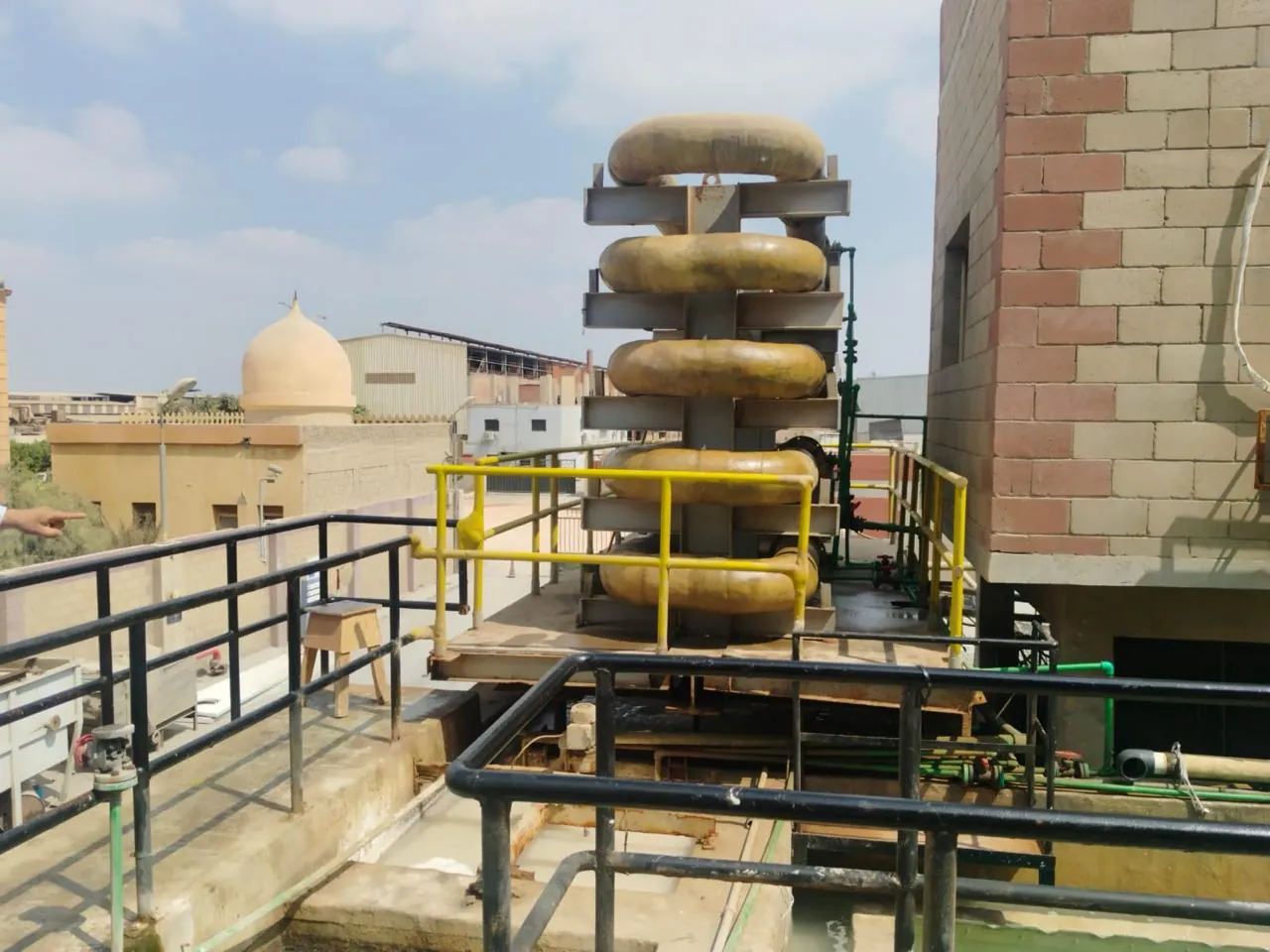
Previewing the industrial wastewater plant and reading the loads
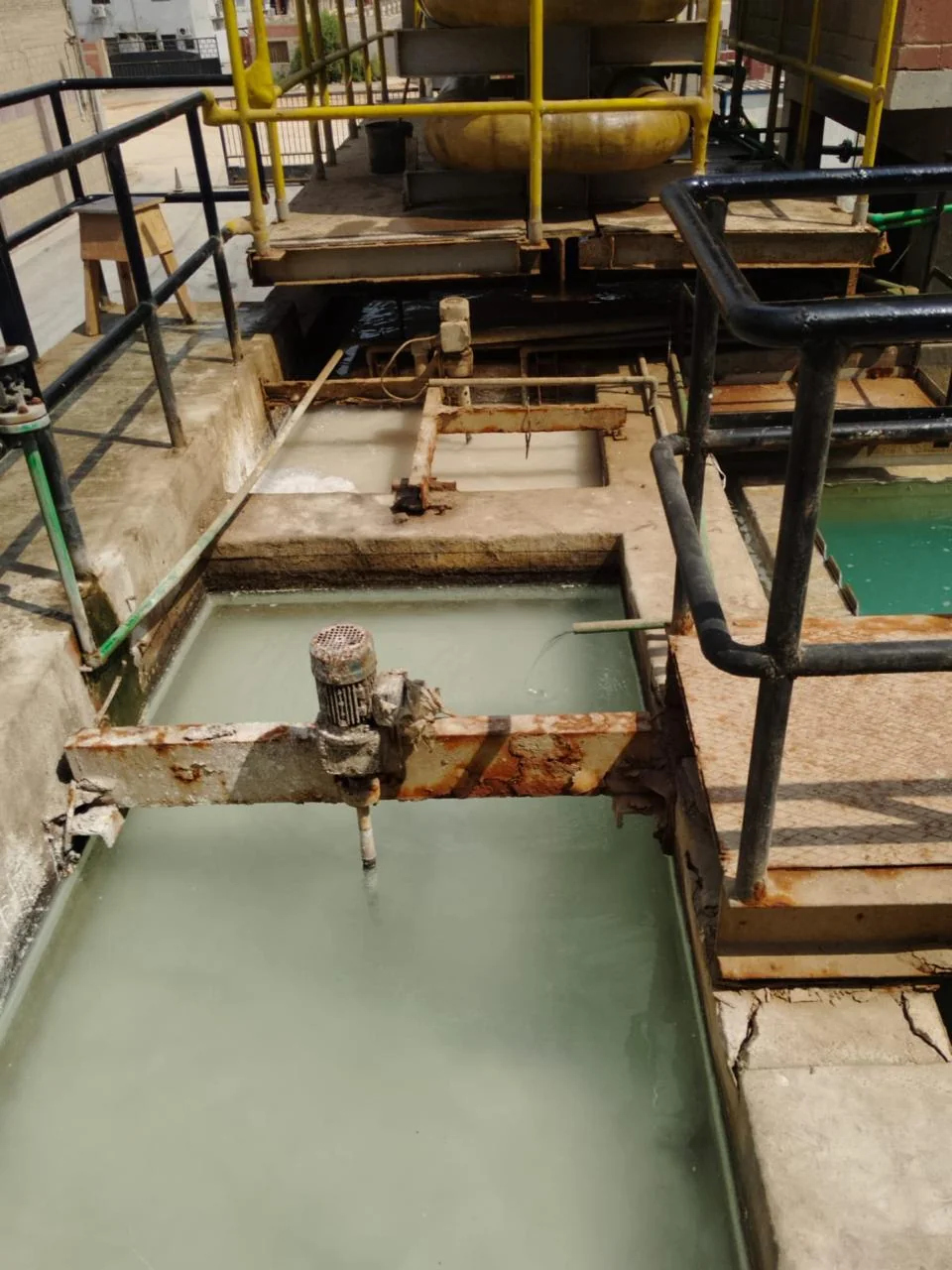
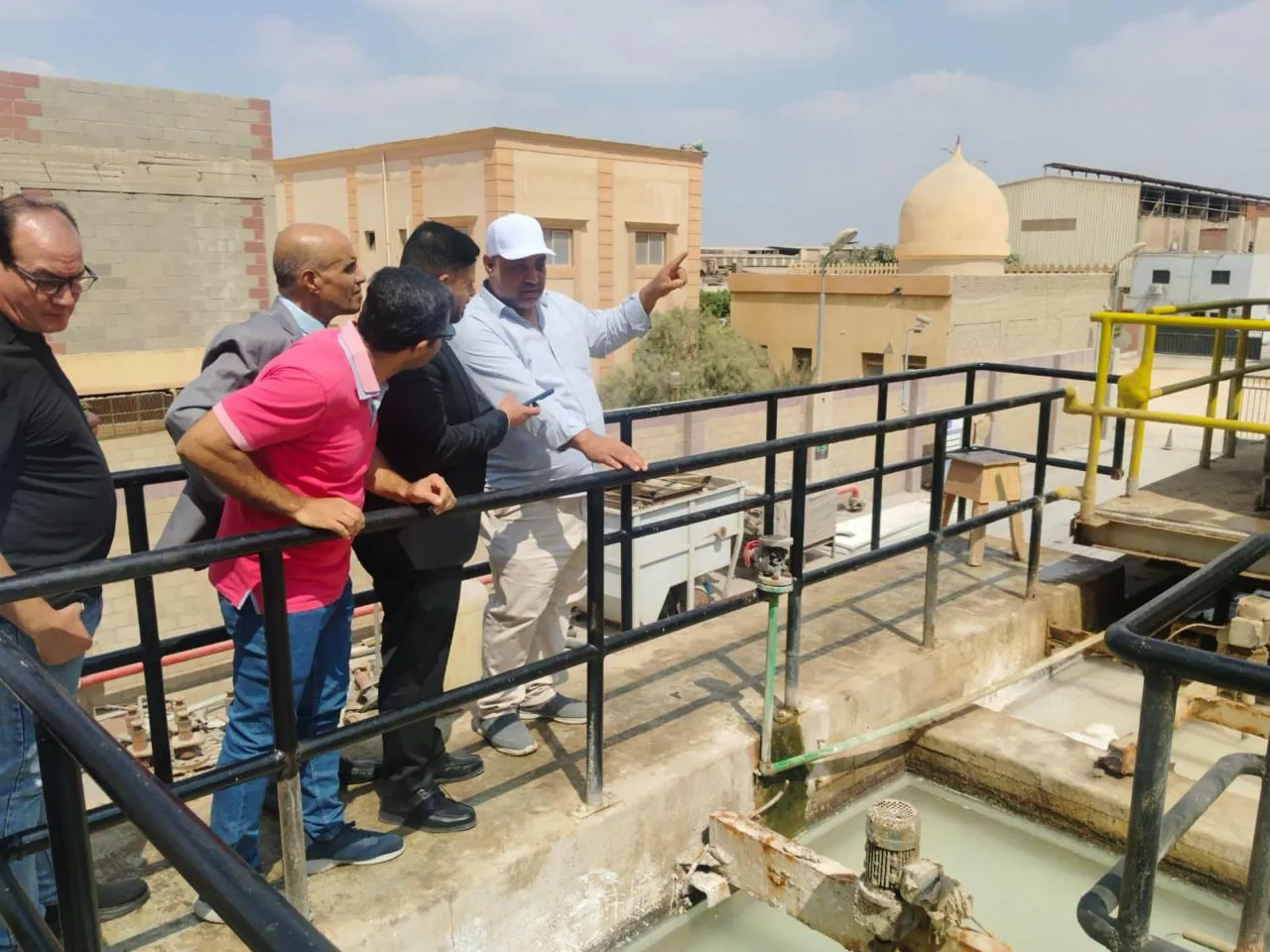
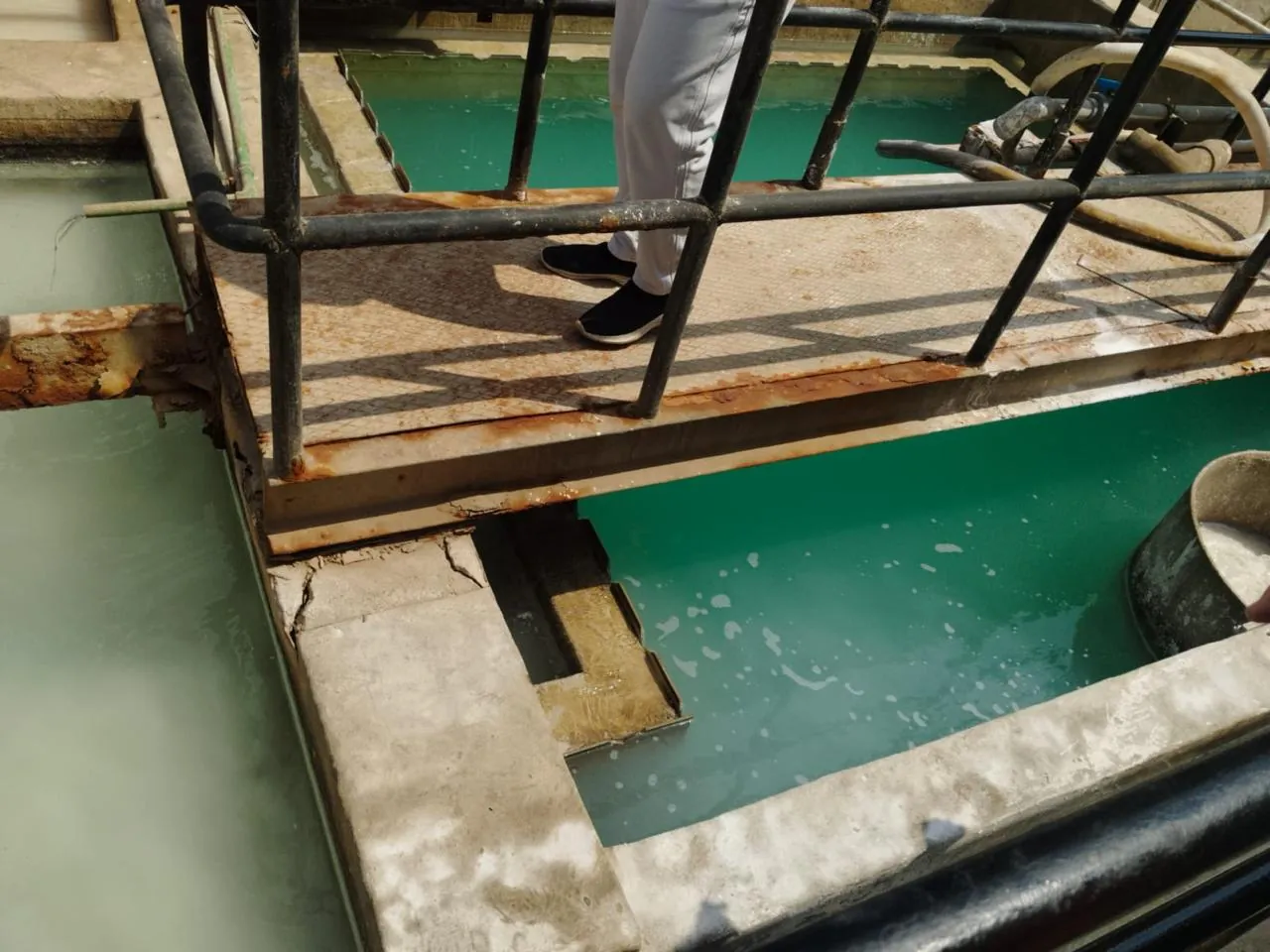
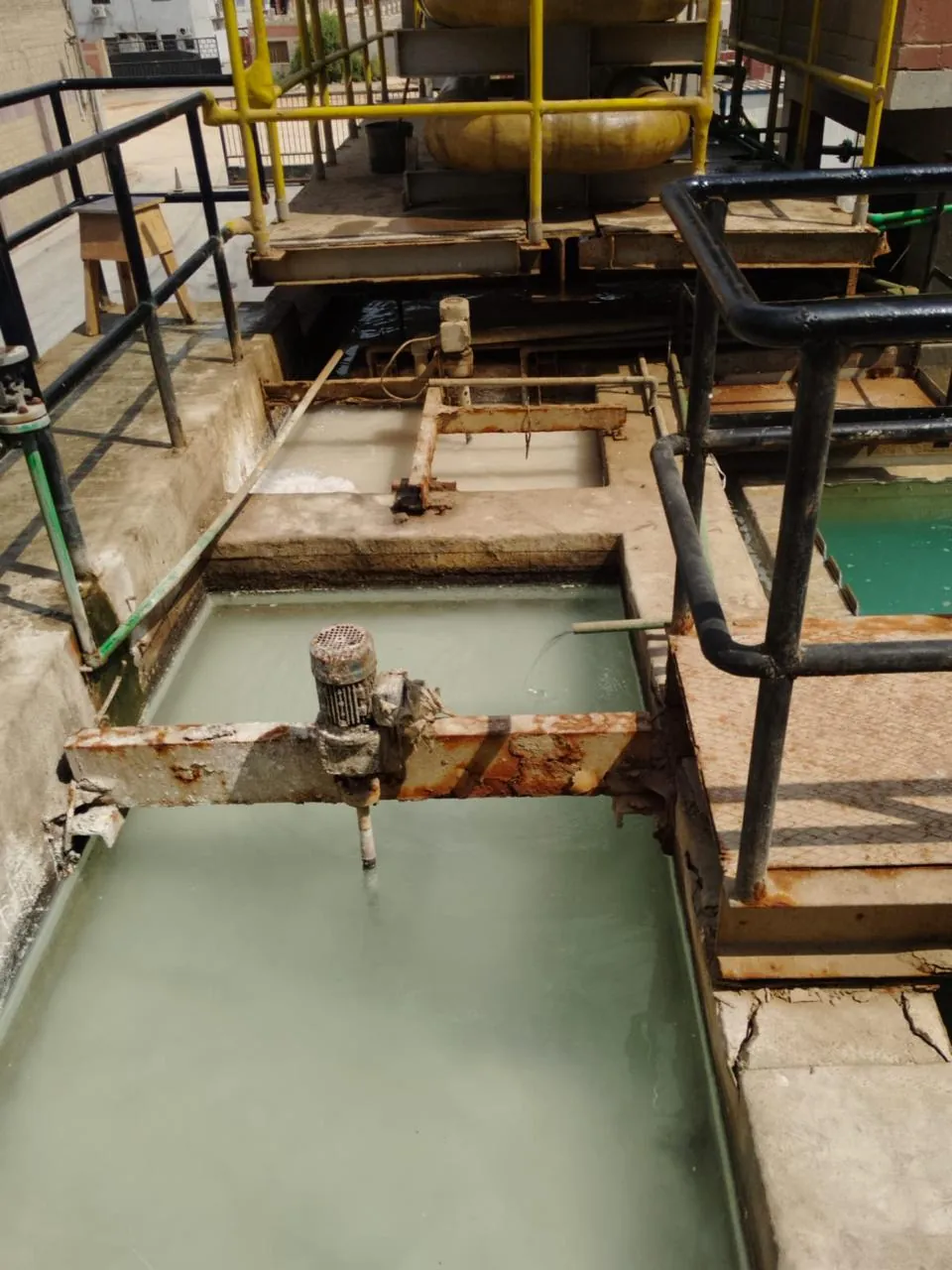
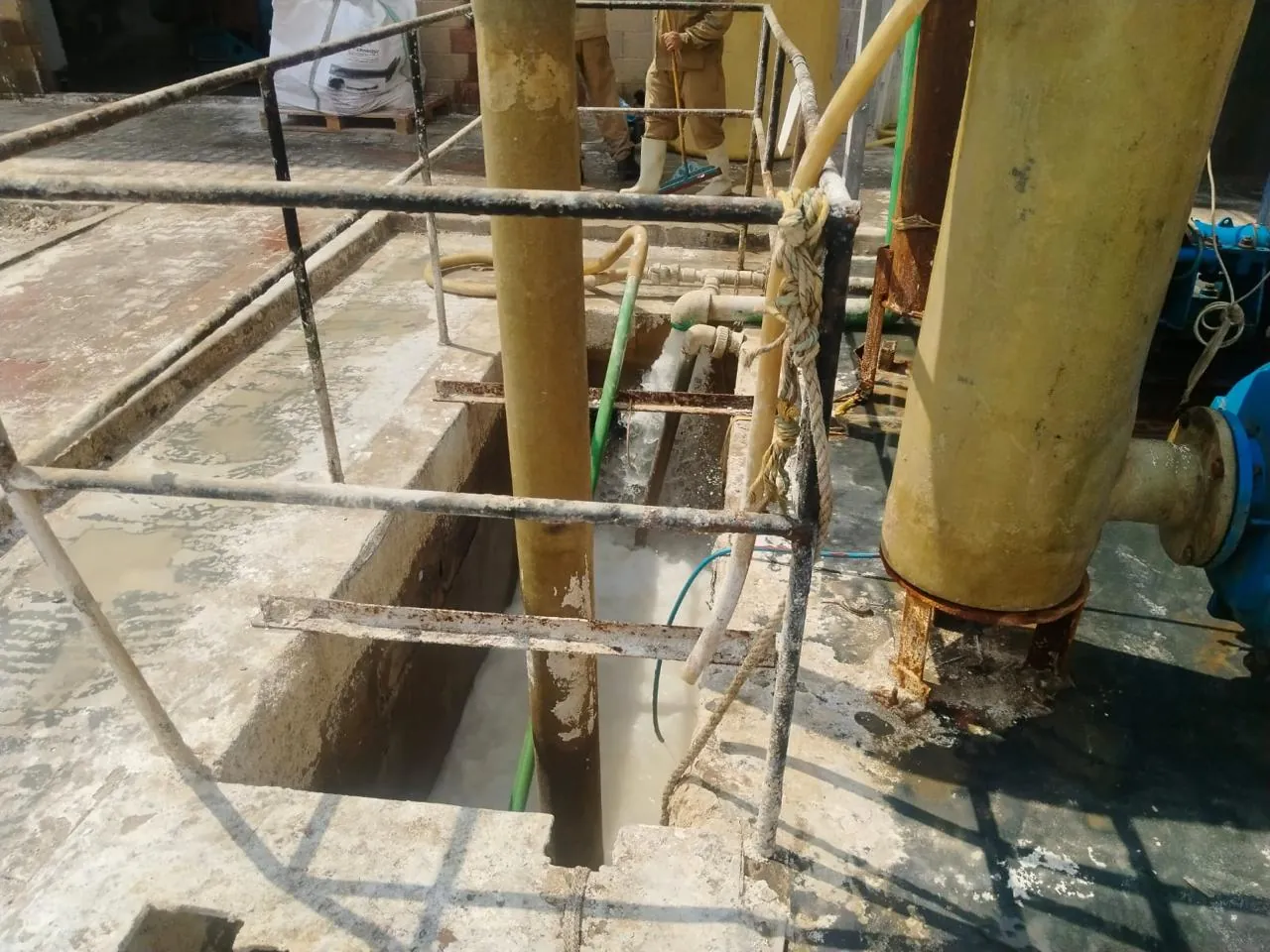
Actual location showing changes in flows, collection paths, and condition of basins and pipes before technology selection.
Services Company designing industrial wastewater treatment plants in Egypt
We provide the service as an integrated path that can be contracted in full or divided into clear packages, while the design reference remains the same so that there is no conflict between equipment, civil works, electricity and control.
GREEN LIFEAnalysis
Design
Execution
Design
Execution
Water analysis and diagnosis
Review the sample, its source, withdrawal timing, and indicators associated with the application, then identify missing data before approving any equipment or final price.
Engineering design of the plant
Prepare the water balance, sequence of stages, flow rates, pressure, chemical consumption, measurement points, protection and expansion.
Manufacturing and supply
Assembling treatment units, structures, tanks, and control panels, and supplying pumps, membranes, filters, and valves according to an approved list.
Installation and operation
Coordinate field work, connection, dry and wet tests, and adjust doses, pressures and flows until the operating point is reached.
Maintenance and spare parts
A preventive program, a record of readings, a plan for consumables and critical spare parts, and a response to faults, instead of waiting for a decrease in production or a plant stop.
Development and raising efficiency
Evaluate an existing plant and determine bottleneck, energy loss and product quality, then propose an implementable modification with as little downtime as possible.
Design indicators Processing industrial waste for compliance or reuse
Analysis List No sheets attached to the offer; Each indicator changes a decision in primary processing, key technology or operation. The next panel shows the most important reading points that should appear in the project file.
DESIGN INPUT / 01
COD and BOD
This reading is involved in determining the technology, protection, and actual capacity. Green Life does not have a single value; These are reviewed with the rest of the indicators, water source and end use before the plant scale is installed.
- Direct impact on the choice of components
- Review value change during operation
- A measurement point within the delivery plan
in projects Company designing industrial wastewater treatment plants in Egypt The water source is reviewed first because the lab result is independent of the location of the sample. Well water may change after continuous pumping, network water may vary seasonally, and industrial wastewater is affected by the production system and the product being manufactured. That's why we determine the drawing point, running time, sample size, and preservation method before interpreting the numbers.
The data is then translated into a water balance: feed quantity, net production, washing or return water, tank capacity, working hours and reserves. Budgeting prevents a common mistake of purchasing a plant with a nominal capacity that appears adequate when it does not meet Peak demand demand or requires unrealistic operating hours. It also allows comparison of electricity, chemical and water consumption between alternatives.
Design and implementation stages Company designing industrial wastewater treatment plants in Egypt
Each stage has clear inputs, outputs and dependencies. Jumping into equipment purchases before these stages are installed brings problems back to the site in the form of modifications, downtime, and additional cost.
01
Installing source data
Review the water source, its seasonal change, and the location of the sample collection so that the design is not based on a reading that does not represent actual operation. in a project Processing industrial waste for compliance or reuse The result of the phase is recorded within the presentation file or operating document to remain auditable to responsibilities.
02
Water demand calculation
Link daily capacity to the number of working hours, instantaneous flow, Peak demand times, required tank, and expansion plan. in a project Processing industrial waste for compliance or reuse The result of the phase is recorded within the presentation file or operating document to remain auditable to responsibilities.
03
Determine product quality
Recording the required specification at the point of use instead of just saying “pure water,” which is not suitable for an engineering basis. in a project Processing industrial waste for compliance or reuse The result of the phase is recorded within the presentation file or operating document to remain auditable to responsibilities.
04
Treatment train design
Arranging stages, doses, pumps, membranes, and measuring devices according to the actual load and safety margins. in a project Processing industrial waste for compliance or reuse The result of the phase is recorded within the presentation file or operating document to remain auditable to responsibilities.
05
Testing and handing over of the plant
Trial run, measurement of quality, pressure and flow, training of officials and delivery of the follow-up programme. in a project Processing industrial waste for compliance or reuse The result of the phase is recorded within the presentation file or operating document to remain auditable to responsibilities.
Egyptian and international codes for industrial wastewater treatment plants
Design boundaries are not selected from a global table; Rather, from the actual receiving point: a public drainage network, a waterway, or reuse. This is evidenced within the license and acceptance matrix.
is a design reference, not a certification claim
The technical proposal specifies the applicable version, limits of liability, certifying body, and conformity tests. The mention of a code on this page does not mean that every plant or component is automatically certified to that code.
Egypt01
Law 93 of 1962 and Resolution 44 of 2000
Drainage reference on the public sewer network; Acceptance limits are determined according to the entity that owns the network and the actual license of the site.
Official reference ↗Egypt02
Law No. 48 of 1982 and its regulations and amendments
Protecting the Nile River and its waterways from pollution, while reviewing Resolution 92 of 2013 and the amendments in effect according to the future of drainage.
Official reference ↗Egypt03
Environmental Law 4 of 1994 and its amendments
Reference to the environmental register, environmental commitment, and dealing with waste and hazardous materials within industrial facilities.
Official reference ↗International04
ISO 5667-1:2023
Design water sampling programs and withdrawal techniques for raw water, wastewater, sludge, and resulting water.
Official reference ↗International05
ISO 16075 Series
Design, implementation and monitoring of treated wastewater reuse projects for irrigation, including materials, performance, disinfection and risk management.
Official reference ↗International06
IEC 61439-1:2020 and IEC 60204-1
Reference for the design, assembly and verification of low-voltage panels, the safety of electrical equipment and programmable systems in the plant.
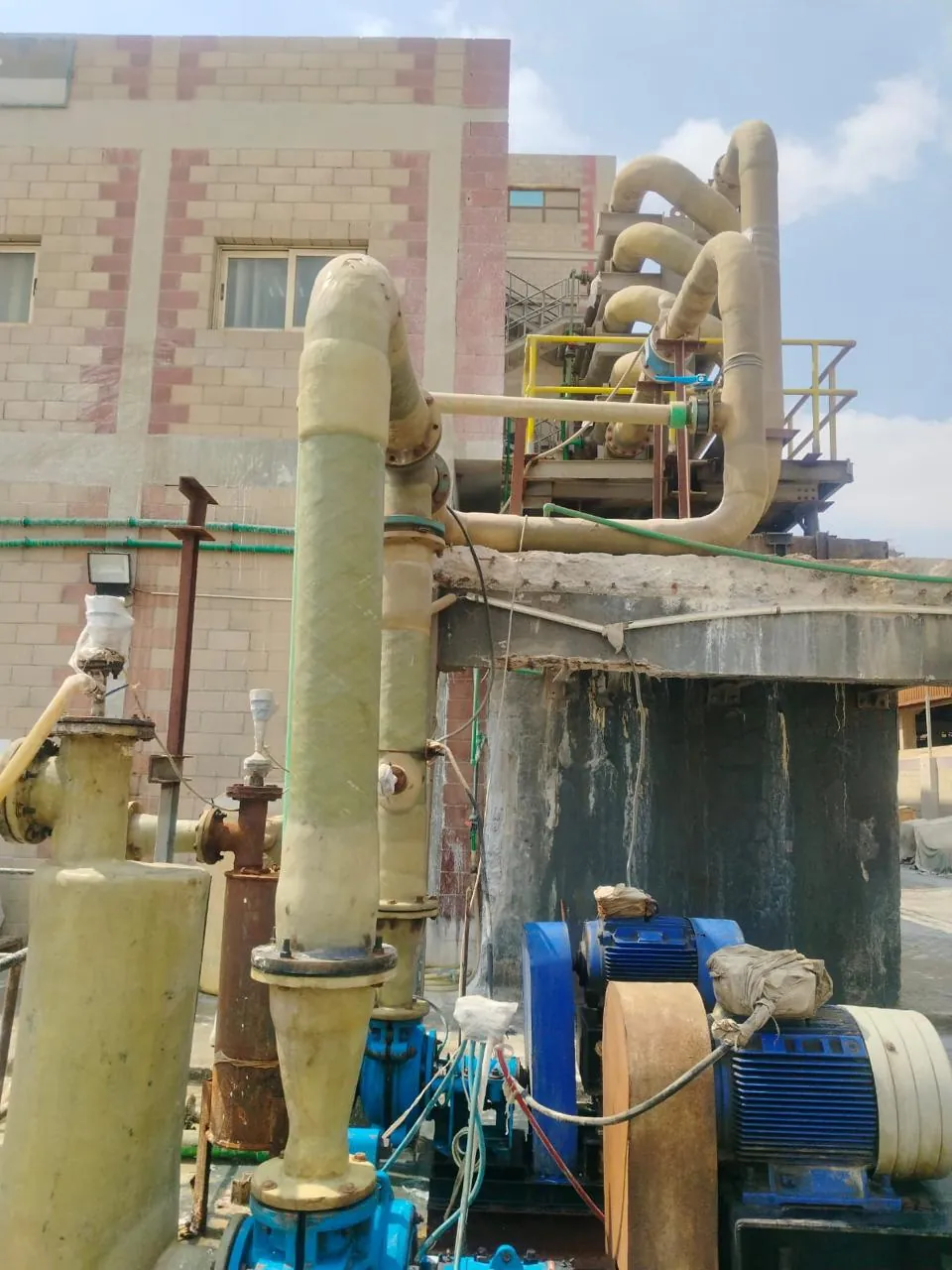
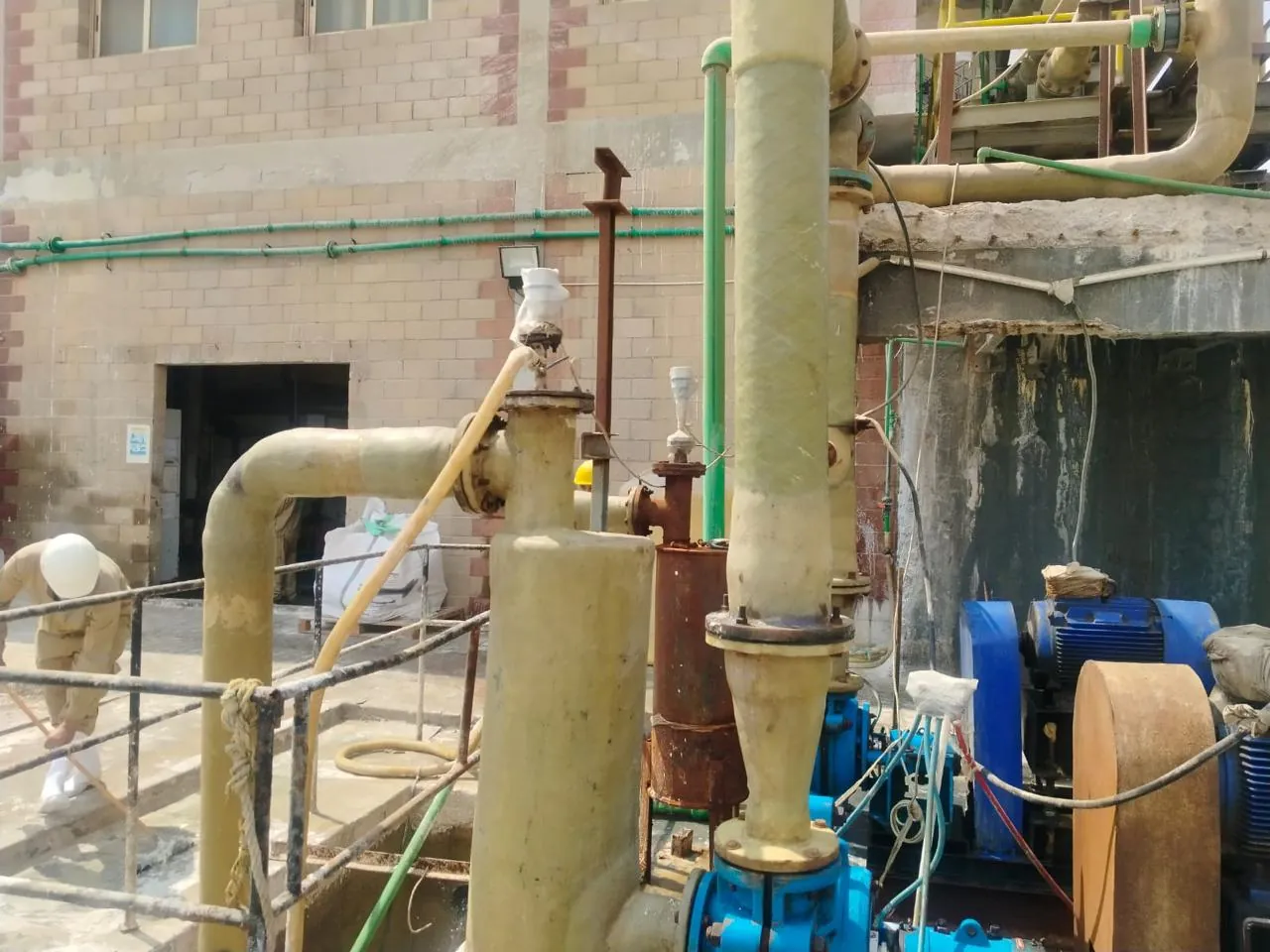
Official reference ↗Stages of industrial wastewater treatment on site land
The pictures document balancing, pumping, ventilation, separation, and the path of water between stages, instead of relying on a separate theoretical diagram.
Applications Company designing industrial wastewater treatment plants in Egypt within the Egyptian market
The page does not target only a general word; Rather, it covers purchase intentions related to the sector, use and problem so that the entrepreneur reaches the service that is closest to his situation.
Food factory waste
Water quality, capacity, and treatment stages are determined according to requirements Food factory waste, separating critical needs from general services and linking the design to the operating plan.
↗Disbursement of textile and dyeing factories
Water quality, capacity, and treatment stages are determined according to requirements Disbursement of textile and dyeing factories, separating critical needs from general services and linking the design to the operating plan.
↗Chemical plant drainage
Water quality, capacity, and treatment stages are determined according to requirements Chemical plant drainage, separating critical needs from general services and linking the design to the operating plan.
↗Drainage of industrial sinks
Water quality, capacity, and treatment stages are determined according to requirements Drainage of industrial sinks, separating critical needs from general services and linking the design to the operating plan.
↗Oil factory drainage
Water quality, capacity, and treatment stages are determined according to requirements Oil factory drainage, separating critical needs from general services and linking the design to the operating plan.
↗Paper mill drainage
Water quality, capacity, and treatment stages are determined according to requirements Paper mill drainage, separating critical needs from general services and linking the design to the operating plan.
↗The cost of ownership, not just the purchase price
Cost elements Processing industrial waste for compliance or reuse
The final price results from clear range boundaries. A lower bid may exclude pretreatment, tanks, instrumentation, or installation, and a higher bid may include duplication or automation that the project does not need. Therefore, each item must be compared with its function and its impact on quality and continuity.
We review the cost of energy, chemicals, filters, membranes, labor and potential downtime, then balance it against the initial investment. This comparison is especially important for plants that operate long hours; A small difference in recovery rate or operating pressure may make an annual cost greater than the purchase price difference.
01Convection, not just flow+
This clause appears explicitly in the technical and financial offer, and specifies what is included in the price and what is excluded and its impact on performance, operation and maintenance. Clarity of the item prevents comparison of unequal offers.
02Production hours fluctuate+
This clause appears explicitly in the technical and financial offer, and specifies what is included in the price and what is excluded and its impact on performance, operation and maintenance. Clarity of the item prevents comparison of unequal offers.
03Physical and chemical treatment+
This clause appears explicitly in the technical and financial offer, and specifies what is included in the price and what is excluded and its impact on performance, operation and maintenance. Clarity of the item prevents comparison of unequal offers.
04Size of ponds and civil works+
This clause appears explicitly in the technical and financial offer, and specifies what is included in the price and what is excluded and its impact on performance, operation and maintenance. Clarity of the item prevents comparison of unequal offers.
05Sludge and odor system+
This clause appears explicitly in the technical and financial offer, and specifies what is included in the price and what is excluded and its impact on performance, operation and maintenance. Clarity of the item prevents comparison of unequal offers.
06Purpose of exchange or reuse+
This clause appears explicitly in the technical and financial offer, and specifies what is included in the price and what is excluded and its impact on performance, operation and maintenance. Clarity of the item prevents comparison of unequal offers.
Contracting risks in Company designing industrial wastewater treatment plants in Egypt
A strong business page does not mean general promises; Rather, it clarifies the decisions that protect capital and operational continuity. These are the risk points most associated with this type of project.
Reliance on a single sample
This risk is addressed by establishing data at the basis of the design, writing the acceptance criterion, and determining who is responsible for measurement and correction before supply and after commissioning.
Reduce the balancing basin
This risk is addressed by establishing data at the basis of the design, writing the acceptance criterion, and determining who is responsible for measurement and correction before supply and after commissioning.
Biological selection for a toxic stream
This risk is addressed by establishing data at the basis of the design, writing the acceptance criterion, and determining who is responsible for measurement and correction before supply and after commissioning.
Ignoring the resulting sludge
This risk is addressed by establishing data at the basis of the design, writing the acceptance criterion, and determining who is responsible for measurement and correction before supply and after commissioning.
Promise to reuse without polishing and sterilization
This risk is addressed by establishing data at the basis of the design, writing the acceptance criterion, and determining who is responsible for measurement and correction before supply and after commissioning.
The professional proposal includes a table of components, models, materials and capacities, a description of the water path, feed and product quality limits, scope of civil and electrical works, and a test plan. When these elements are absent, the price becomes an incomparable number, and the true cost may appear after the site is launched.
On the other hand, detailing does not mean loading the project with the highest specification in every part. The goal is a specification suitable for actual risks with the possibility of maintenance and supply within Egypt. A good choice strikes a balance between reliability, parts availability, ease of operation, power and scalability, and prevents dependence on a component that cannot be serviced locally.
Receiving and operating standards Company designing industrial wastewater treatment plants in Egypt
The success of the contract is not measured by the arrival of the equipment to the site, but rather by the ability of the plant to produce the agreed upon quality and capacity under specific and documented operating conditions.
The receiving phase begins with reviewing the conformity of the equipment, materials, and models to the supply list, then testing the suction, expulsion, and drainage lines, electrical protection, the direction of rotation of the pumps, and calibrating the sensors. The water is then gradually started, recording each stage's pressure, flow produced, losses, and water quality. In a project Processing industrial waste for compliance or reuse The result does not depend on a real-time reading; Decreased stability of measurements and the ability of the system to handle a full operating cycle.
Clear acceptance limits are established, including net production quantity, quality indicators, chemical consumption, pressure behaviour, warnings and safe stopping. It also records the effect of source and temperature changes because performance may differ from test day conditions. The client team receives the daily, weekly and monthly follow-up schedule, sampling points, intervention limits, and a list of materials and spare parts needed for the first period.
Training is part of the delivery and is not a formal additional service. The operator learns to start and stop the plant, arrange valves, set doses, read indicators, handle alarms, and carry out washing or reconditioning without damaging components. With these steps it turns Company designing industrial wastewater treatment plants in Egypt From a purchase to an operational asset that can be measured, maintained and developed.
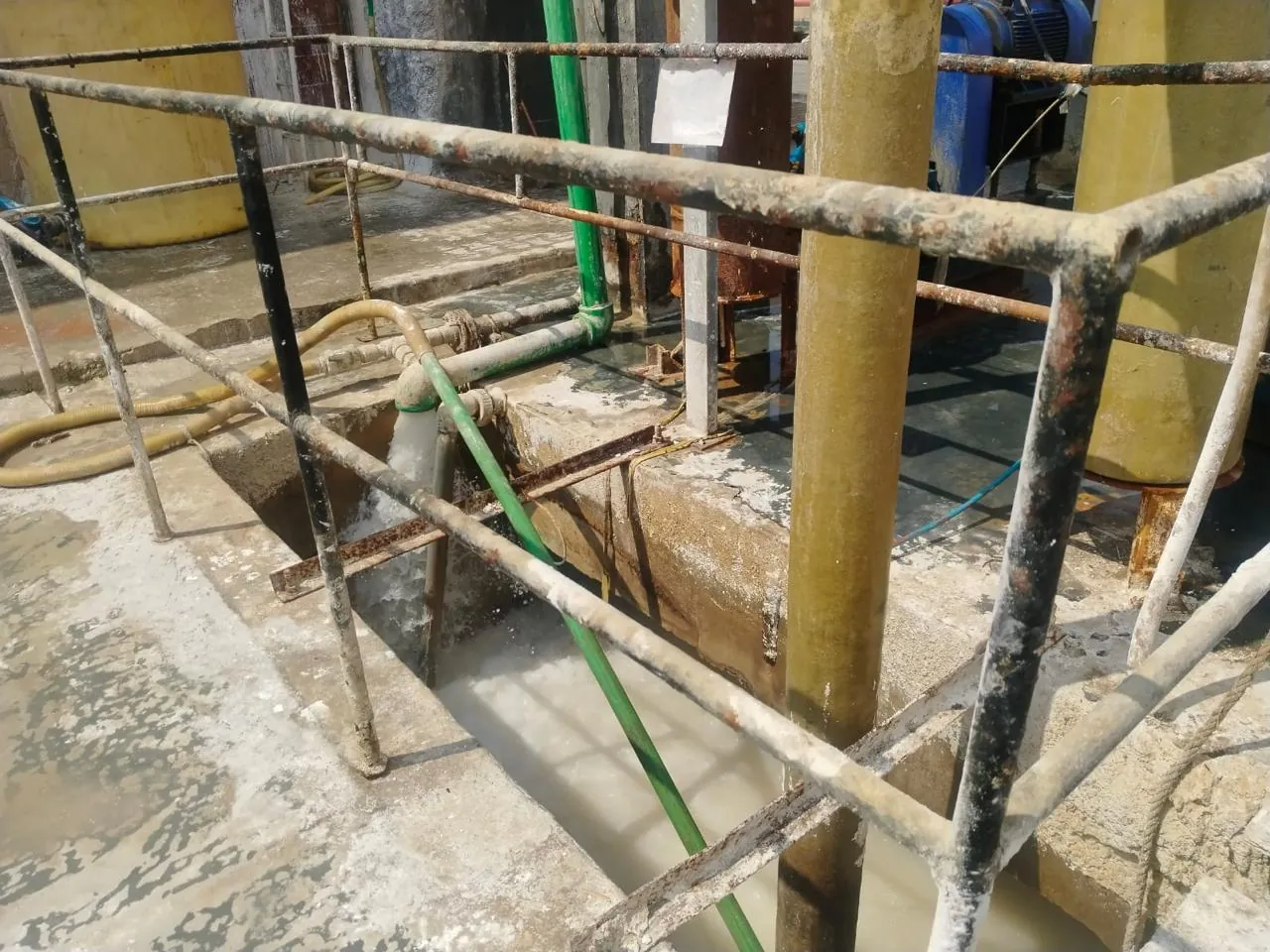
Operating the industrial wastewater line and approving the result
The operating team correlates equipment status with load readings, exit quality, and sludge or reuse path.
07/ Contract file
Display output Company designing industrial wastewater treatment plants in Egypt
Before signing the contract, the client must know what he will receive technically, what is required from the site, and what is the criterion for the success of the plant.
Design basis
Source, analysis, capacity, quality, hours of operation, assumptions, and acceptable limits of variation.
Processing phase diagram
Clear sequence from water ingress until storage or use with dosing, measuring and return points.
Equipment list
Make, model, material, capacity, pressure, quantity, and accessories without vague commercial descriptions.
Business Limits
Supply, installation, electrical, civil, tanks, pipes, and what the customer prepares before the team arrives.
Test program
Pressure, leakage, flow, quality, protection, sequential operation and acceptance criteria tests.
Delivery and Support
Operations manual, training, warranty, maintenance schedule, consumables and spare parts list.
Business Answers Before Requesting a Quote Company designing industrial wastewater treatment plants in Egypt
Data required to prepare the technical offer+
We need the water source, up-to-date analysis, daily capacity, hours of operation and use, required quality, project location, and available space. When an item is missing, we clarify the assumption used and ask for its confirmation before fixing the price.
The difference between nominal capacity and net production+
Net production is the amount of water available for use after washing, refluxing, and stops. Therefore, we link the tank capacity, operating hours, temperature, and recovery rate, and we are not satisfied with the pump number or feed rate.
Design, supply and installation period+
The period is determined after the analysis, plan, list of components and site works are approved. Standard plants are faster, while fabricated units, tanks, civil works and custom control panels require certification-related software.
Limits of warranty and after-sales service+
Guarantee of component defects must be separated from operating results related to feed quality, dosing and maintenance. A good presentation identifies visits, response, consumables, exceptions, and operator training.
Updating an existing plant instead of creating a new plant+
Evaluation begins by measuring flows, pressures, quality and condition of pumps, filters, membranes and controls. If the basic structure is adequate, the choke point can be replaced or pretreatment or automation added instead of an unnecessary complete replacement.
Correct comparison between suppliers' offers+
Compares offers based on net production, product quality, brands, materials, hardware, installation scope, energy, chemicals, warranty and maintenance. Price alone does not reveal the difference between a workable solution and a deficient hardware package.
ENGINEERING BRIEF / EGYPT
Request a quote Company designing industrial wastewater treatment plants in Egypt Based on your project data
Submit water analysis, capacity, usage and location. The Green Life Engineer reviews inputs and identifies missing data and initial remediation scope before preparing the technical and financial proposal.
Next step
Convert water data to a clear plant scale
Submit the analysis, capacity, usage, and project location to review the requirements and link them to the appropriate processing phases.
Start studying your project ↗