Water treatment and desalination solutions for the agricultural sector in Egypt
Treatment of well and irrigation water according to salinity, iron, manganese, boron and crop requirements, with practical brine, energy and seasonal-operation management.
Engineering for Farms and agricultural reclamation starts with operating requirements, not a ready-made equipment list
Projects in this sector are not similar in consumption or in the required water quality. The source may be a network, a well, or a combination of both, and peak demands, operating hours, points of use, and requirements vary from one site to another. The design therefore links water data to the activity cycle before specifying technology and capacity.
The system includes tanks, distribution network, protection, automation, backwash and reject-flow paths, and consumable materials. Critical points are also separated from service uses so that all the water is not treated at the highest specification unnecessarily, and reserves, expansion, and the impact of stopping the plant are calculated.
The sector file documents responsibilities for design, supply, site work, testing and training, and links quality to a clear operating history and critical parts inventory. In this way, offers are compared on the basis of net production, energy, losses, and maintenance, and not on the price of the equipment alone.
Specialized water-treatment routes for Farms and agricultural reclamation
Each path handles a different load, quality, and usage, and leads to a page designed for the application rather than re-describing the sector.
Poultry farms
Treating drinking and cooling water according to salinity, hardness, iron, and microbes.
Open the specialized solution ↗ 02 / AGR / 02Animal production farms
Solutions for drinking, washing and cooling water according to consumption and quality of the well.
Open the specialized solution ↗ 03 / AGR / 02Fish farms
Filtration, aeration, sterilization, and management of water quality according to type and density.
Open the specialized solution ↗ 04 / AGR / 02Greenhouses
RO plants and mixing plans adjust EC, boron and sodium depending on the crop.
Open the specialized solution ↗ 05 / AGR / 02Removal of iron and manganese
Oxidation and filtration units that protect irrigation networks, drippers and RO plants.
Open the specialized solution ↗ENGINE
Six inputs turn into a contract basis
The value of each input, its source, and the limits of its change are recorded and then reflected in the capacity, treatment stages, materials, and measurement points. Locking these inputs prevents different expectations and makes comparing offers based on a single scope.
Representative sample, instantaneous consumption, quality in use, site area, energy, and waste path are interrelated elements. Omitting a single element could change the size of tanks, number of pumps, recovery rate, or level of automation.
Start analyzing water data ↗From the source to the point of use through a measurable treatment path
Source and analysis
Actual load, seasonal variation and available flow.
Primary protection
Reducing pollutants that threaten the primary stage.
Major processing
Technology, capacity and material according to the required quality.
Storage and distribution
Pressure and sterilization prevent the deterioration of produced water.
Measurement and maintenance
Alarm, performance log, and critical running inventory.
The plant is not evaluated by visible equipment alone. The design includes balance of flows, wash periods, rejected water, tanks, network capacity, material consumption and safe stop logic. When these limits are documented, performance can be measured and the actual cost per cubic meter can be calculated.
It also reviews the impact of stopping the plant, the time available for repair, and the components that need duplication. The goal is a system that serves daily operation and whose components can be accessed, diagnosed, and maintained by the site team.
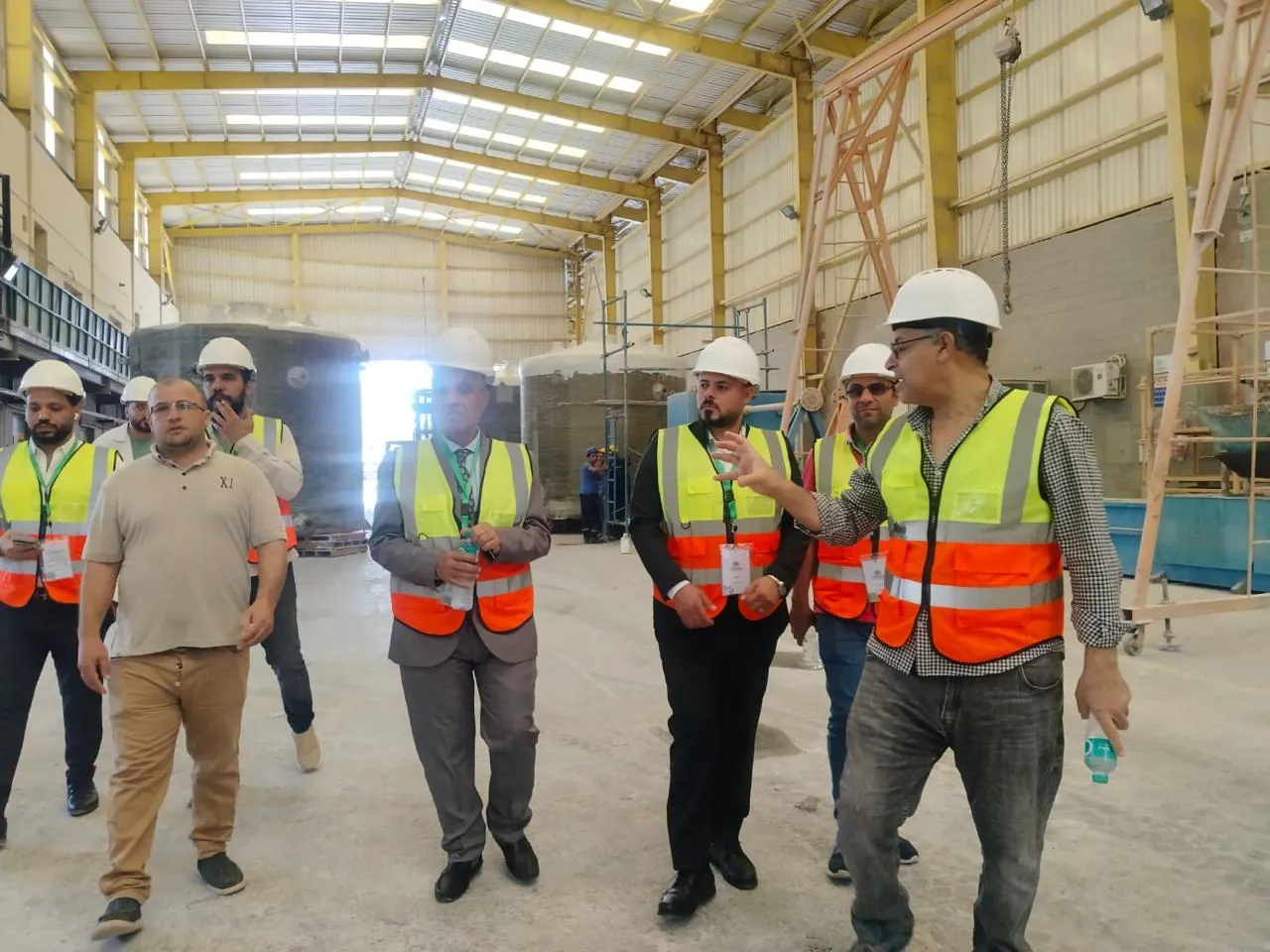
The site is part of the design
Reviews passages, vessel openings, pump intakes, tank levels, backwash discharge, chemical room ventilation, and cable and piping routes. These details prevent costly modification after equipment arrives and protect the operating team.
Delivery includes pressure and leakage testing, sensor calibration, trial of protections, flow and quality measurement, followed by operator training, delivery of follow-up log, consumables and spare parts.
View interactive implementation models ↗Guarantee
PerformanceINPUTS → LIMITS → ACCEPTANCE
Performance criteria for Farms and agricultural reclamation must be fixed before plant capacity is selected
The design of water treatment solutions for this sector is based on a real consumption table showing the average and peak flow, working hours, seasonal interruptions and the required safety stock. These loads are linked to an analysis of the source and quality required at each use, and then the potential for salinity, turbidity, iron, manganese, hardness, organic matter and microbiology is reviewed. When data are missing, the assumptions and their limits are explicitly written, and the samples or tests needed to be completed before equipment is purchased are specified.
A water balance is then constructed that shows raw, production, backwash, reject flow, discharge or reuse, because the nominal capacity alone does not reveal the amount of water actually available to the project. Alternatives are compared on recovery rate, energy, chemicals, area, operating hours, labor and spare parts. Separating uses into different lines may be more efficient than forcing one plant to produce the highest quality for all points.
The design basis includes measurement and protection points, automation sequences, and the scenario of a power outage, low tank, or quality reading exceeding the limit. It also specifies access for maintenance, raising pumps, opening vessels, backwash drainage, and ventilating the chemical room. These details are translated into a process plan, equipment list, distribution plans, and clear civil and electrical boundaries, so conflicts during implementation are minimized and space or services do not turn into additional late work.
Acceptance testing measures net flow, water quality, pressure, protections, leakage and operating consumption over known conditions, then delivers starting values, follow-up program and critical spare parts. The technical proposal for Farms and agricultural reclamation therefore becomes a measurable and reviewable commitment, not a general description of a ready-made plant.
Turn sector data into a clear plant scope
Send analysis, capacity, usage and location so we can define milestones, measurement points and scope boundaries.